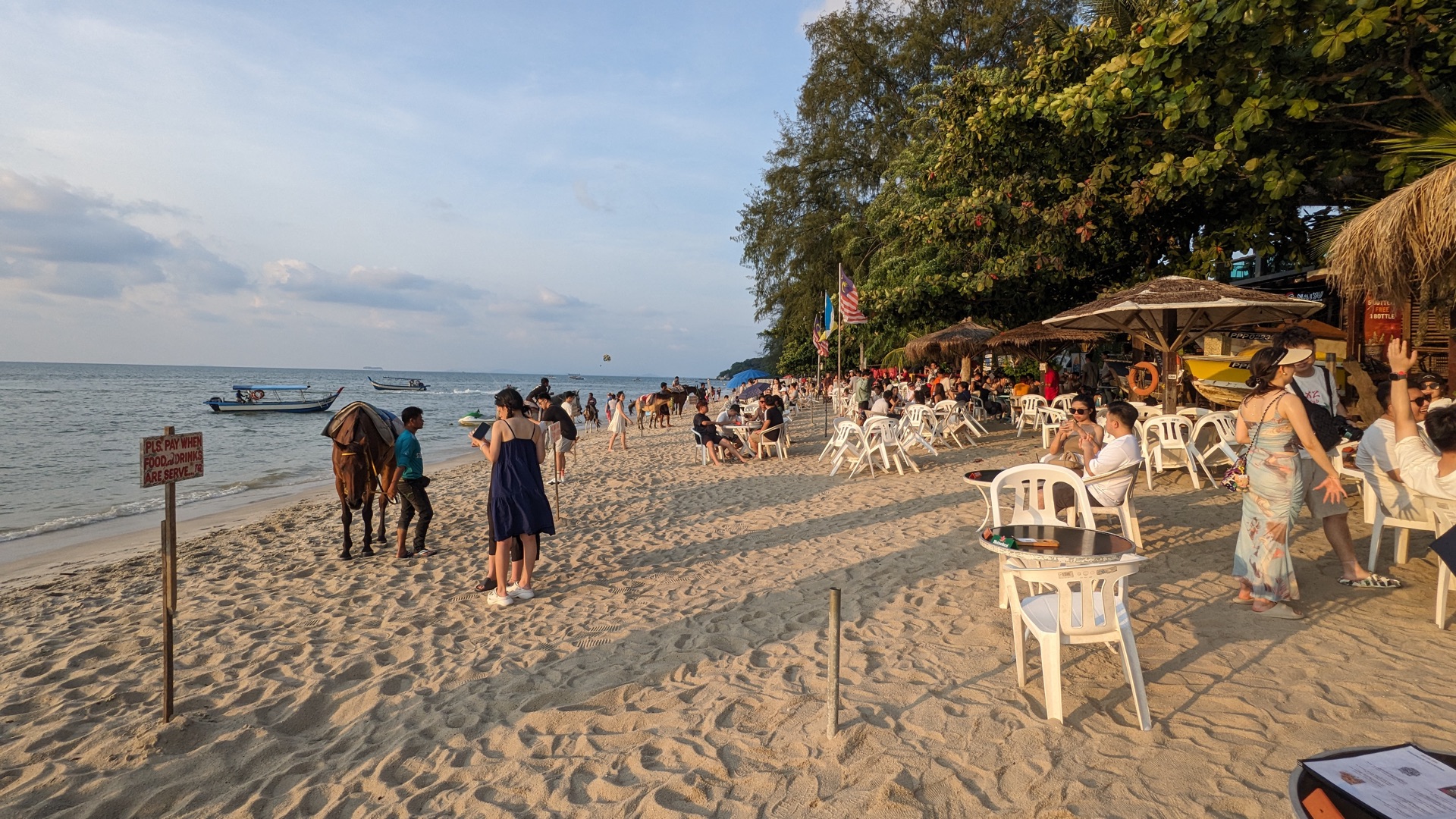
Part of my Tanjung Bungah 2026 buyer's guide. For the full corridor read — every project, PSF band, foreign-buyer angle and honest catch — start there. This piece drills into one specific decision within it.
These two adjacent beachfront areas get grouped together in most Penang property research, but they play genuinely different roles in a buyer's life. Tanjung Bungah works as a primary home. Batu Ferringhi mostly doesn't — it works as a holiday home, a retirement lifestyle base, or a specific-use asset for buyers who genuinely want the resort beach lifestyle.
Here's the honest breakdown.
Key takeaways:
- Tanjung Bungah works as a primary home — 15–20 min to Georgetown, active new launches, Dalat International in-area, closer to the hospital cluster.
- Batu Ferringhi works as a holiday/retirement base — resort beach belt, but 25–35 min to Georgetown and drive-dependent for groceries and healthcare.
- Supply: Tanjung Bungah has one active new launch (Waterstone, from RM1.287M freehold); Batu Ferringhi is sub-sale only in 2026.
- Both are overwhelmingly freehold; yields are moderate (3.0–4.5% gross), with Batu Ferringhi carrying more seasonal STR potential.
- Both sit on the island, so the foreign-buyer floor (RM1M) and 3% state levy apply identically.
- The honest test: if you'll hit the beach several times a week, Batu Ferringhi; if it's weekends-only and you want to stay connected, Tanjung Bungah.
At a Glance
| Metric | Tanjung Bungah 2026 | Batu Ferringhi 2026 |
|---|---|---|
| Active new launch count | 1 (Waterstone) | 0 |
| Sub-sale market depth | Strong — from ~RM450K to RM4.7M | Strong — from ~RM450K to RM2.1M+ |
| New launch PSF | RM810–1,200 | Not applicable |
| Sub-sale median PSF | RM550–1,000 | RM400–700 |
| Distance to Georgetown | 15–20 minutes | 25–35 minutes |
| Distance to Pulau Tikus hospital cluster | 20–25 minutes | 25–35 minutes |
| Beach infrastructure | Present but less defined | Established resort beach belt |
| International school proximity | Dalat within area | Dalat via 15–20 min drive |
| Foreign buyer minimum | RM1,000,000 | RM1,000,000 |
Sources: internal transaction observation cross-referenced with the Penang Price Index and JPPH/NAPIC transaction data. PSF ranges are indicative bands, not a valuation.
Where the Daily Difference Lives
Tanjung Bungah sits 10 minutes north of Tanjung Tokong. The character is coastal-residential with sea-view hillside positioning. You can drive to Georgetown for a heritage-street dinner in 20 minutes. You can reach Gurney Plaza in 15 minutes. Dalat International School is within the area. The Pulau Tikus hospital cluster is 20 minutes away. It's coastal but functionally connected to the rest of island life.
Batu Ferringhi is a further 15 minutes north again. The character is resort-beachfront — Shangri-La's Rasa Sayang, Hard Rock Hotel, Lone Pine, Holiday Inn Resort — anchored by the Batu Ferringhi Night Market and the beach belt itself. Getting to Georgetown means 25–35 minutes each way. Grocery runs require driving to Tanjung Tokong or Tanjung Bungah. It's a genuinely different pace of life.
For buyers who intend to actually live in the property daily, Tanjung Bungah's commute economics work in a way Batu Ferringhi's don't. For buyers whose use case is weekends, holidays, or extended semi-retirement stays where daily Georgetown proximity isn't required, Batu Ferringhi is legitimate. My full Tanjung Bungah area guide and Batu Ferringhi area guide go deeper on each.
Active Supply Reality
Tanjung Bungah has one active new launch:
Waterstone — from RM1.287M freehold, 365 units, 1,334–2,195 sq ft, 3- and 4-bedroom by BSG Property. Hillside positioning with sea-view potential from mid-floor and above. Completion 2028. Genuine family-scale freehold condominium.
Batu Ferringhi has zero active new launches. All activity is sub-sale across the established freehold stock — Ferringhi Residence, Ferringhi Hills, Ferringhi Pearl, By The Sea, La Ferringhi, Pearl Residences, The Marin, Island Resort Villas, Iconic Vue.
For buyers who specifically want new launch product (developer warranty, modern building specs, VP-fresh unit), Tanjung Bungah is the only option. Batu Ferringhi requires sub-sale patience. The catch on the new-launch side: Waterstone completes in 2028, so a buyer wanting to move in this year is back to sub-sale in both areas anyway.
Sub-Sale Market Comparison
Both areas have deep sub-sale markets. The tiers:
Tanjung Bungah premium (RM1.5M+): Skyhome (to ~RM4.7M), 1 Tanjong (~RM3.6M), Nineten (~RM3.2M), Ratu Mutiara (~RM2.38M), Alila 2 (~RM2.4M)
Tanjung Bungah mid-tier (RM600K–RM1.4M): Mira Residence (~RM1.35M), Surin Condominium (~RM680K), Granito @ Permai (~RM488K)
Batu Ferringhi premium (RM1.3M+): Pearl Residences (~RM2.1M), Island Resort Villas (~RM2.1M), The Marin @ Ferringhi (~RM1.5M), Ferringhi Pearl (~RM1.4M), Ferringhi Hills (~RM1.35M), La Ferringhi (~RM1.318M), By The Sea (~RM1,337,500)
Batu Ferringhi entry (RM450K–RM800K): Ferringhi Residence (~RM687,500), Ferringhi Residence 2 (~RM1,064,800), Iconic Vue (~RM530,000)
Tanjung Bungah's ultra-premium tier reaches higher (Skyhome from ~RM4.7M vs a ~RM2.1M Batu Ferringhi ceiling at Pearl Residences and Island Resort Villas) because hillside villa and low-density positioning command top-tier premiums that beach-belt condos don't quite match. Note that the entry floor is almost identical — both areas open around RM450K in the oldest sub-sale stock — so the real divergence is at the top, not the bottom.
What Your Money Actually Buys
The prices above are the asking floor. What you pay to complete is more — and for foreigners, meaningfully more. Both areas sit on Penang island, so the same rules apply to each:
- RM1,000,000 minimum purchase price for foreigners on the island. That rules a foreign buyer out of the sub-RM1M entry stock in both areas — no By The Sea at RM1,250,000 is fine, but no Iconic Vue at RM450K for a foreign passport.
- 3% state levy on the purchase price — roughly RM30,000 on a RM1M buy — on top of stamp duty and legal fees.
- State consent on every foreign transaction, which adds 3–4 months to completion.
So a foreigner targeting the RM1.287M Waterstone entry is really budgeting past RM1.32M before stamp duty and legals. Run your own number against the affordability calculator before you fall in love with a floorplan — the levy and consent timeline are the two things buyers most often forget to price in.
On the exit, foreigners pay Real Property Gains Tax of 30% on gains in years 1–5, dropping to 10% from year 6 onward. A worked example: buy at RM1.25M, sell in year 3 at RM1.45M — the ~RM200K gain (before allowable deductions) is taxed at 30%, roughly RM60K, versus about RM20K if you'd held past year 5. The RPGT calculator does this properly with deductions. The takeaway for both areas is the same: beachfront here is a hold, not a flip.
Rental Yield — The Honest Version
Both areas deliver moderate long-term yields of 3.0–4.5% gross. That is not a flaw — it's what mature, freehold, lifestyle-led coastal stock does. You buy here for the address, the sea view and the hold, not for a yield story.
The difference is at the short-term-rental (STR) end. Batu Ferringhi's tourism pull makes holiday-let demand real — but it comes with two catches most brochures skip: seasonality (the tourist calendar, monsoon months and event peaks swing occupancy hard) and house rules (a growing number of projects restrict or ban short-term letting outright, so the STR case is project-specific, not area-wide). Tanjung Bungah leans the other way: less tourist STR upside, but steadier long-term expat demand, much of it from Dalat International School catchment families on 1–2 year leases. Model both scenarios honestly on the ROI calculator before assuming the beach address prints holiday income.
Who Buys Each
Tanjung Bungah attracts:
- Families with children at Dalat International School
- Sea-view lifestyle buyers wanting hillside positioning at accessible PSF
- Long-term expat rental investors
- Semi-retired lifestyle owners who still want Georgetown accessibility
- Waterstone-tier buyers seeking new launch freehold in the beach corridor
Batu Ferringhi attracts:
- Holiday-home buyers (Penang island professionals, KL/Singapore weekenders)
- Foreign retirees choosing beach lifestyle over city convenience
- Buyers who genuinely use the beach daily
- Selective STR investors (where house rules permit)
- Owner-occupiers deliberately opting out of urban lifestyle
The Real Decision
Pick Tanjung Bungah if:
- This will be your primary home
- Daily Georgetown or Pulau Tikus commute is part of your life
- You want an active new launch option (Waterstone)
- You have or plan to have children at Dalat
- Healthcare drive time matters
Pick Batu Ferringhi if:
- You genuinely want beachfront lifestyle as the primary purchase driver
- Your daily life doesn't need frequent Georgetown or FIZ access
- You're comfortable with sub-sale patience and no new launch supply
- You're a holiday-home buyer or retiree with time flexibility
- Resort infrastructure (hotels, night market) is genuine amenity for you
Zac’s Take
Zac Ong
I've watched buyers force themselves into Batu Ferringhi because it 'looks like beach paradise' in the marketing, then discover the daily grocery run and hospital drive genuinely wears them down. Batu Ferringhi rewards buyers who actually want the beach lifestyle and can accept the geography. Tanjung Bungah rewards buyers who want beach proximity without giving up the city-connected daily rhythm. The honest test: how often will you actually go to the beach? If the answer is 'multiple times per week for morning walks or swims,' Batu Ferringhi. If the answer is 'weekends and holidays but I still want to be near everything else,' Tanjung Bungah. Both are legitimate; the mistake is buying one and expecting the other's lifestyle.
For deeper context, see my Tanjung Bungah property guide, Batu Ferringhi property guide and the Waterstone review.
Sources: Project prices, PSF, sizes, unit counts, tenure, land title, developer and completion year from our tracked dataset, compiled from developer price lists, official project sites and public listings. Sub-sale asking verified from live portal listings using the median-anchored method, with bait listings and relisted units excluded. RPGT rates and the s.21B retention per the Real Property Gains Tax Act (LHDN). Stamp duty per the Stamp Act (LHDN) — a flat 8% for foreign buyers, tiered 1–4% for citizens. The foreign-buyer minimum purchase price, 3% island / 2% mainland state levy and state consent requirement per Penang state policy and s.433B of the National Land Code. Rental yields derived from our own tracked asking rents and prices — directional, not an official benchmark. Transaction benchmarks per NAPIC/JPPH. Figures move with the market — confirm current details with the developer or your solicitor before committing.