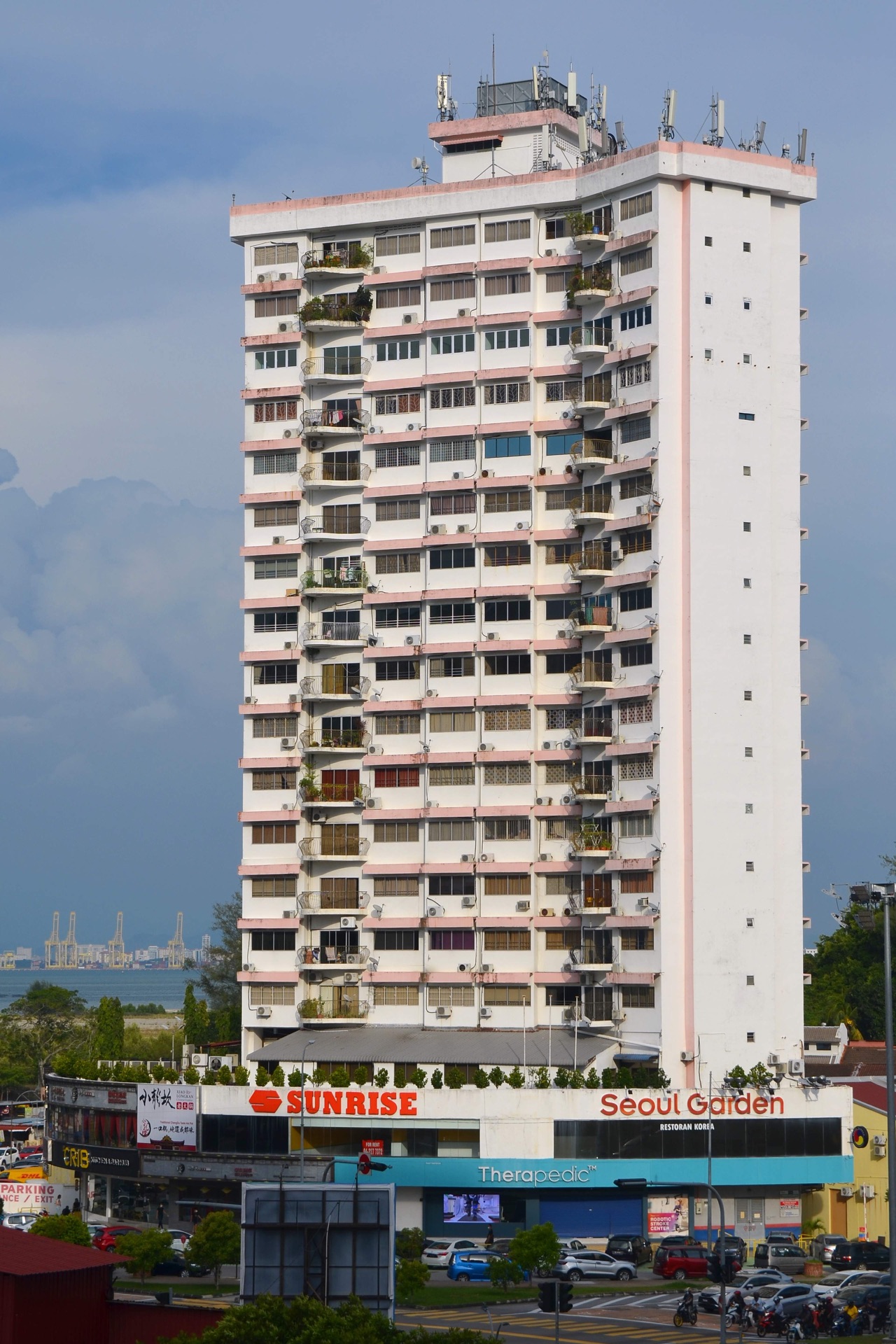
For an American couple with about USD 600,000 in the retirement pool, Penang trades one specific US pain point — Medicare's near-total non-coverage overseas — for a healthcare bill that runs roughly a fifth of the US equivalent for the same procedure. That trade is either the best move of your retirement or the worst, and it depends on one variable most Americans don't check first. This piece walks through the whole playbook honestly — MM2H, the property math, the US tax stack you never escape, where Americans actually live in Penang — and ends on the one variable.
Key takeaways:
- MM2H Gold in 2026 asks for a RM1,000,000 fixed deposit in a Malaysian bank plus a Malaysian property of at least RM1,000,000 (roughly USD 210,000 each at the mid-2026 rate near RM4.75 to the dollar), and issues a renewable 15-year visa.
- Medicare essentially does not follow you overseas. Budget USD 2,000–4,000 a year for a Penang-side health plan for a couple 65+, plus keep Medicare Part B alive if you visit the US.
- Your US tax stack does not go away — annual Form 1040, FBAR when foreign accounts exceed USD 10,000, and Form 8938 above USD 400,000 in foreign assets for a joint filer abroad.
- Penang Island's foreign floor is RM1,000,000 per unit. Foreign stamp duty is flat 8% from 1 January 2026, plus a 3% state levy on the island and roughly 1% legal — call the transaction cost 12% of the purchase price before you fund it.
- Malaysia itself has no estate or gift tax. Your US federal estate exposure is a separate question and it lives on the US side.
Why American retirees end up looking at Penang
Most Americans who reach out to me are not adventurers. They are careful people who did the math on staying in Phoenix, or the Villages, or a coastal-Carolina town, and did not like the answer. The number that pushes them is almost always medical. A domestic health event in your late sixties in the US can be a five-figure bill even with Medicare and a Medigap plan on top — deductibles, coinsurance, uncovered specialist care, dental, hearing, vision, long-term care.
Penang is not the only answer to that number. Portugal, Mexico, Ecuador, Vietnam all sit on the same shortlists. What Penang uniquely offers a US retiree is a stack: English as a working language of medicine and property law, weather in the 75–90°F band year-round, personal ownership of freehold property with a real title system inherited from the UK, JCI-accredited private hospitals within 30 minutes of most expat neighborhoods, and — the one people don't say out loud — a very small US immigrant footprint, which for some is a feature and for others is a bug.
The bug is real. Penang has a large British, Australian and MM2H expat community, and a much thinner American one. There is no US school district equivalent, no US-branded church denomination on every corner, no US-scale Costco run. If you want to move to a place with an existing American town-within-a-town, you probably want Lake Chapala in Mexico or Boquete in Panama. Penang is the answer for the American couple who is comfortable being one of a few dozen US retirees in the city.
The MM2H Gold reality — how a typical US retiree qualifies
The renewed MM2H programme runs in three tiers. Silver, Gold and Platinum. Gold is where most retired US couples land. It asks for a RM1,000,000 fixed deposit in a Malaysian bank plus purchase of Malaysian property of at least RM1,000,000, with those two locked for the tenure of the visa. In return you get a 15-year multiple-entry visa, renewable, and the right to bring a spouse and dependants.
At roughly RM4.75 to the US dollar in mid-2026, that is about USD 210,000 in a Malaysian fixed deposit and about USD 210,000 in property. So USD 420,000 in committed capital before closing costs, furniture and moving. Anyone selling you a version where you can do it on USD 200,000 total is quoting stale rules or the old programme.
A few things to watch:
The FD counts toward your Malaysia-side asset base for FBAR and Form 8938 reporting on the US side. That is not a problem — it is a compliance line you now have to check every year.
The FD rate on foreign-currency FDs in Malaysian banks is real, but it is Malaysian ringgit rate, not dollar rate. Do not model this as an equivalent US treasury. Model it as capital parked for the duration of your visa.
Verify the exact application requirements — proof of income, health screen, background check, agent quirks — with the MM2H One-Stop Centre before you commit. The programme has been retiered more than once in the last five years and the paperwork changes.
If your US net worth is well above the Gold requirement, Platinum exists — RM2M FD and RM2M property — and gives you a 20-year visa plus a route toward permanent residency. Most US retirees I meet don't need it.
The healthcare trade — real numbers vs US Medicare and employer plans
This is the section that matters most, so I'll walk it slowly.
Two hospitals do most of the work for expat residents on the north side of the island. Gleneagles Penang on Jalan Pangkor has held JCI Gold Seal accreditation since 2016 and runs about 380 beds. Island Hospital on Jalan Macalister is the largest private hospital on the island at about 600 beds. Both take walk-ins, both have English-speaking specialists, both are 20–35 minutes from Batu Ferringhi, Tanjung Bungah and Gurney Drive outside rush hour. Loh Guan Lye Specialists Centre at Pulau Tikus is the closest option for those living in Gurney or George Town proper.
Here is a rough procedure comparison. Malaysian numbers are typical private-pay bands quoted at the hospitals above in the last twelve months; US numbers are indicative retail equivalents before insurance. Confirm the live quote with the hospital before you plan around any specific figure.
| Procedure | Penang private (indicative) | US retail equivalent (indicative) |
|---|---|---|
| Annual physical + basic labs | ~USD 200 | USD 400–1,500 |
| Specialist consult | USD 20–50 | USD 200–450 |
| Cardiac catheterisation | ~USD 6,000 | USD 15,000–40,000 |
| Total hip replacement | ~USD 8,000 | USD 30,000–60,000 |
| Colonoscopy day case | USD 600–1,300 | USD 2,500–6,000 |
| A&E, non-critical, no admission | USD 55–130 | USD 500–2,500 |
Two honest lessons.
The Penang numbers are not free. They are cash prices at private hospitals. Public hospital care exists and is much cheaper, but expats almost never use it — the queues and the language mix are hard, and private care is affordable enough that no one bothers to try the public route.
Medicare essentially does not follow you here. Original Medicare (Parts A and B) covers overseas care only in a handful of narrow scenarios. A few Medicare Advantage plans and some Medigap plans include limited foreign emergency coverage, usually for the first 60 days of a trip and often with a lifetime cap. None of that is coverage for actually living here. The practical fix is a Penang-side expat health plan — AIA and Great Eastern's international products, Allianz Worldwide Care, MSIG, or a broker-arranged plan through Cigna Global or IMG. A retired couple both 65+ typically lands at USD 2,000–4,000 a year for hospitalisation cover with a modest deductible. Get quotes before you move, because underwriting after 70 gets tighter and more expensive.
Keep Medicare Part B alive if you visit the US even a few weeks a year. Dropping Part B and re-enrolling later comes with permanent premium penalties, and if you fly back for a serious procedure you will want it.
The tax compliance stack you cannot escape
The US taxes on citizenship. That does not change when you move. Every year of your life, if you keep the passport, you file a Form 1040.
Three lines to know:
Your Malaysia-side accounts get reported to the US Treasury via the FBAR — FinCEN Form 114 — if the aggregate exceeds USD 10,000 at any point in the year. The MM2H fixed deposit alone puts you over that. FBAR is separate from your tax return, filed to FinCEN by 15 April with an automatic extension to 15 October.
If your foreign financial assets exceed USD 200,000 single or USD 400,000 joint at year-end (living abroad thresholds), you also file Form 8938 with your 1040. Same accounts get reported twice, to two agencies, with slightly different rules. This is normal.
If you rent your Penang property out, Malaysia will tax the rental. As a non-resident individual owner (which is most retirees, unless you spend enough of the year here to become tax-resident) the rental is subject to a flat 30% Malaysian income tax after allowable deductions. You then report the same rental on your US 1040 and claim a foreign tax credit for what you paid to Malaysia, so you are not double-taxed but you do file twice. The US-Malaysia relationship is set up under the tax treaty and mutual reporting framework; a US cross-border CPA can walk this in ten minutes.
Malaysia does not tax your US Social Security, US pension distributions, US IRA withdrawals or US-source dividends. Those stay a US-side matter.
Do not use a US-only preparer. Find a CPA who does expat returns weekly. The cost is a few thousand dollars a year and the peace of mind is worth it.
Where American retirees actually live in Penang
Four neighborhoods do most of the housing for retired Westerners on the island. Each has a different daily rhythm.
Batu Ferringhi is the beach corridor. If your mental image of retirement is coffee on a balcony with the sea in view, sea swims, sunset walks and no traffic to speak of, this is it. It is 25 minutes from George Town and 30 minutes from either major private hospital. The trade is that the beach strip has maybe 20 restaurants and by month four you know them all. The area guide sits at Batu Ferringhi property guide.
Tanjung Bungah is the family and school corridor between Batu Ferringhi and Tanjung Tokong. Less resort, more suburban. Closer to hospitals, closer to international schools, less beach access. If you have grandchildren visiting for months at a time this is where they will actually want to be. See Tanjung Bungah property guide.
Gurney Drive and the Gurney corridor is the urban seafront — malls, walkable food, the Gurney Paragon and Gurney Plaza, direct hospital access, and the shortest hop into George Town. This is where the newer branded-residence towers are. Read Gurney Drive property guide.
Pulau Tikus and George Town proper is old-money urban Penang — heritage shophouses, colonial streets, the best hawker food density on the island, Loh Guan Lye across the road. It is not beach and it is louder than Batu Ferringhi. For a certain kind of retiree — reader, walker, food person — it is perfect. The pillar is at Pulau Tikus property guide.
Sit in each area for two weeks before you buy. Every American retiree I have helped in the last three years wrote down a shortlist that changed after they lived somewhere for a month.
Property options at USD 300,000 to USD 600,000
At mid-2026 exchange rates, USD 300,000 to USD 600,000 sits in the RM1.4 million to RM2.8 million band, which is exactly where most retired US couples land. Four projects I would put on a shortlist for a US retiree, verified from my project database as still active and available:
Ferringhi Pearl — a completed freehold condo on the Batu Ferringhi strip with sea-facing layouts and a low-rise density that suits older residents. Entry is around RM1.4 million, comfortably clearing the RM1 million foreign floor.
Waterstone — a newer freehold development in Tanjung Bungah, still selling in the primary market with modern layouts and hospital-corridor location. Entry from around RM1.29 million; foreign buyers will land above the floor once the 8% duty and 3% levy are added.
Codrington Residence — a completed freehold boutique block in Pulau Tikus, urban-heritage location, walk to hawker food and Loh Guan Lye. Entry from around RM1.4 million.
Marriott Residences — a completed branded-residence tower on the Gurney corridor, freehold, hotel-level services, priced from about RM1.6 million. If you want zero-friction service and can pay for it, this is one of the cleanest options.
Every one of these is foreign-buyer eligible above the RM1,000,000 island floor and available on the subsale or primary market as of writing. Prices change; call before you write a cheque.
Personal ownership vs a Sdn Bhd company — for retirees, usually personal
The question that keeps coming up: should I hold the property through a Malaysian company (a Sdn Bhd) instead of in my own name? A friend at the golf club in Florida says it saves tax. The answer for almost every American retiree is no, hold it personally.
Here is why. A Sdn Bhd used to hold your home is a fully separate legal entity with annual audit, secretarial fees, LHDN filings, corporate tax on any rental, and RPGT that floors at 10% and never drops to 5%. For a retiree who lives in the home and never rents it, the company gives you extra cost and paperwork every year for zero real benefit. You cannot mortgage as favourably. You cannot claim the primary-residence RPGT concession on exit that a personal owner can. You add a US tax problem — a Sdn Bhd is usually a controlled foreign corporation from the IRS's perspective and pulls you into GILTI territory, which is genuinely nasty for a US person. Almost no US retiree wants to touch that.
The company route makes sense for buyers building a rental portfolio of five-plus units, or for structuring a family office. For the couple buying one home to live in, it is the wrong answer.
Estate planning — no Malaysian estate tax, but the US side is real
Malaysia repealed its estate duty in November 1991 and has never brought it back. There is no gift tax either. When you die owning a condo in Penang, Malaysia takes no death tax from your estate.
The US side is different. As a US citizen your worldwide estate is subject to US federal estate tax above the lifetime exemption — USD 13.99 million per individual in 2025, and scheduled to drop by roughly half after 2025 unless Congress extends the current level. For most retirees that number is comfortably above their estate size and the point is moot. For estates near or above it, the Penang property counts in the US calculation, at fair market value on the date of death.
Even for smaller estates you need two wills — a Malaysian will covering the Malaysian property, and your US will covering everything else. Probating a US-only will over Malaysian real estate is slow and expensive. Both wills should be drafted together, or at least reviewed together, so they do not contradict each other. Talk to a Malaysian estate attorney (any of the mid-tier firms in Penang do this weekly) and coordinate with your US one.
The one variable Americans don't check first
Here is the payoff on the hook. The variable that determines whether Penang is the best move of your retirement or the worst is not the property, not the healthcare, not the tax stack.
It is how close you actually are to a JCI-accredited hospital, in minutes, at 2am on a Tuesday.
Every US retiree I have helped who has stayed lives within 30 minutes of Gleneagles Penang or Island Hospital in normal traffic and within 45 minutes at rush hour. Every one who left within two years — I know four — lived further out. One was in a beautiful hillside villa in the western hills where the ambulance takes 55 minutes on a good day. One was on the mainland in Batu Kawan, an hour and a bridge from either private hospital. One was in a lovely spot on Pulau Aman, an island off the mainland. All three were fine until the day they weren't. The fourth left for family reasons in the US and the property was not the issue.
You are moving here at an age where a middle-of-the-night event is not a hypothetical. The variable to check first is not the view. It is the drive time to the ER of a hospital that meets international standards, at the hour you'd actually need it. Sit in the passenger seat with someone driving you from the unit to Gleneagles at 8am on a weekday before you commit. If it's over 40 minutes, keep looking.
For comparison — three other posts worth reading
If you have not already, read the British retiree's first 12 months in Batu Ferringhi — the Medicare / NHS specifics differ, but the month-3 wobble is real for every Western retiree and worth being warned about. The Australian and Western buyer guide covers financing quirks for Western passports. The MM2H strategy playbook sits behind the visa math above. And if you want a live-in budget in ringgit, the RM10,000 monthly retirement ledger is where I put concrete numbers.
Sources
- MM2H current tiers: Malaysia Ministry of Tourism, Arts and Culture (MOTAC) MM2H programme page.
- Foreign-buyer floor and Penang state levy: Penang state government and the Penang Institute's foreign purchase policy summary.
- Stamp duty flat 8% for foreign buyers from 1 January 2026: Malaysia Budget 2026 speech and LHDN stamp duty schedule.
- Estate Duty Enactment 1941 repeal effective 1 November 1991: LHDN historical guidance and Malaysian legal commentary.
- JCI accreditation of Gleneagles Penang: Joint Commission International directory.
- Medicare overseas coverage rules: Medicare.gov travel coverage.
- FBAR: FinCEN Form 114.
- Form 8938: IRS instructions.
- Social Security payment abroad: SSA Payments Abroad Screening Tool.
Talk it through
If you're a US retiree looking hard at Penang, I'll walk through the specific version of the math that fits your pool, your visa route and your neighborhood shortlist — honestly, and without pushing a project. Message me on WhatsApp with a couple of lines about your situation and I'll get back to you in a day.
Disclaimer: I'm a licensed Malaysian real estate negotiator (REN 64593). Nothing here is US legal, tax or investment advice. For the US side — Medicare election, FBAR/Form 8938 filing, estate structuring — engage a US-licensed CPA and estate attorney. For the Malaysian side, engage a Malaysian conveyancing lawyer for the SPA and state consent, and confirm current MM2H terms with the MM2H One-Stop Centre. Exchange rates in this piece are indicative around RM4.75 to USD 1 in mid-2026 and move daily.