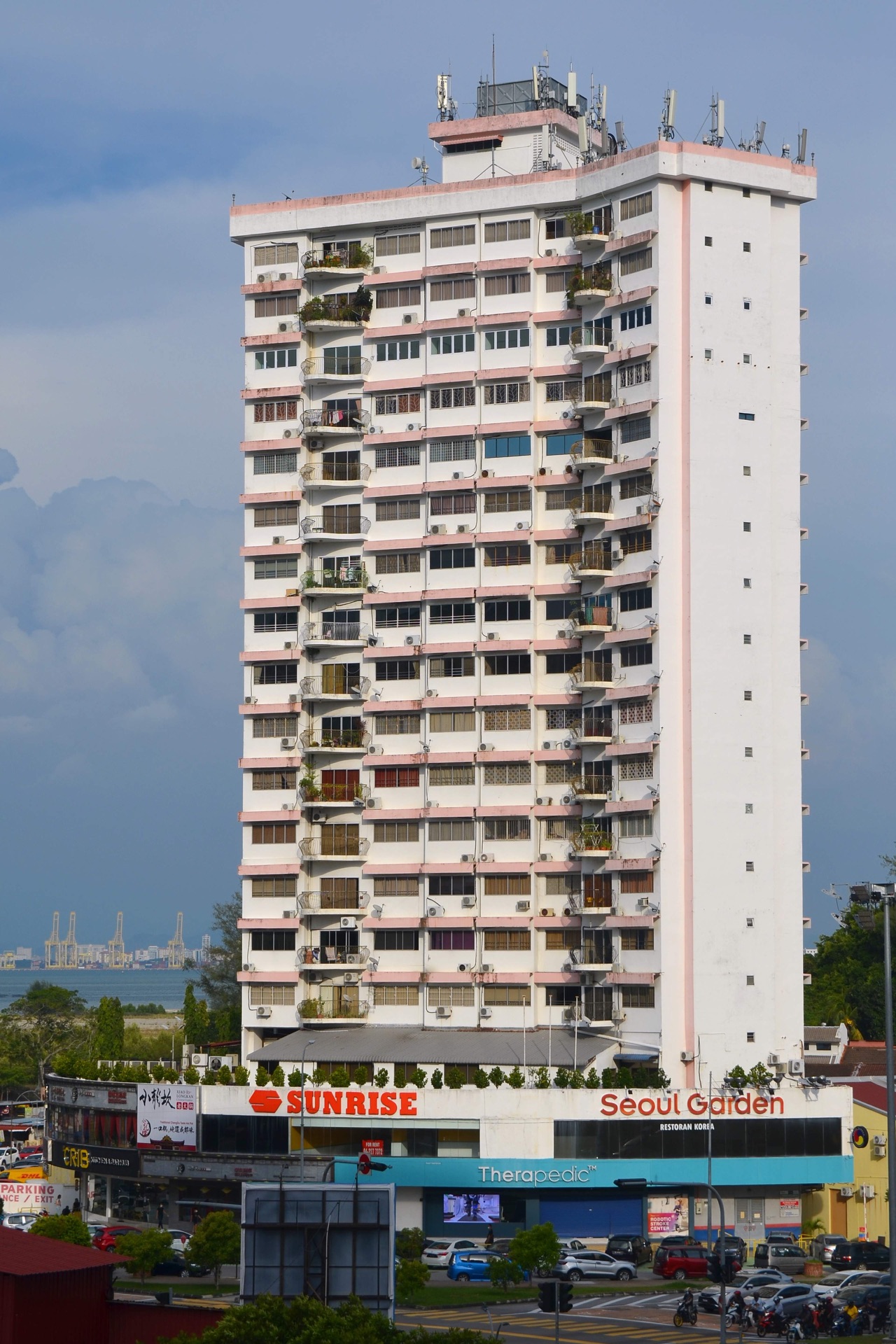
Yes. An Australian can buy freehold property in Penang outright — there is no FIRB equivalent, no approval board, no new-build-only rule. The floor is RM1,000,000 on the island (RM600,000 mainland), plus a 3% state levy (2% mainland), a flat 8% stamp duty, and state consent of 3–4 months. The question that starts most of these conversations is deceptively simple: what does my money actually buy here? When I walk an Australian or British buyer through the currency comparison, the reaction is usually some version of quiet surprise. Not because Penang is exotic or foreign — but because the gap in what the same money buys is genuinely striking.
Key takeaways:
- RM1,000,000 is roughly AUD 310–340K, GBP 175–195K, or USD 215–235K — that budget buys a freehold sea-view condo in Penang, versus a studio suburb flat in Sydney or a one-bed outer-London flat.
- Foreigners face a RM1,000,000 minimum purchase price on Penang Island, 70% maximum loan-to-value, and state consent on every purchase.
- Australians and British citizens get 90-day social visit pass access on entry, renewable by border exit and re-entry, without a formal visa.
- Malaysia has double taxation agreements with both Australia and the UK, generally crediting Malaysian tax (RPGT, rental income tax) against home-country tax owed.
- RPGT on exit is 30% within 5 years and 10% from year 6, with the buyer's solicitor retaining 7% of the sale price (3% is the rate for citizens) until the refund process clears.
The Currency Comparison That Changes the Conversation
Let's be direct about the numbers.
From Australia: At typical AUD/MYR exchange rates, RM1,000,000 is approximately AUD 310,000–340,000. In Sydney, that is a parking spot, or more precisely, a studio apartment in a suburb you've never heard of. In Melbourne, you're slightly better off, but not dramatically. In Penang, RM1M buys you a freehold condominium in the north island expat corridor — the equivalent of Paddington or Cremorne in terms of lifestyle access — with sea views, a swimming pool, gym, and 24-hour security. It is not even a close comparison.
From the UK: At GBP/MYR rates, RM1M is approximately GBP 175,000–195,000. That is enough to buy a one-bedroom flat in an outer London borough, or a small terraced house in a northern English city. In Penang, it is a freehold condominium with a sea view in the expat zone.
From the US: At USD/MYR rates, RM1M is approximately USD 215,000–235,000. In any major US coastal city, that is insufficient for anything useful. In Penang, freehold condo.
This is not an argument that Penang property is undervalued in absolute terms. It is an observation about what different currencies buy in different markets — and for buyers whose savings are denominated in AUD, GBP, or USD, the purchasing power comparison is genuinely compelling.
Why Western Buyers Come to Penang Specifically
Penang is not the only low-cost Southeast Asian destination. It is, however, the one that consistently shows up for Western buyers who are running a checklist that includes: English as a working language, functional Western-standard private healthcare, a food and cultural scene that does not feel like a resort hotel, and a legal system that is comprehensible and based on English common law principles.
Thailand is cheaper in some respects but does not allow foreigners to own freehold landed or condominium title in the same way. Indonesia has similar restrictions. Vietnam is frontier. Bali is lifestyle but lacks the healthcare infrastructure. Penang offers freehold ownership, a common law legal system, English-language hospitals, and an established expat community that has been here long enough to have figured out the systems. That combination is rare in Southeast Asia.
Who the Western Buyer in Penang Actually Is
From the enquiries I handle, the Western buyer profile breaks into three reasonably distinct types:
The lifestyle investor. Typically 45–60, has capacity to invest AUD 300–500K (or GBP/USD equivalent), wants a property they can use for extended stays (1–3 months per year) and rent out the rest of the time. The asset serves dual purposes: lifestyle access and partial income generation. Georgetown and Tanjung Tokong dominate this buyer's list.
The pre-retirement planner. 55–65, still professionally active, looking 3–5 years ahead. Wants to establish a property now while currency conversion is favourable and before any tightening of foreign buyer rules. Plans to transition to longer stays as work commitments reduce. Often seriously considers MM2H once they're closer to transitioning.
The adventurous retiree. 60+, actively looking to relocate or spend the majority of the year outside their home country. Healthcare access and cost of living are the primary filters. Has usually visited Penang multiple times and has specific preferences about where on the island to live.
Healthcare: The Deciding Factor for Retirees
For Australian and British buyers over 55, healthcare access typically moves to the top of the decision framework. The realistic picture:
Penang's private hospitals — Gleneagles, Penang Adventist, Pantai — provide quality care at a fraction of what Australians pay in the private system or what UK residents face in terms of NHS wait times for non-urgent treatment. Diagnostic imaging, specialist consultations, and surgical procedures are substantially cheaper, and English is the working language throughout. For most day-to-day and planned medical needs, Penang's private hospital network is genuinely excellent.
For very complex tertiary care, Penang hospitals sometimes refer to KL or Singapore. Most serious buyers factor in comprehensive international health insurance alongside this understanding. Annual international health insurance premiums for 60-year-olds in the Southeast Asia region range from roughly RM8,000–18,000 depending on coverage level — significantly less than equivalent private health insurance premiums in Australia.
Active Projects Suited to This Buyer Profile
For Australian and Western buyers looking in the RM1M+ range with a lifestyle or semi-retirement focus:
W Residence Gurney Bay — from RM2.37M freehold in Gurney Drive. International hotel brand, freehold title, Penang's most prestigious address strip. For Western buyers who want a premium lifestyle asset with immediate brand recognition and hotel-standard managed infrastructure, this is the top of the active new launch market.
Waterstone — from RM1.287M freehold in Tanjung Bungah, by BSG Property. Sea-facing freehold on Penang's beachside corridor. For Australian and British buyers specifically, the combination of beach proximity, freehold tenure, and a RM1.287M entry price in AUD/GBP terms is strikingly accessible compared to anything equivalent back home.
Crown Penang (entry units fall below the RM1,000,000 foreign-buyer minimum) — from RM704K freehold (commercial HDA title) in Tanjung Tokong. The expat corridor. International schools nearby, Straits Quay marina walkable. Foreign buyers look at the RM1M+ unit range. Established expat community makes long-term furnished rental straightforward.
Lumina Residence — from RM1.03M freehold in Georgetown, by VST Properties & BSG. Georgetown's food and culture is a genuine draw for Western buyers. Boutique, freehold, and above the foreign buyer threshold. For buyers who want a culturally rich urban address rather than a gated lifestyle precinct.
Run your numbers as a foreign buyer →70% LTV, Penang Island RM1M minimum — see what your budget realistically unlocks.What Australians and British Buyers Should Know About Tax
Malaysia-Australia DTA. Malaysia and Australia have a double taxation agreement. Broadly, this means taxes paid in Malaysia (RPGT, rental income taxes) are creditable against Australian tax obligations. The ATO requires disclosure of foreign property and income — maintain clear records from the start. Confirm the structure with an Australian accountant who handles foreign property.
Malaysia-UK DTA. The UK-Malaysia DTA is also in place, providing similar credits. RPGT paid in Malaysia interacts with UK CGT rules in ways that require qualified UK tax advice for your specific situation.
RPGT reminder. On exit, you pay 30% on gains if you sell within 5 years, 10% from year 6. Your buyer's solicitor retains 7% of the full sale price as a retention sum before proceeds are released (foreign sellers; the rate is 3% for Malaysian citizens) — the RPGT refund process if your actual liability is less than the retention takes months. Plan for this cash-flow timing.
Foreign Property Register. Both Australia and the UK require tax residents to disclose foreign property holdings. Make sure your accountant is aware of your Penang purchase from day one.
Sources: RM1,000,000 foreign-buyer minimum purchase price and state consent requirement, Penang state authority guidelines. RPGT rates (30% within 5 years, 10% from year 6) and the 7% solicitor retention sum for foreign sellers, LHDN (Inland Revenue Board of Malaysia). Project pricing (W Residence Gurney Bay, Waterstone, Crown Penang, Lumina Residence) per developer listings in our own project data at /new-launches/.
Zac’s Take
Zac Ong
Australian and British buyers are almost always surprised by what their money buys here. That surprise is usually followed by a practical question: what's the catch? The honest answer is: the catch is that it's not your home market, the legal system is different (though based on English common law), currency risk works both ways on exit, and the depth of the local market for resale is thinner than Sydney or London. Those are real trade-offs. But for buyers who come in with clear eyes on what they're getting — a lifestyle asset in a genuinely liveable city at a fraction of what it would cost back home — Penang tends to deliver. The ones who do best are the ones who've visited multiple times and know what they're buying, not just on paper.
If you're coming from Australia, the UK, or elsewhere in the Western world and want to understand what your budget buys in Penang right now — which projects, which areas, what the realistic process looks like — I'm happy to work through it with you. Reach out via WhatsApp and we'll start from the numbers.