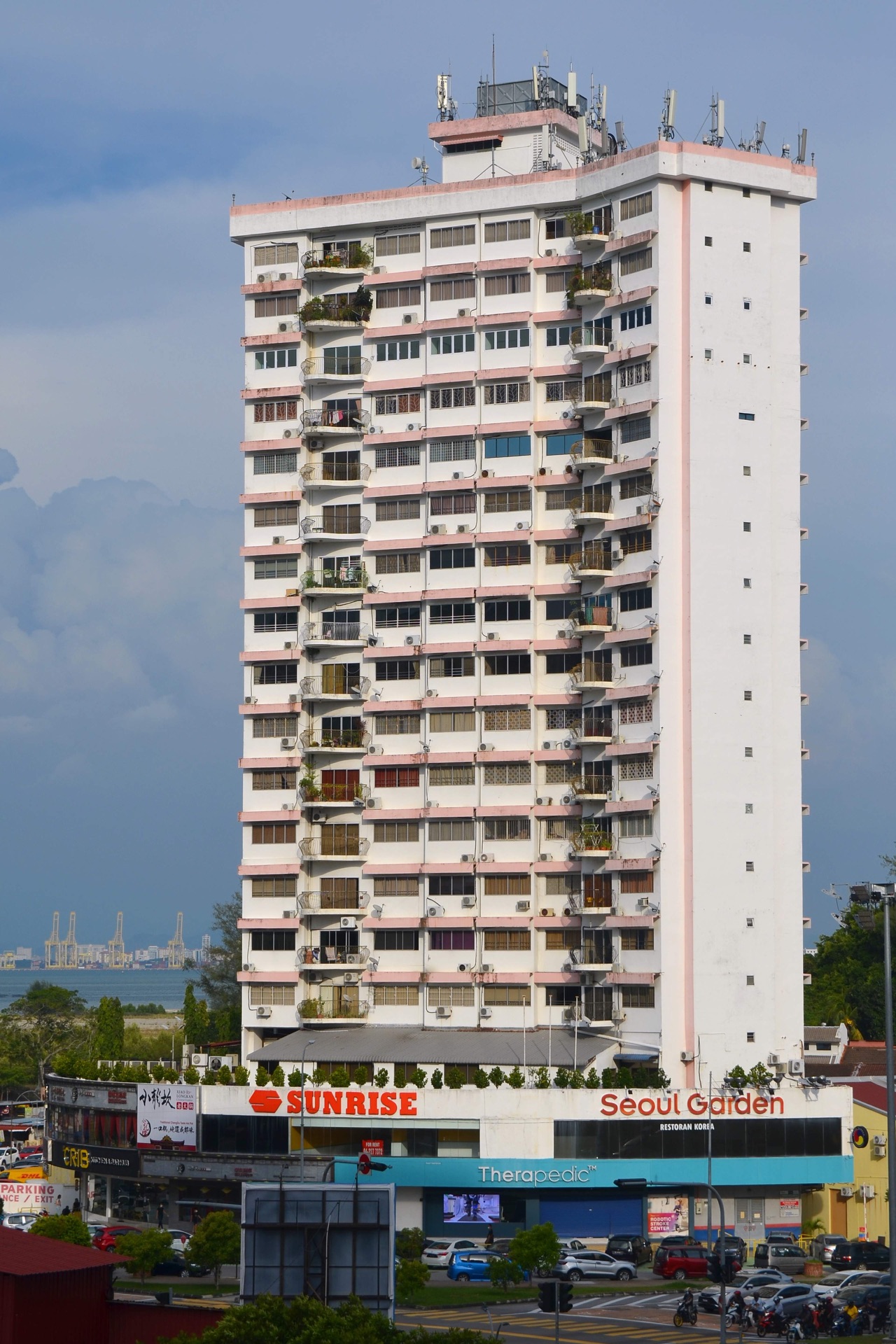
Petrol is now more expensive in Penang than many British retirees expect, the electricity bill depends almost entirely on your air-conditioning, and private health insurance can cost more than your groceries. And yet a retired couple who own their home here can still live comfortably on roughly half of what the same life costs in the UK. Both things are true, and a realistic budget needs both.
This is a line-by-line monthly budget for a UK couple living in a premium condo on Penang Island, converted at roughly RM5.45 to the pound (the late-September 2026 rate). It assumes you own the home outright, which is also how the UK benchmark below is calculated.
Key takeaways: A comfortable life in Penang for a homeowning couple costs roughly RM8,000–13,000 a month, about £1,500–2,400. The UK's own benchmark for a comfortable retirement for a homeowning couple is about £5,050 a month. The biggest savings are food, help at home and property running costs. The two items to plan carefully are health insurance and, if you drive, unsubsidised petrol.
The UK benchmark
To compare like with like, it helps to start with the UK figures. The Pensions and Lifetime Savings Association's 2025 Retirement Living Standards put the after-tax cost of a moderate retirement for a homeowning couple at £43,900 a year, about £3,660 a month, and a comfortable retirement at £60,600 a year, about £5,050 a month.
Those numbers include holidays, running a car and eating out. The Penang budget below is built to deliver roughly the comfortable version of that life: a good home, a car or regular taxis, eating out several times a week, help with cleaning, and travel.
A monthly budget for a UK couple in Penang
These are typical ranges for a couple in a 1,400–2,000 sq ft condo in Tanjung Bungah, Tanjung Tokong, Gurney or Pulau Tikus. Your own numbers will depend on the building and on how you live.
| Item | RM per month | £ per month (at 5.45) |
|---|---|---|
| Condo maintenance and sinking fund | 700–1,100 | 130–200 |
| Assessment and quit rent (annual, spread) | 150–250 | 30–45 |
| Electricity, water, internet, two phones | 450–900 | 85–165 |
| Groceries | 1,500–2,500 | 275–460 |
| Eating out | 1,200–2,500 | 220–460 |
| Car (fuel, insurance, servicing) or Grab | 700–1,300 | 130–240 |
| Private health insurance (couple, 60s) | 1,000–3,000 | 185–550 |
| Part-time cleaner | 400–800 | 75–145 |
| Leisure, clubs, golf, local trips | 500–1,200 | 90–220 |
| Total | about 6,600–13,550 | about 1,200–2,500 |
A couple living simply, eating mostly local food, with a basic health plan and no car, can sit near the bottom of that range. A couple who eat at Western restaurants often, keep a car, travel around the region and choose an international health plan will sit near the top.
Flights home are extra. If you plan one or two trips back to the UK a year, set aside a separate travel budget; it's the line most likely to be underestimated.
Where you save
Food is the obvious one. Penang's hawker food, cooked at street stalls and food courts, is among the best in Asia, and a good local meal for two costs a fraction of a UK pub lunch. Western food, imported cheese and wine are a different matter; they cost as much as at home or more, which is why the grocery and eating-out ranges are wide.
Running your home is cheaper too. Service charges for a high-end condo usually run about RM0.45–0.60 per square foot a month, plus a sinking fund (a savings pot for major repairs) of at least 10% of that charge, so a 1,600 sq ft apartment typically costs RM800–1,050 a month for pool, gym, security, landscaping and building upkeep. Water in Penang is very cheap. There's no council tax as such, just two modest annual bills: assessment, paid to the city council, and quit rent, a small land charge paid to the state.
Help at home is affordable. A part-time cleaner a couple of times a week is normal here rather than a luxury.
Where Brits get caught out
Petrol. Since September 2025, subsidised RON95 at RM1.99 a litre has been limited to Malaysian citizens under the BUDI95 scheme. Everyone else pays the unsubsidised price, which moves weekly and stood at RM4.52 a litre in the first week of October 2026. That's still cheaper than UK petrol, but it's more than double what your Malaysian neighbours pay, and it's the number most out-of-date guides get wrong. Many retirees on the northern coast use Grab, the local equivalent of Uber, for most trips and keep a small car for the rest.
Electricity. It depends almost entirely on air-conditioning. Run it in the bedrooms at night and you'll pay far less than running it all day in a large apartment.
Health insurance. This is the line that grows. Premiums rise with age, pre-existing conditions may be excluded, and many plans stop accepting new members at around 70–75. The figure in the table is a planning range for a couple in their sixties; get real quotes before you move.
The frozen State Pension. Malaysia is one of the countries where the UK State Pension isn't uprated. Your costs here will rise with inflation; that part of your income won't. Over fifteen or twenty years, that slowly eats into the gap between Penang and UK living costs.
Currency. Every pound you bring in buys more or fewer ringgit from month to month. In September 2026 alone, the rate ranged from about RM5.39 to RM5.51.
How your home choice changes the budget
Where you buy shapes your monthly spending more than most people expect.
A large condo with resort-style facilities costs more in service charges but replaces a gym membership and a pool. A hillside location like Alila 2, Waterstone or Mira Residence in Tanjung Bungah is quieter and has more space for the money, but means more driving. Alila 2 is worth noting here: its service charge is about RM0.30 per square foot, well below many newer luxury condos, despite its extensive gardens. A walkable base in Pulau Tikus such as Codrington Residence cuts transport costs and puts the hospitals close by. At Straits Quay, Andaman @ Quayside puts restaurants, the supermarket and the marina within walking distance.
For a ringgit-level breakdown from a Malaysian angle, see the RM10,000-a-month retirement ledger. For what each budget buys, see what £500K, £750K and £1M buy in Penang, and for the visa, pension and healthcare side, retiring to Penang from the UK.
If you'd like to talk through what a home in a particular building will cost you to run, message me on WhatsApp below. I'm Zac Ong (REN 64593, PropNex Penang).
Sources
UK benchmarks from the PLSA Retirement Living Standards 2025. Fuel prices from the Ministry of Finance's weekly announcement for 1–7 October 2026 and the September 2025 BUDI95 launch. Condo maintenance ranges and the 10% sinking fund minimum from Malaysian property guides citing the Strata Management Act 2013. Living-cost ranges cross-checked against 2026 expatriate cost-of-living guides for Penang; exchange rate from September 2026 GBP/MYR history. Health insurance ranges are planning estimates and vary widely by insurer, age and plan.