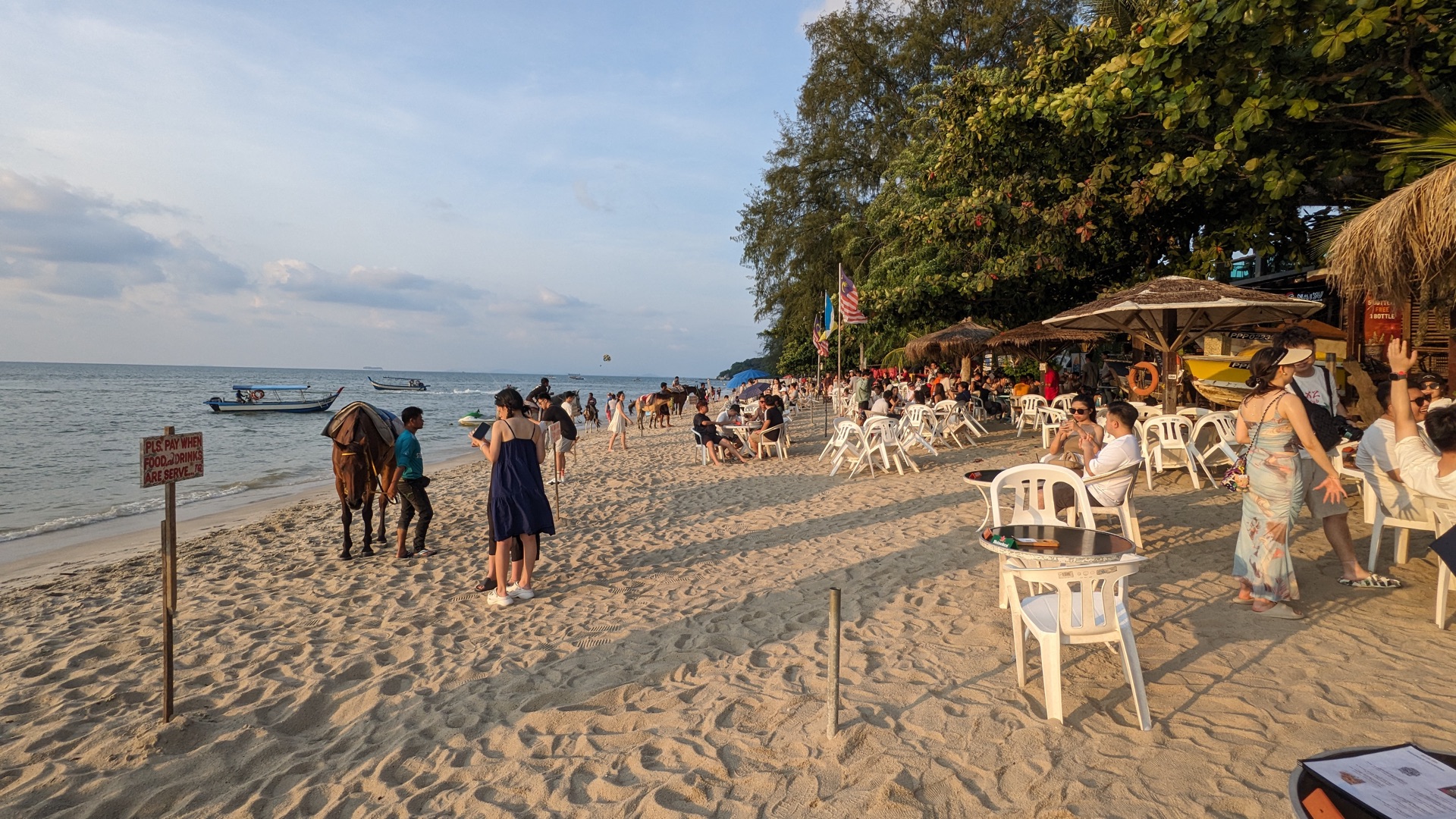
Specific types of retirement arrive at Batu Ferringhi for specific reasons. The couple who've spent 30 years in Hong Kong's density and want sea, warmth and space. The Singapore engineer who's done 25 years of HDB and condo life and wants a beach for the next 20. The expat retiree whose working life was in Southeast Asia and who wants to stay in the region close to family in Singapore or Hong Kong. These profiles share more than they differ, and Batu Ferringhi fits specific parts of what they want very well. Other parts it doesn't fit as cleanly. This walks through both.
Why retirees from Singapore and Hong Kong actually choose Batu Ferringhi
Climate and lifestyle shift. Singapore and Hong Kong daily life is urban, dense, high-pace. Batu Ferringhi is coastal, residential, slower-tempo. For retirees who've spent decades in the former and want the latter, Batu Ferringhi delivers that shift without requiring a bigger relocation (Thailand, Bali) or a weather compromise (temperate retirement destinations).
Flight distance to home city stays manageable. Singapore is 1 hour 20 minutes direct from Penang International Airport. Hong Kong is roughly 4 hours. These are practical distances for family visits — grandparents can see grandchildren for weekends; children can visit for school holidays without a major travel commitment. Many retirees find this flight-distance equation is what tips the decision versus more remote retirement destinations.
Cost of living reduction is substantial. A couple spending RM32-45K monthly for comfortable Singapore retirement or roughly similar in Hong Kong terms can live comfortably at Batu Ferringhi for RM12-18K monthly. The biggest savings are housing (particularly after purchase), food, domestic help, and routine transport. Private healthcare, international travel and some premium categories (specific wines, imported brands) are closer to equal.
Chinese-speaking community and food. Penang's Chinese community is established enough that daily life in Mandarin or Hokkien is comfortable for retirees who came up in those languages. Food — particularly Hokkien and Teochew traditions — is strong. This is a noticeably easier soft integration than, say, Bali or Phuket for the same retiree profile.
No inheritance tax on Malaysian property. For retirees thinking about multi-decade asset planning, Malaysia's zero-inheritance-tax structure on property is a structural advantage versus Singapore (no estate duty but complex rules) or Hong Kong (no estate duty but subject to future policy shifts). Property held through to the next generation transfers cleanly.
The honest downsides most retirees underweight
Healthcare is nearby but not walking distance. Penang's private medical cluster (Island Hospital, Gleneagles, Loh Guan Lye Specialists Centre) is in Pulau Tikus, 25-35 minutes' drive from Batu Ferringhi. For retirees in their 60s with occasional specialist appointments, this is tolerable. For retirees in their late 70s or 80s with frequent medical needs or mobility considerations, the daily drive-plus-parking logistics add up.
Pulau Tikus condos sit within walking distance (literally 5-15 minutes on foot) of these hospitals. If walkable healthcare matters more than beach lifestyle at your current age, Pulau Tikus is a better area fit than Batu Ferringhi.
Urban density is deliberately absent. The thing you liked about living in Singapore's downtown or Hong Kong's density — street-level cafes, walkable retail, 24-hour conveniences a block away — doesn't exist at Batu Ferringhi. The strip has local F&B and the beach amenity, but the vibrant urban daily rhythm is not what you get. Retirees who miss this find themselves driving to Georgetown weekly for the pattern.
Driving dependence. Daily life at Batu Ferringhi involves more time in a car than life in Singapore or Hong Kong involved on public transport. Groceries beyond local Mydin or Giant require Tanjung Tokong or Pulau Tikus. Serious F&B and cafe culture are in Georgetown. Specialist medical is in Pulau Tikus. International school runs (if grandchildren attend) are up at Uplands. Over a 10-15 year retirement, this driving reality shapes daily life more than most buyers model at purchase.
Community turnover. Batu Ferringhi's expat retiree community is real but smaller than Pulau Tikus or Gurney's. Social integration takes deliberate effort — fewer existing networks of Singapore or Hong Kong retirees than you'd find in some of Penang's more established expat enclaves.
Which Batu Ferringhi property fits which retiree profile
Active beach-lifestyle retiree couple: By The Sea @ Batu Ferringhi. Direct beachfront access, 138 units with mixed demographics (younger buyers plus retirees), from RM1M+ foreign-eligible layouts. Daily beach walks become routine; morning swims before coffee are the lifestyle this product enables.
Boutique-preferring couple downsizing from Hong Kong luxury: Moonlight Bay. 90 units, boutique residential feel, Ivory Properties track record, from RM1.49M. The quieter daily building character matches retirees used to boutique residential rather than mass-tower density.
A note on landed homes. Batu Ferringhi's boutique landed enclaves (Pearl Residences, Ferringhi Pearl, La Ferringhi) are lovely, but most units trade between roughly RM1.3M and RM2.5M. Penang Island's minimum for a foreign buyer of landed property is RM3M, but MM2H participants can buy from RM500,000. So for a Singapore or Hong Kong retiree on MM2H, which most full-time retirees will be, these enclaves are open. Without MM2H, the realistic options with a garden are the gated villa clusters at Seri Tanjung Pinang near Straits Quay, from about RM3.2M.
Retirees prioritising ground-floor accessibility for mobility: By The Sea ground-floor units (direct beach-level access, no lift dependency), or a large low-floor unit at Moonlight Bay where the lift ride is short and the pool deck is level.
Retirees still considering: Pulau Tikus area instead. Honestly worth considering for retirees in late 70s or 80s. Codrington Residence, Moulmein Rise, The Anton and the upcoming Cantonment Residence are the Pulau Tikus options at similar ticket. Trade: no beach, walking-distance hospitals, denser urban character. For the health-forward retiree profile, this is often the better match.
MM2H integration for Singapore and Hong Kong retirees
The current Malaysia My Second Home framework has three tiers. For retirees from Singapore or Hong Kong, the relevant tiers are:
MM2H Gold (USD500,000 fixed deposit, minimum RM1M property, 15-year pass). The property leg can be your Batu Ferringhi purchase above RM1M. The fixed deposit sits with a Malaysian bank in the applicant's name, and part of it can be drawn down after approval for approved purposes such as the property purchase. For many Singapore and Hong Kong retiree couples, this is the standard pathway.
MM2H Silver (USD150,000 fixed deposit, minimum RM600K property, 5-year pass). The Silver tier requires a property of at least RM600K, and Penang's own minimum for MM2H participants is lower, at RM500K, so a Silver holder can buy in Batu Ferringhi from RM600K, condo or landed.
MM2H Platinum (USD1,000,000 fixed deposit, minimum RM2M property, 20-year pass). The RM2M property leg comfortably clears the island floor for a condo. Platinum tier is aimed at retirees doing serious long-horizon planning and bringing substantial assets.
For Singapore or Hong Kong retiree couples, Gold is usually the right tier. Full sequencing: MM2H 2026 property buying playbook.
Rough monthly budget for a comfortable Batu Ferringhi retirement couple
Running example for a couple used to a comfortable urban Singapore or Hong Kong lifestyle, after property purchase is complete:
| Category | Monthly RM |
|---|---|
| Property running cost (JMC fees, utilities, assessment on owned property) | 2,500-4,000 |
| Food (local + occasional restaurant + weekly supermarket) | 2,500-3,500 |
| Transport (fuel, car service, occasional ride-hailing) | 800-1,500 |
| Domestic help (part-time cleaner + occasional helper) | 1,500-2,500 |
| Private healthcare + insurance | 1,500-3,000 |
| Entertainment, hobbies, personal | 1,500-2,500 |
| Travel and visits home (annualised) | 1,500-2,500 |
| Total monthly | ~RM12,000-18,000 |
Versus Singapore equivalent (SGD9,000-13,000 per month = RM32-45K equivalent) or Hong Kong equivalent (HKD55,000-80,000 per month = RM30-45K equivalent). The RM18-27K monthly saving represents meaningful real purchasing power or spending headroom.
Add property purchase costs (12-13% of price for foreign buyers upfront) and one-off relocation costs in year 1 — these are sunk costs that amortise over the retirement duration.
What deserves harder thought before you move
Visit for 2-3 months before you buy. Rent a Batu Ferringhi condo for a season before committing to purchase. The ownership decision shouldn't be made on a 2-week viewing trip. The lifestyle fit either resonates or it doesn't, and 2-3 months of actual living reveals the answer more than any pre-trip planning.
Think about ageing in place over 10-15 years. The condo you buy at 65 may need to work at 75 or 80. Mobility considerations (lift access, pool deck accessibility, unit-by-unit layout) matter more than most buyers model at purchase. Low-floor units with level access to the pool deck and lobby age better than high-floor stock for mobility.
Have a Plan B for serious healthcare needs. Penang's private healthcare is high quality for routine and most specialist care. For specific complex procedures (specialist cancer treatment, cardiac interventions beyond the local scope), some retirees fly to Singapore for a weekend of care rather than treat locally. Factor this in your private healthcare insurance planning.
Keep enough liquidity for optionality. Retirees who put all their capital into Malaysian property lose some optionality for subsequent life decisions (moving back for care, consolidating property into fewer assets, funding major unexpected costs). A property + liquid asset allocation balance that preserves 2-3 years of living expenses outside the illiquid property is sensible.
Zac’s Take
Zac Ong
Batu Ferringhi for Singapore or Hong Kong retirees works for climate-and-lifestyle-shift retirees who want beach, warmth, cost reduction, and keep flight distance to home city manageable. Monthly cost runs RM12-18K for a comfortable couple versus RM30-45K equivalent in SG or HK. The specific trade is driving dependence (healthcare 25-35 min, Georgetown 25-30 min, groceries 15 min — all drives), less urban density than SG or HK provides, and smaller established SG/HK retiree networks than Pulau Tikus or Gurney area. For active beach-lifestyle retirees: By The Sea or Moonlight Bay. For boutique-preferring couples: Moonlight Bay. Foreign retirees on MM2H can buy the Batu Ferringhi landed enclaves from RM500,000; without MM2H, landed homes on the island need RM3M+. For health-forward retirees in late 70s or 80s: consider Pulau Tikus instead for walking-distance medical access. Rent 2-3 months before buying to confirm the lifestyle fit.
Where to go from here
Send me on WhatsApp your current age, whether you're a couple or single retiree, how often family will visit, and whether you want beach-lifestyle-active or boutique-residential daily feel. Those four inputs filter the Batu Ferringhi shortlist down to 1-2 specific projects. If MM2H is on your pathway, mention which tier you're aiming for.
Broader reads: Best condos in Batu Ferringhi 2026 for the ranked area shortlist, Batu Ferringhi property guide 2026 for the full area read, Buying Batu Ferringhi property as a foreigner step-by-step 2026 for the process, MM2H 2026 property buying playbook for residency sequencing, Pulau Tikus property guide 2026 if walkable healthcare matters more than beach access.
Sources: Cost-of-living comparisons based on 2026 Singapore and Hong Kong public price indices and Zac Ong's on-the-ground Batu Ferringhi transaction experience. MM2H framework per Ministry of Tourism, Arts and Culture (MOTAC) 2026 guidelines. Foreign-buyer rules per Penang state policy and Malaysia's Budget 2026. Private healthcare pricing based on published consultation rates at Island Hospital, Gleneagles and Loh Guan Lye Specialists Centre. Prices change often, so ask for the current figure on the home before you make an offer.