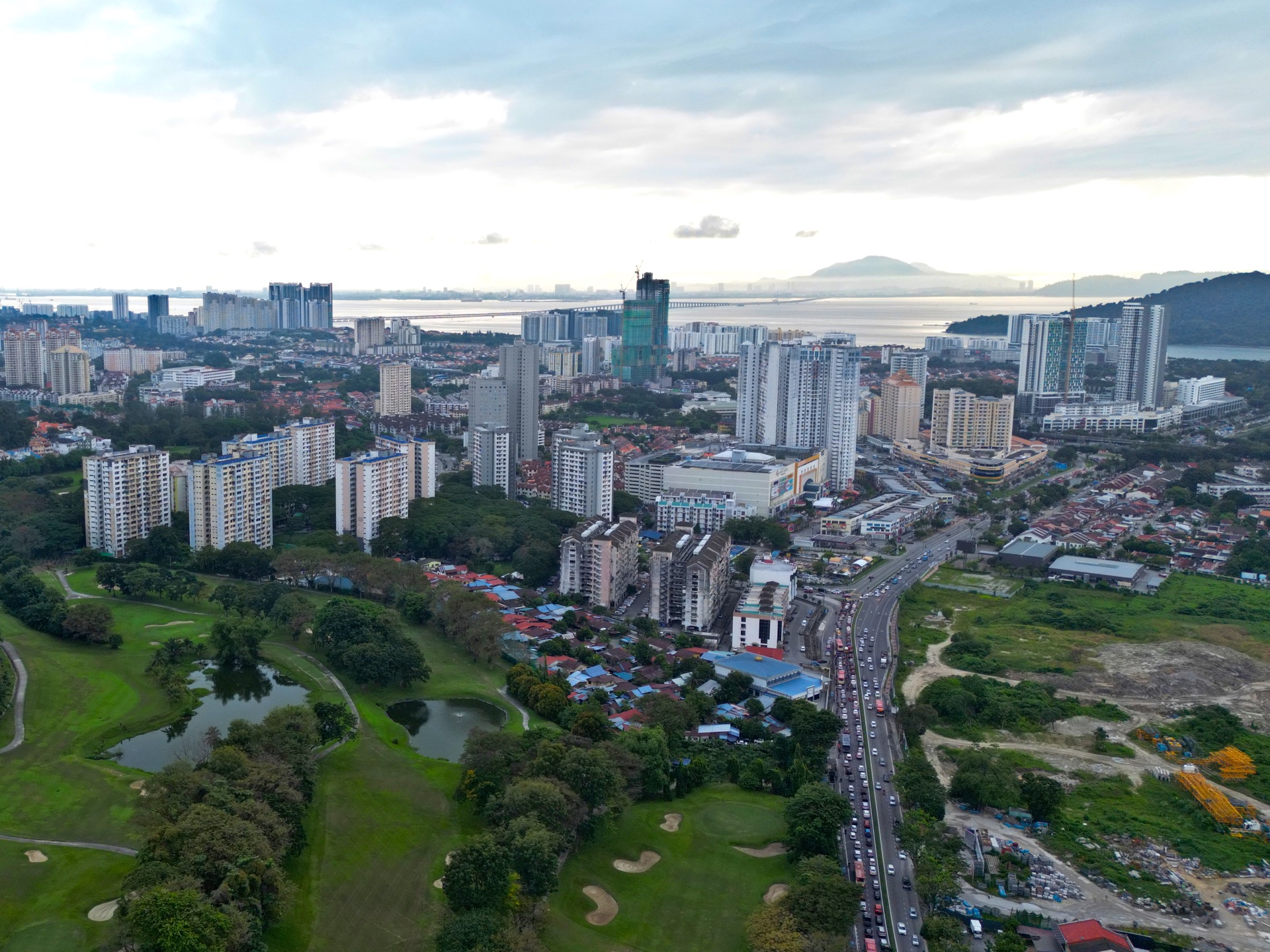
Malaysia's residential overhang reached 32,801 completed unsold units worth about RM16.37 billion in the first quarter of 2026 — the sixth consecutive quarterly increase. Penang holds 3,165 of them, the fifth highest of any state, and 16% more than a year ago.
Most agents will not show you this number. I think that is exactly backwards: an overhang figure is not a reason to avoid a market, it is a map of where supply has run ahead of demand — and in Penang that map is far more specific than "the market is oversupplied." Read properly, it tells you which buildings to negotiate hard on and which to leave alone.
Key takeaways:
- 3,165 completed unsold units in Penang, Q1 2026 — 5th nationally, up 16% year-on-year.
- About 70% are condominiums and apartments — roughly 2,215 units.
- The glut is in RM200,000–400,000 stock, not luxury: 708 units in the RM200–300k band, 412 in RM300–400k.
- Nationally, units rose 7.6% quarter-on-quarter while total value fell 7.7% — cheaper stock accumulating, prices being trimmed.
- This is a band-specific condition, not a Penang-wide one. Treat it as leverage, not as a warning.
What "Overhang" Actually Means
The term gets used loosely, so let me be precise, because the definition is what gives the number its weight.
NAPIC counts a unit as overhang on three tests together: the development has its Certificate of Completion and Compliance, no sale and purchase agreement has been executed for the unit, and it has stayed unsold more than nine months. That is a much harder signal than "unsold under construction." The building exists. The developer is carrying it. Maintenance, assessment and financing costs are running against an empty unit every month it sits.
Which is why an overhang figure moves prices in a way a launch-stage sales rate does not. A developer with a half-sold tower still under construction has options. A developer with 200 completed empty units has a problem, and problems get discounted.
Where Penang's 3,165 Units Actually Sit
Here is the part that reframes the whole story.
| Segment | Units |
|---|---|
| Condominiums & apartments | ~2,215 (about 70%) |
| Landed & flats | ~950 (about 30%) |
| RM200,001–300,000 | 708 — the single largest band |
| RM300,001–400,000 | 412 |
The popular assumption is that an overhang means luxury towers sitting empty. In Penang, the opposite is true: the concentration is in affordable and mass-market high-rise. More than a thousand of the state's unsold completed units are priced under RM400,000.
That should not be surprising once you look at what has been built. Penang Island alone has a long list of completed high-rise projects in that band running to four figures of units in a single scheme — and when several of those complete within a few years of each other, aimed at the same buyer with the same budget, some of that stock is going to sit.
For the national picture, the value detail is the tell: units up 7.6% quarter-on-quarter, total value down 7.7%. Both moving at once means the new additions to the overhang are cheaper than the existing pile, and that developers are marking prices down on paper to shift it.
The Good Side of a Bad Number
If you are buying in the oversupplied band, this is the most favourable negotiating position Penang has offered in years, and I would use it.
Developer stock has a holding cost. A completed unsold unit is a monthly bleed. That is precisely the seller who entertains a serious offer, throws in the fit-out, absorbs legal fees, or moves on price in a way a hot launch never will.
You can inspect what you are buying. Overhang stock is completed by definition. No renders, no delivery risk, no four-year wait — you stand in the actual unit, on the actual floor, and check the actual view before paying.
Competition works for you. When several nearby buildings hold unsold stock in the same price band, you are not choosing between one developer's terms and nothing. You are running an auction in reverse.
And it disciplines new supply. Six consecutive quarters of national increase is exactly the signal that slows launch pipelines. That is uncomfortable for developers and healthy for anyone who already owns.
The Bad Side, Stated Plainly
If you own in that band, your exit is crowded. This is the honest cost, and it lands on ordinary owners, not developers. When you sell a 900 sqft unit in a 1,200-unit building, you compete with your own neighbours and with a developer next door discounting completed stock. Price is the only lever most sellers have left.
Rents follow supply. Excess stock does not sit empty forever — much of it ends up let. That caps rental growth in the same band, which is why I keep telling investors in mass-market high-rise to underwrite on today's rent rather than a projected one.
And discounting is not always a bargain. A unit discounted because the developer needs it gone is a genuine opportunity. A unit cheap because the building is poorly located, badly managed or crushed by density is cheap for a reason that will still be true when you sell. Those two look identical in a price list.
How to Tell Which Is Which
Three checks separate a genuine overhang bargain from a value trap. None of them requires the NAPIC data — they require looking at the specific building.
One: how many identical units are there? This is the single most useful question at this end of the market, and it is why our reviews lead with unit counts. A 2,685-unit scheme built around a single repeated layout — One Foresta is the clearest example on the island — means your unit is never distinctive on the way out. A 300-unit building in the same band is a completely different asset. Taman Skyridge at 306 units and Granito @ Permai at 980 sit either side of that line and it shows.
Two: is the discount about the market or the building? Compare the asking price against other units in the same building first, then against the area. A unit priced below its own neighbours has a unit-specific problem. A whole building priced below its area has an area or management problem. Only a building priced with its peers, in an area holding its level, is a clean market discount.
Three: what does the management account look like? In a building with unsold stock and heavy investor ownership, maintenance arrears are the risk nobody prices. Ask for the accounts and the sinking-fund balance before you offer — a cheap unit in a building with a funding hole is not cheap.
What I Would Do Right Now
If you are buying under RM400,000 on the island: the data is on your side. Negotiate properly, insist on seeing the management accounts, and weight density heavily in the decision. Two units at the same price in the same area are not the same purchase if one sits in a 2,700-unit scheme and the other in a 300-unit block.
If you are selling in that band: price against reality, not against what you paid. Your competition includes a developer with completed stock and a holding cost, and they will move before you do. Presentation and a defensible floor or facing are worth more than holding out for last year's number — that is the conversation I have most often, and the honest version of it starts with this data.
If you are buying above RM1 million or in genuinely scarce stock: this number is close to irrelevant to you. The overhang is not in low-density seafront, landed, or the branded tier. Different market, different arithmetic — the luxury picks sit outside this entirely.
And if you are an investor: run the yield on today's rent in the actual building, not the area average, and treat the overhang as a cap on rental growth in that band for the next few years. The yield calculator will tell you the truth faster than any projection.
Want to know whether a specific building sits in the oversupplied band — and whether its discount is opportunity or warning? Send me the project and I will give you the density, the band and the honest read.
Sources: Overhang counts, national totals, state rankings and price-band distribution from the National Property Information Centre (NAPIC) Property Market Status Report, Q1 2026, as reported by Penang Property Talk and corroborated by IQI Global's NAPIC Q1 2026 analysis. Penang: 3,165 units, 5th nationally, up 16% from 2,729 in Q1 2025; national total 32,801 units / ~RM16.37 billion, the sixth consecutive quarterly increase; quarter-on-quarter units +7.6% against total value −7.7%. Penang segment split (~70% condominium/apartment) and price bands (708 units RM200,001–300,000; 412 units RM300,001–400,000) per the same report. Project unit counts and prices from our own tracked records. NAPIC data is published quarterly and revised — confirm the latest release before acting on it.