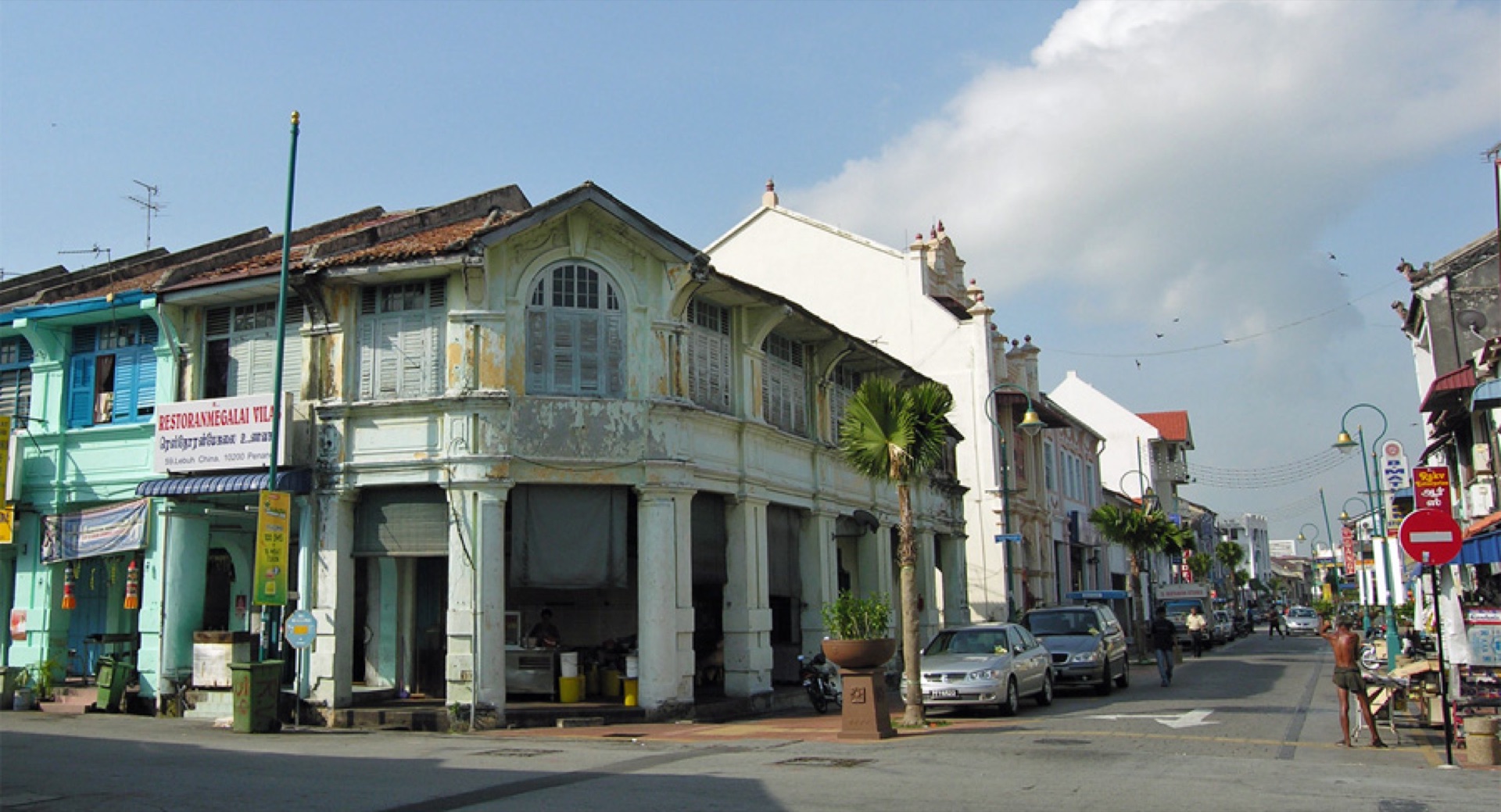
Georgetown and Bayan Lepas are at opposite ends of Penang Island — geographically, culturally, and investment-case-wise. Georgetown is the heritage UNESCO core with heavy tourism and cultural texture. Bayan Lepas is the tech belt with FIZ industrial and semiconductor employment. Buyers comparing them are typically choosing between two fundamentally different investment strategies.
Here's the honest comparison.
Key takeaways:
- Georgetown new launches run RM850–1,500 PSF vs Bayan Lepas's RM430–1,300 PSF — Bayan Lepas buys noticeably more square footage per Ringgit.
- Long-term yields are similar (roughly 3–4.5% gross in both); Georgetown's range is wider because of short-stay units, but short stays need a licensable property type, a 75% management-body vote and a council licence.
- Georgetown is Penang's strongest STR/Airbnb market on the back of UNESCO heritage tourism; Bayan Lepas is a functional long-term rental market for tech-area tenants.
- The planned Penang LRT Mutiara Line runs through Bayan Lepas's tech belt with proposed FIZ-adjacent stations; Georgetown's LRT proximity is limited.
- The foreign buyer minimum purchase price is RM1,000,000 in both areas.
At a Glance
| Metric | Georgetown 2026 | Bayan Lepas 2026 |
|---|---|---|
| New launch PSF | RM850–1,500 | RM430–1,300 |
| Sub-sale median PSF | RM500–950 | RM400–650 |
| Gross rental yield | Roughly 3–4.5% long-term | Roughly 3.5–4.5% |
| Primary demand driver | UNESCO heritage tourism, academic, medical | FIZ tech belt employment |
| Tenure profile | Mixed (freehold + leasehold heritage) | Mixed (freehold + commercial-title leasehold) |
| LRT proximity | Limited | Direct (Mutiara Line planned stations) |
| STR / Airbnb demand | Penang's strongest | Limited (some suites-format exceptions) |
| Foreign buyer minimum | RM1,000,000 | RM1,000,000 |
The Investment Case Divide
Georgetown's case is heritage tourism plus academic/medical/digital nomad long-term demand. The UNESCO status supports permanent tourism inflow that anchors the STR market. Meanwhile, USM Health Campus, Penang Medical College, Gleneagles, Island Hospital, and Penang General Hospital cluster nearby, creating a consistent academic and medical tenant pool. Plus digital nomads and remote workers now form a real medium-term demand layer. Georgetown is diversified across multiple demand types.
Bayan Lepas's case is concentrated tech-area demand. The FIZ industrial estate, growing semiconductor and advanced packaging investment (including Intel's Penang capacity expansion), and the broader tech-area employment ecosystem generate consistent tenant demand. Higher-income tech workers support premium rent, but the demand base is more cyclical — a semiconductor downcycle affects the area more than it would affect diversified Georgetown.
For risk-averse yield investors, Georgetown's diversified demand is more resilient. For higher-beta upside investors, Bayan Lepas's tech-area concentration offers both stronger yield and stronger cyclical exposure.
The STR vs Long-Term Question
This is where the choice is clearest.
Georgetown is Penang's strongest STR (short-term rental / Airbnb) market. UNESCO heritage tourism drives year-round and weekend visitor demand. Serviced suites and other commercial-title units can earn short-stay income once licensed. Under Penang's Private Homestay By-Law 2026 (enforcement from 1 November 2026), ordinary residential condominiums on the island can't be licensed for short stays; serviced apartments, SoHo and suites can, with a 75% management-body vote and a council licence.
Bayan Lepas has limited STR demand. This is a functional residential market. Tenant base is tech-area workers, families, and long-term renters. Standard long-term unfurnished or furnished rental is the appropriate strategy. Nightly STR would underperform noticeably.
If STR is central to your investment case, Georgetown. If long-term rental to consistent tenant pool is your case, Bayan Lepas or Georgetown both work — run the numbers on either through the ROI calculator before committing.
Lifestyle Character
Georgetown is culturally dense. Heritage shophouses, kopitiams operating for three generations, street art, hawker culture, F&B and bar scene, arts galleries, colonial architecture. Walking distance is genuine — Beach Street, Armenian Street, Chulia Street, Muntri Street, Hin Bus Depot all accessible on foot. This is lived urban character, not curated tourism.
Bayan Lepas is functional residential. Queensbay Mall anchors weekend and evening amenity for the area. Local kopitiams and F&B serve the tech-area workforce. Sea-view and coastal walking areas along parts of the area. But the character is fundamentally suburban-residential with commercial layers, not culturally anchored.
For lifestyle-first buyers, Georgetown wins decisively. For investment-first buyers who don't need daily cultural texture, Bayan Lepas's functionality is appropriate.
Active New Launches Compared
Georgetown:
- Scott @ Logan — RM436K freehold, heritage fringe
- G'Vinton — RM596K freehold
- Noordinz Suites — sold out off-plan (about RM627K–956K), freehold (commercial HDA title), suites format
- Lumina Residence — RM1.03M freehold, premium boutique
Bayan Lepas:
- Avion Residence — from RM342K freehold (commercial title)
- London Pavilion — RM418K, but registered under the state Rumah MutiaraKu affordable programme: quota-restricted and not available to foreign buyers
- Maldives Residences — RM498K freehold
- Lucerne Residences — RM599K freehold
- SENZE @ PICC — RM705,000 freehold
Bayan Lepas offers noticeably lower entry pricing across most bands.
The LRT Question
The planned Penang LRT Mutiara Line is projected to run through Bayan Lepas tech belt with stations at FIZ-adjacent and surrounding residential clusters. Line completion is uncertain in timing but supportive if delivered.
Georgetown's LRT proximity is more limited under current plans. Georgetown's value driver remains heritage and diversified demand, not transit infrastructure.
For LRT-case buyers, Bayan Lepas is the clearer play. For non-LRT-dependent buyers, Georgetown's fundamentals are independent of transit-timing risk.
Foreign Buyer Fit
Georgetown attracts foreign buyers who want:
- Cultural lifestyle and heritage character
- STR investment case (in a licensable serviced suite, with the licence confirmed)
- Semi-retirement base with walkable urban living
- Digital nomad or remote worker lifestyle
- Diversified tenant demand for long-term rental
Bayan Lepas attracts foreign buyers who want:
- Pure yield investment on tech-area demand
- LRT infrastructure case
- Lower entry pricing at the RM1M foreign buyer threshold
- Long-term hold with concentrated tech-sector exposure
When Each Wins
Pick Georgetown if:
- Heritage lifestyle character is central to your buying rationale
- STR / Airbnb investment case fits your capacity
- You want diversified demand (tourism + academic + medical + digital nomad)
- You value walkable urban texture as daily amenity
- Semi-retirement or cultural residence is your use case
Pick Bayan Lepas if:
- You're optimizing for gross rental yield percentage
- LRT infrastructure case is central to your investment case
- Lower entry pricing at RM1M threshold gives you access to more choice
- Tech-area concentration risk is acceptable in your portfolio
- You don't need daily lifestyle amenity density
Still torn between the two theses? The project comparison tool lets you line up specific launches from both areas side by side.
Zac’s Take
Zac Ong
Georgetown vs Bayan Lepas is one of the cleanest case comparisons on the island — they're different bets. Georgetown is diversified, culturally anchored, STR-capable, heritage-supported. Bayan Lepas is concentrated tech-area yield with LRT catalyst optionality. Buyers who do well in either are the ones who deliberately chose one case. Buyers who struggle are the ones who bought Bayan Lepas expecting Georgetown lifestyle, or bought Georgetown expecting Bayan Lepas yield percentages. Neither will deliver the other's promise. Match your investment strategy — or your lifestyle vision — to the area's actual character.
Sources: PSF ranges and transacted-price benchmarks are drawn from NAPIC/JPPH data and our own tracking at /penang-price-index/, which also underpins the gross rental yield figures. The RM1,000,000 foreign buyer minimum purchase price is set by the Penang state authority.
For deeper context, see my Georgetown guide and Bayan Lepas guide.