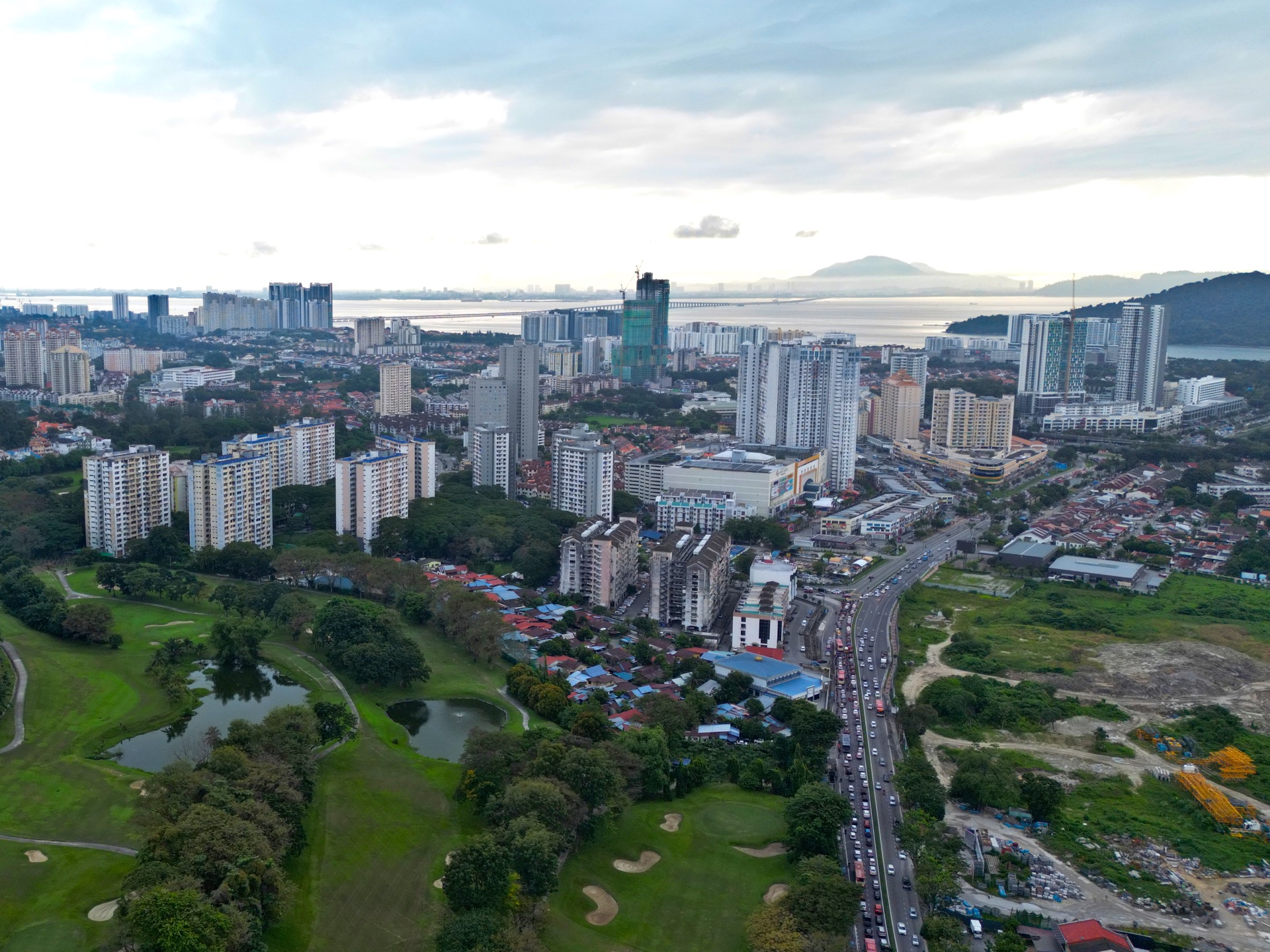
Your neighbour sold their Setia Greens semi-D last year for RM1.85 million. That does not mean yours is worth RM1.85 million. Here is how to actually price a Sungai Ara semi-D in 2026 — and the mistake I watch sellers make every quarter that quietly costs them 3–4% on the final cheque.
I get the WhatsApp two or three times a month. It is usually the same person: mid-fifties, kids just finished uni, own-stay in Sungai Ara for eight or twelve years, thinking about the next move. Sometimes it is upgrading to a bungalow in Tanjung Bungah. Sometimes it is downsizing into a Gurney condo. Sometimes it is following the daughter to KL or Singapore. What is almost always the same is the opening line: "My neighbour sold at X. What do you think I can get?"
Short answer: probably not X. Not because your house is worse, but because the market prices Sungai Ara semi-Ds one unit at a time, and the neighbour's price is one data point out of many. This is a piece for the owner who has decided maybe — not for a first-time seller, and not for someone trying to speculate. It is written the way I would talk it through at a Bukit Jambul kopitiam, because that is where these conversations actually happen.
Key takeaways:
- Sungai Ara landed is trading, but it is not hot. Casa Rica @ Setia Greens sits around RM660 psf on current reads, and Isle of Palm @ Setia Pearl Island around RM578 psf. Your number sits inside that landscape, not above it just because your neighbour got lucky.
- The three levers that move your price are condition, layout, and timing. Everything else — including which agent you pick — is a rounding error next to these three.
- The three mistakes that cost sellers 3–4% are: chasing the neighbour's headline price, over-renovating before listing, and listing on portals with five different agents at five different prices.
- RPGT from year 6 is 0% for citizens, 10% for foreigners. That gap alone is worth RM40,000+ on a typical Sungai Ara semi-D — worth understanding before you set the listing price.
- Priced right, expect 4–9 months to keys. Priced 8–10% above the last comparable, expect 12+ months of sitting.
What Sungai Ara landed is trading for right now
Before we talk about your house, look at what the market is actually doing.
Two projects anchor the current Sungai Ara semi-D read. Casa Rica @ Setia Greens — SP Setia's Phase 2, completed around 2024, 60 units on 11 acres, freehold residential title — has its 2-storey semi-Ds starting around RM1.9 million on developer/reference pricing, working out to roughly RM660 psf on the smaller layouts. Isle of Palm @ Setia Pearl Island, completed 2018, has semi-Ds and superlinks trading from about RM2.2 million, with the underlying psf around RM578.
Those two numbers — RM578 to RM660 psf — bracket the honest current read on Sungai Ara landed in this bracket. Older Setia Greens Phase 1 stock (2013), and the various terrace-scale enclaves around Cangkat Sungai Ara, sit at lower psf but on smaller footprints. What matters for you is this: if your semi-D is priced at psf materially above that band, you need a specific, defensible reason. If it is priced below, you may be leaving money on the table.
That is the market. Your price sits somewhere inside it — not on top of it because your neighbour got a good number, and not below it because you want a fast sale.
For deeper background on the enclave, the Sungai Ara area guide and the Casa Rica @ Setia Greens review are the two most useful reads.
The three things that actually move your price
I have walked through more than a few Sungai Ara semi-Ds. Ignore the agents who list 12 factors on a pricing spreadsheet. Three things do the real work.
Condition is the biggest one, and not in the way most sellers think. The buyer is not scoring your house against a fresh-from-developer benchmark. They are scoring it against every other subsale on their shortlist. A house that shows well — clean paint, working aircons, a garden that has been trimmed in the last month, no obvious water stains — will out-price a technically-better house that shows tired. Buyers price what they see. If your kitchen was expensively renovated in 2015 and now looks dated, that reads as "I will need to redo it" not "it is renovated". This is why cosmetic tidying pays back and full renovations do not.
Layout efficiency is the second lever, and it is unforgiving. A 3,000 sq ft semi-D with a genuinely usable four-bedroom plan, decent ceiling height, a driveway that fits two cars comfortably, and a wet-and-dry kitchen setup will out-price a bigger unit with an awkward layout by 5–8% at the same address. This is why the newer Casa Rica stock, on planning that reflects 2020s living, prices ahead of some older nearby options with more raw square footage. If your layout is genuinely good, price to it. If it is compromised — a bedroom you have to walk through, a kitchen with a poorly-placed column — accept that in your ask.
Timing is the third. Not the calendar year, but where your listing sits inside the buyer season. Serious own-stay upgrader traffic clusters between February and June, and again briefly in September. Chinese New Year through Ramadan is the quieter window; December is almost dead for landed. If you list in mid-January with a firm 6-month plan, you catch the strongest window. If you list in November because you want it "done for Christmas", you are competing for a thin buyer pool and you will feel it in your final number.
The three mistakes that cost sellers 3–4%
Every seller I talk to who ends up disappointed with their final cheque made at least one of these three. Usually two.
Chasing the neighbour's headline price. The neighbour who sold at RM1.85M had a specific unit, a specific buyer, a specific negotiating position, and — often — a fully-renovated kitchen and a corner lot with an extra 400 sq ft of land you do not have. Their price is one data point. The buyer looking at your house has been to five viewings this month and knows the current range better than you do. If you price 8% above the last real comparable, the market does not correct you loudly — it just stops calling. You sit for six months, then drop, then drop again, and end up 3–4% below where you should have started. The right move is to price at the last defensible comparable plus 2–3% for negotiating room, not plus 10% because your neighbour "got lucky".
Over-renovating before listing. I have sat with sellers who spent RM80,000 on a kitchen redo two months before listing because "buyers like modern kitchens". The result: the kitchen taste is theirs, not the buyer's; the buyer discounts because they will still redo it; and the RM80,000 is gone. Fix real defects. Repaint. Trim the garden. Deep-clean. Get the aircons serviced. Beyond that, leave the money in the bank — you will need it for the next place.
Listing on portals with five different agents. This one is the invisible killer. Sellers think spreading the listing across five agents means five times the coverage. It means the opposite. No agent will invest unpaid effort in a listing they might not close. The listing appears on portals with five different photo sets, three different price points, and inconsistent property details — which to any experienced buyer reads as "distressed seller, negotiate hard". Your ask price becomes the ceiling, not the anchor. The clean version is one agent, exclusive, three-month term, with a clear pricing plan and a walk-away number both sides agree on.
The RPGT reality — what you actually take home
Selling price is not walk-away number. RPGT sits in between them, and the gap between the two is bigger than most sellers think about until the buyer's lawyer sends the retention notice.
The current RPGT rates in Malaysia for 2026:
| Ownership length | Malaysian citizen / PR | Foreigner |
|---|---|---|
| Year 1–3 | 30% of chargeable gain | 30% |
| Year 4 | 20% | 30% |
| Year 5 | 15% | 30% |
| Year 6 onwards | 0% | 10% |
Chargeable gain is your selling price minus your original purchase price, minus allowable costs (legal, agent commission, valid renovation invoices). For a citizen who has owned for 6+ years, that number is entirely yours. For a foreigner selling in the same window, 10% of the gain still goes to LHDN — and the buyer's lawyer withholds 7% of the full selling price as retention until the RPGT return is filed and the actual liability is settled. On a RM2 million sale, that is RM140,000 sitting in a solicitor's account for weeks. Not lost, but not available.
Two things follow from this. First: if you are a citizen at year 5 of ownership thinking about listing, waiting to year 6 saves you 15% of the gain — often the single most valuable decision in the whole sale process. Second: if you are a foreigner, factor the 10% RPGT and the 7% retention into your walk-away math from the start, not at closing.
Rough numbers on any specific case: RPGT calculator. Actual filing: a tax agent or your solicitor.
The exit-strategy checklist — six months, three months, one month
This is the sequence that separates the sellers who get their number from the ones who spend a year on the market.
Six months before listing. Get an honest valuation — not a valuation shaped by what you want it to be. Pull your original SPA, legal invoices, and any valid renovation receipts (you will need these for RPGT). Check your ownership length carefully; if you are between year 5 and year 6 as a citizen, know the exact anniversary date. Fix real defects — a leak, a cracked tile, a broken door — while the pressure is low and you have time to call the good contractors, not the ones who will overcharge you in a rush.
Three months before listing. Repaint the interior if it needs it (probably yes). Deep-clean, including the aircons. Trim the garden. Have professional-grade photos taken in the morning light, not with a phone at 3pm. Sign an exclusive listing with one agent — one, not five — with a written pricing plan, a listing price, a first-drop trigger, and a walk-away floor. Agree on the photo set and portal presence before it goes live.
One month before listing. Declutter. Personal photos, kids' trophies, religious items — pack them or move them to one room. Buyers need to imagine themselves in the house, and they cannot do that around your family album. Have a "showing sheet" ready: original SPA date, land title, tenure, quit rent, assessment, maintenance if applicable, aircon age, roof age, last electrical inspection. Serious buyers ask for these. Not having them ready reads as amateur, and amateur sellers get lowballed.
When it is better not to sell
Half the WhatsApps I get end with me telling the owner to hold. That is not the pitch you expect from a licensed negotiator, but it is honest.
Hold if: you are a citizen at year 4 or 5 of ownership and can wait to year 6 — the RPGT saving alone will beat any expected price appreciation in that window. Hold if: the next place is not decided. Selling into a housing plan that is still shopping around means either you sit on cash paying rent, or you rush the purchase and pay for both mistakes at once. Hold if: you can genuinely rent it for 3.5–4.5% gross yield and you do not need the capital — Sungai Ara semi-Ds rent to families relocating from KL or Singapore, and a good tenant covers the running costs while you compound. Hold if: the current market is soft in your specific bracket and you can afford to wait 12–18 months for a specific catalyst (a completed Casa Rica secondary transaction at a strong number, visible Mutiara Line progress southward, or a specific new-launch pricing signal).
Sell if: you have a defined next chapter and the timeline is real. Sell if: the property is materially larger than your household now needs and the running cost is meaningful. Sell if: you are a foreigner and RPGT will not get materially better by waiting (year 6+ already). Sell if: you are at genuine risk of a distressed sale in the next 2–3 years — a soft health issue, an aging parent, a business under pressure. A planned sale beats a forced one by 8–12% every time.
What this means for you
If you are five to fifteen years into owning a Sungai Ara semi-D and thinking about the next move, the honest read for 2026 is: the market will pay you fairly, but only if you price it fairly. Casa Rica and Isle of Palm bracket the current landscape at RM578–RM660 psf. Your number sits inside that, adjusted for condition, layout, and timing. Chase the neighbour's headline and you sit; over-renovate and you burn cash; multi-list and you signal desperation. Price at the last defensible comparable, one exclusive agent, three-month term, and 4–9 months later you close.
The valuation conversation is free. What I do: physical walkthrough, pull the last 24 months of comparables from Setia Greens and Setia Pearl Island (transacted, not asked), review your ownership length for RPGT, and give you a defensible listing price and a walk-away floor. Whether you list with me or not, you leave the conversation with numbers you can trust — not numbers shaped by the outcome I want.
Talk to Zac about your Sungai Ara valuation
If you are seriously thinking about selling — this year, next year, or "sometime" — the right first move is a real number, not a portal estimate.
WhatsApp me with the address (or the enclave and layout) and a rough sense of when you might want to sell. I will come back with a valuation range, a comparable set from the enclave, and an honest read on timing. No fee, no obligation, no listing pitch on the first call.
Zac Ong — REN 64593, PropNex Penang.
Sources
- Verified project data from my portal (Casa Rica @ Setia Greens, Isle of Palm @ Setia Pearl Island — verified publishable, freehold, current 2026 pricing/psf).
- LHDN — Real Property Gains Tax rates schedule (2026 rates for citizens, PR, and foreigners).
- Brickz.my / JPPH transaction data for Sungai Ara enclave comparables.
- Section 21B of the RPGT Act 1976 (retention: 7% non-citizen, 3% citizen).
This is a general guide, not personalised tax or legal advice. RPGT filings should be prepared with a licensed tax agent or your solicitor. Property valuations are indicative pending a physical walkthrough and comparable review.