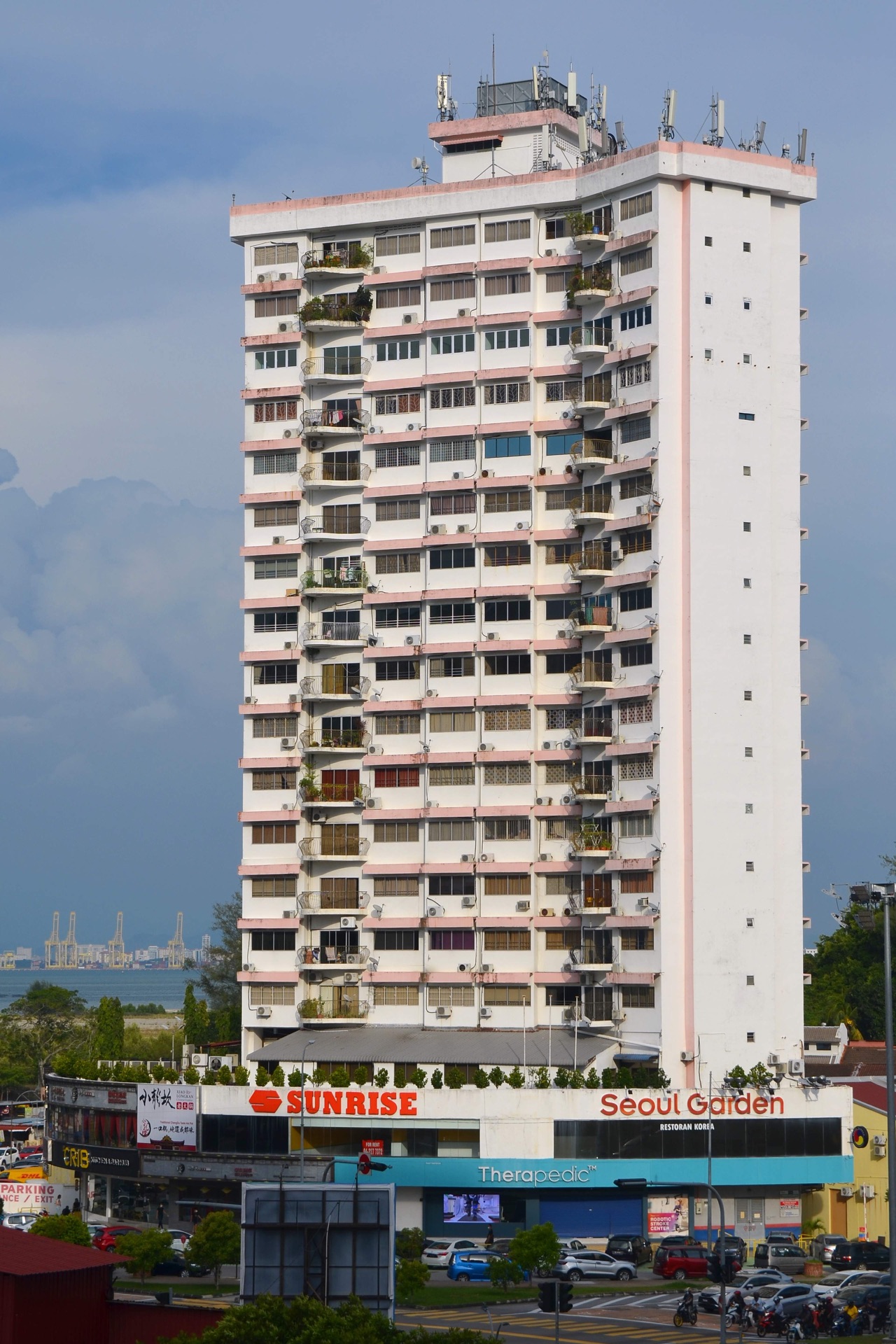
The same Taiwan retirement fund that would carry a couple comfortably to about age 75 back home stretches, on my clients' actual monthly numbers in Penang, to about 95 — and leaves a full second budget line for private healthcare.
That is not marketing arithmetic. It is what I have watched play out across Taiwanese couples who moved here between 2019 and 2025, at the mid-range life a retired professional actually wants: a 1,200–2,000 sq ft freehold condo near the water, three meals a day without cooking, one car, private insurance, weekend trips. About RM10,000 a month (~TWD 72,000) covers it. The Penang side of the equation stays that way partly because rent and food are structurally lower, and partly because you no longer pay for the two things that eat Taiwanese retirement budgets alive: real estate carrying costs, and top-up medical bills once NHI stops covering everything you actually need.
This guide is the Penang-focused answer to the practical questions I get from Taiwanese buyers thinking about retirement here — not a comparison piece, and not a brochure. Healthcare, community, monthly numbers, the things you gain, the things you give up, and the properties that make sense once you decide.
Key takeaways:
- A comfortable Taiwanese-retiree couple's budget in Penang runs about RM6,500 lean / RM10,000 mid / RM16,000 comfortable per month (~TWD 47,000 / 72,000 / 115,000 at ~RM1 = TWD 7.2).
- Private healthcare is anchored by Gleneagles Penang (380 beds, JCI-accredited) and Island Hospital (~600 beds). Mandarin-speaking specialists are common; Penang Hokkien is close enough to Taiwanese that a market conversation just works.
- There is a real, functioning Taiwanese community — Taiwan Chamber of Commerce Penang chapter, a handful of Taiwanese restaurants, natural clustering around Tanjung Tokong, Tanjung Bungah and Gurney Drive.
- Foreign-ownership rules apply as they do to any non-Malaysian: RM1,000,000 island floor, 3% levy, flat 8% stamp duty, 3–4 months state consent, ~70% foreign LTV, 30% RPGT in years 1–5 and 10% from year 6. There is no discount for retirement or MM2H.
- Three properties I'd actually shortlist for a Taiwanese retiree today: Fettes Residence, Andaman @ Quayside, Cascadia — all freehold, all in walkable, hospital-adjacent northern Penang Island.
What a month actually costs
The number I quote most often is RM10,000 a month for a comfortable couple. Here is what sits inside it — rounded, realistic, and reflecting my clients' actual spending rather than a Numbeo table.
| Line | Lean (RM) | Mid (RM) | Comfortable (RM) |
|---|---|---|---|
| Housing (rent OR strata + assessment if owned) | 2,200 | 3,500 | 6,000 |
| Groceries + wet market | 1,000 | 1,400 | 2,000 |
| Eating out | 600 | 1,200 | 2,000 |
| Utilities (electricity, water, internet, mobile) | 400 | 550 | 700 |
| Transport (Grab most days OR one car) | 500 | 900 | 1,500 |
| Private health insurance (couple, 60–65) | 1,200 | 1,800 | 2,500 |
| Domestic help (weekly cleaner, part-time) | 200 | 400 | 600 |
| Entertainment, hobbies, travel sink | 400 | 1,000 | 2,000 |
| Monthly total (RM) | ~6,500 | ~10,800 | ~17,300 |
| ≈ TWD at RM1 = TWD 7.2 | ~46,800 | ~77,800 | ~124,600 |
A few honest notes on those lines:
- Housing. RM3,500 rents a comfortable 1,400 sq ft freehold three-bedder in Tanjung Tokong or Pulau Tikus in 2026. If you own outright, your carrying cost drops to maintenance fee + assessment — commonly RM0.30–0.45 per sq ft per month + about RM100/month assessment. On a 1,400 sq ft unit that's roughly RM520–730 a month all in.
- Insurance. International private medical for a Taiwanese couple aged 60–65 sits around RM12,000–24,000 per couple per year depending on cover level. This is a real line — do not model retirement in Malaysia as if NHI still exists.
- Grab. A cross-island Grab ride is typically RM10–25 in 2026. A Taiwanese retiree couple who don't drive can live on Grab plus occasional taxi with no lifestyle hit.
- Car. If you keep one, budget RM120,000–180,000 for a decent used car, plus running cost of about RM1,000–1,500 a month all in (petrol, insurance, servicing, condo parking is usually included).
If you own the property outright and don't run a car, the middle-lane budget drops closer to RM7,500 a month for a couple. That is the number I tell clients to plan around.
Healthcare — what you're actually getting
This is the question every Taiwanese buyer asks first, and it deserves a straight answer.
Penang's private hospital tier is genuinely good. Not "acceptable for the price" — genuinely good, on a comparable footing with the Taiwanese private hospital tier for most retirement-relevant scenarios.
Gleneagles Penang — 380 licensed beds, JCI-accredited, part of IHH Healthcare. The strongest cardiology programme in the north, full oncology centre, comprehensive surgery. Located in Pulau Tikus, which is why Pulau Tikus and Tanjung Tokong sit at the top of most retiree shortlists.
Island Hospital — around 600 beds after its recent tower expansion, the largest private hospital in northern Malaysia. Very deep specialist bench, particularly known for cardiology and oncology. Located between Jalan Macalister and Pulau Tikus.
Both hospitals have specialists who consult in Mandarin, and Penang Hokkien is a working language at the nursing counter. Add Penang Adventist, Pantai Hospital Penang and Loh Guan Lye Specialists and you have five private hospitals inside a 6 km radius on the island's most retiree-dense corridor.
Two honest caveats:
- You are paying out of pocket or through insurance. There is no NHI equivalent. A cardiac stent that Taiwan's NHI would cover largely, you pay for — around RM35,000–60,000 at Gleneagles or Island for a single stent case. This is where private international insurance earns its cost.
- The very apex of complex tertiary care — rare-disease transplant, cutting-edge oncology trials — is stronger in Singapore and in Taiwan's top medical centres. Most Penang retirees I know keep a plan for the 1-in-50 scenario: fly to Singapore (35 minutes) or back to Taiwan (about 4.5 hours) for the truly complex case, and use Penang for the other 49.
The routine cost picture is what most Taiwanese retirees underestimate favourably: a full specialist consult at Gleneagles runs about RM120–250. A standard health screening — bloods, ECG, ultrasound, specialist review — comes in around RM800–2,000 depending on scope. Nothing about these numbers ruins a retirement.
Language and cultural landing
Penang is the softest cultural landing in Malaysia for a Taiwanese retiree. Three specific reasons:
Penang Hokkien is essentially mutually intelligible with Taiwanese. Not identical — the tonal system diverges and Penang absorbed Malay loanwords Taiwanese didn't — but at the wet market, on the bus, in a coffee shop, you and the auntie will understand each other. This is the single biggest reason older Taiwanese retirees say Penang feels "not foreign."
Mandarin is functional everywhere the retirement lifestyle lives — hospitals, banks, restaurants, developer sales galleries, condo management offices. About 40% of Penang's population is ethnic Chinese and Mandarin is the working dialect across George Town.
Vegetarian and Buddhist culture is deep. Kek Lok Si, the largest Buddhist temple in Southeast Asia, sits in Air Itam — 20 minutes from Gurney. Fo Guang Shan has a Penang branch. Vegetarian restaurants are common enough that a Taiwanese Buddhist retiree lives normally without special effort.
What you don't get, and should plan for: no MRT/LRT service on the northern coastal belt yet. The Mutiara Line is under construction with the George Town section (S20 Komtar) targeted for around 2031. It does not serve Tanjung Tokong, Tanjung Bungah, Gurney Drive, Batu Ferringhi, planned or otherwise. Grab and driving are the reality for at least the first five years of any retirement here.
The Taiwanese community — honest scale
Let me be straight about this: the Taiwanese community in Penang is not huge. It is not KL or Singapore, where you can go a week without speaking Malay. But it exists, functions, and grows every year.
- The Taiwan Chamber of Commerce (TCCM) Penang chapter meets regularly and organises networking events, cultural evenings and business introductions. It's the fastest way to plug in.
- There are a handful of Taiwanese-owned restaurants across the island — the roster changes, but there is usually at least one bubble tea chain, one beef noodle shop and one breakfast diner within a 10-minute drive of the northern coastal belt.
- Retirees cluster in Tanjung Bungah, Tanjung Tokong and Gurney Drive. This is a lived observation, not a survey.
- Weekly informal groups meet for morning hikes on Penang Hill trails, Sunday markets, hospital-adjacent tea gatherings.
If your bar is "must have a thriving Taiwanese social scene from day one," Penang will not meet it. If your bar is "must have enough of a landing pad that I'm not the only Taiwanese person in the room," it clears comfortably.
Three small things that will surprise you
The parts of Penang life that Taiwanese retirees consistently tell me they didn't expect to love:
- All-day breakfast culture. Kopitiams are open from 6 am and Nasi Lemak, chee cheong fun, wanton mee and a strong local coffee is a RM10 breakfast, every day, without booking. The same routine in Taiwan is closer to TWD 200 and usually requires a queue.
- You can walk from your home to a UNESCO World Heritage Site. Pulau Tikus condos put you 15 minutes from George Town's heritage core on foot. There is no equivalent to walking through 200-year-old shophouses on a Sunday morning as part of normal life.
- Grab is genuinely cheap. Airport to Tanjung Tokong is about RM45–55. A 6 km ride to your hospital appointment is under RM20. A retiree couple without a car live better here than they would back home without a rail pass.
Three things you will give up
The honest ledger — Penang gets picked, not pitched.
- No four seasons. It is 28–32°C year-round, humid, with two monsoon peaks. If cool autumn air and cherry blossoms anchor your emotional calendar, this will be a slow-burn loss.
- No Taiwan-scale intercity rail. You cannot high-speed rail from Penang to Kuala Lumpur in 90 minutes. There is a rail line, but the practical alternative is a 1-hour flight or a 4-hour drive. Domestic mobility feels less frictionless than Taiwan's.
- Dengue is real, NHI is not. Dengue is endemic — every retiree here has had a friend catch it. It is manageable, but requires screening and mosquito discipline. And you are permanently on private healthcare economics: no NHI safety net, ever.
If those three trade-offs are dealbreakers, close the tab now. If they are acceptable in exchange for what the rest of the guide describes, keep going.
Which properties to actually look at
Three concrete shortlist projects for a Taiwanese retiree, chosen for the same brief: freehold, residential title, walkable to hospitals and a wet market, low-density enough for a quiet retirement, all clearing (or including units that clear) the RM1,000,000 foreign-buyer floor.
Fettes Residence, Tanjung Tokong
Freehold, residential title, by IOI Properties. Completed 2011, 195 units. Asking from about RM1.14M, roughly RM542–850 psf, typical unit around RM1.5M. Standard layouts are about 2,400 sq ft — huge by 2026 standards — with penthouses to about 4,200 sq ft. Straits Quay is 10 minutes, Gurney is 12 minutes, Gleneagles is a 15-minute drive. Old-school proportions, sensible psf, and a genuinely settled address. My honest note: it's a 2011 building and it looks it — buy for space and location, not for finishes.
Andaman @ Quayside, Tanjung Tokong
Freehold, by E&O, in the Seri Tanjung Pinang seafront master plan. Completed 2018, 1,100 units. Asking from about RM1.28M, roughly RM1,086–1,955 psf. This is the seafront lifestyle end of the shortlist — resort-scale facilities, Straits Quay retail and marina downstairs, a genuine sea view from the higher stacks. Land title is not confirmed in our data — ask before you sign, because it changes utility rates and assessment. Suits a retiree couple who want the "living inside a resort" quality of life and are happy paying resort-grade maintenance for it.
Cascadia, Pulau Tikus
Freehold, residential title, 54 units across 2–3 storey blocks. Completed 1993. Asking from about RM800K to RM840K, at roughly RM710–770 psf, unit sizes 1,033–1,180 sq ft. The catch a Taiwanese retiree must know: the smaller Cascadia units sit below the RM1,000,000 island foreign-buyer floor and are not available to foreign purchase. Only units priced at or above RM1M qualify — ask me to confirm unit-by-unit. What Cascadia offers is what money increasingly cannot buy in Penang: a very low-density, garden-style enclave in prime Pulau Tikus, five minutes from Gleneagles, ten from George Town. It is the quiet, leafy option for a buyer who values calm over spec.
For a broader look at where retirees actually settle, see my Tanjung Tokong area guide and Pulau Tikus area guide.
Run your buying power in Penang →DSR-based ceiling using current rates and 70% LTV for foreign buyers.Step by step, how to actually start
Not a brochure timeline. The five steps I walk every Taiwanese retirement client through.
- Take a 30-day scouting trip, not a weekend. Rent a serviced apartment in Tanjung Tokong or Pulau Tikus for a month. Live the routine — market, doctor's appointment, evening walk, Sunday hike. A month tells you what a weekend cannot.
- Get MM2H advice from a Malaysian immigration lawyer. The tiered 2024 framework has real financial commitments (fixed deposit, minimum property price). Understand which tier your finances qualify for before you shortlist properties, because the property-price minimum for your MM2H tier can override the RM1M island floor.
- Plan the FX and remittance strategy. Moving TWD to RM in one lump exposes you to a single rate. Most of my Taiwanese retirees stage the transfer across 3–6 months, or hold part of the retirement fund in USD and convert to RM tranche by tranche. Speak to your Taiwan-side private banker before you sign the SPA.
- Shortlist three properties and view them twice — once by day, once in the evening. Traffic, parking, corridor noise, hawker smell, the guardhouse response time — these show at different hours. If a project only looks good at one time of day, that is your answer.
- Sign the SPA, then plan for a 3–4 month wait for state consent (COSA) before completion. Foreign buyers cannot skip this. Use the time to finalise MM2H, ship your belongings, arrange insurance, and open a Malaysian bank account. For the full mechanics, see my buying property in Penang as a foreigner guide.
Zac’s Take
Zac Ong
For a Taiwanese couple in their late 50s or early 60s, Penang works — genuinely works — for the same reasons Singapore and Australia don't: it is close enough to fly back for a family emergency, cheap enough that RM10,000 a month is a comfortable life not a survival budget, and culturally soft enough that Hokkien and Mandarin do most of the daily work. My honest concern is not whether you'll enjoy it. It's whether you'll buy the wrong property. The RM1.5M sea-view unit in Tanjung Tokong is a very different retirement than the RM1.05M borderline-freehold in a serviced-apartment tower with a commercial title — same headline price band, entirely different long-term. Buy for who you actually are at 75, not who you want to feel like at 60.
Next step
If you're seriously scoping Penang for retirement, the useful next move is either a 30-day scouting month or a short due-diligence trip built around three site visits and a hospital tour. I can put both together — arrange viewings at Fettes, Andaman @ Quayside and Cascadia (or a different shortlist based on your budget), walk you through Gleneagles or Island Hospital, and coordinate with your Taiwan-side lawyer and private banker. If Mandarin is easier for you than English, that is fine — most of my Taiwanese retiree conversations happen in Mandarin.
Flights from Taiwan make a due diligence trip a weekend, not a week. Most retiree buyers I work with visit twice: once to shortlist, once to sign.
Sources: Project prices, PSF, sizes, unit counts, tenure, land title, developer and completion year from our tracked dataset, compiled from developer price lists, official project sites and public listings. Gleneagles Penang bed count and JCI accreditation, and Island Hospital bed count, per each hospital's public information as of 2026. Regulatory constants (RM1,000,000 island floor, 3% state levy, 3–4 month state consent, 8% flat foreign stamp duty, 30%/10% foreign RPGT, s.21B 7% retention, ~70% foreign LTV) per Penang state policy, s.433B of the National Land Code, the Stamp Act and the Real Property Gains Tax Act (LHDN). Monthly living cost lines reflect Zac's observations from working with retiree clients between 2019 and 2025, not published statistics. FX at approximately RM1 = TWD 7.2 (2026); confirm the actual conversion rate at the time of transfer. MM2H tiers per MOTAC — instruct a Malaysian immigration lawyer before committing. Figures move with the market and with your circumstances — confirm current details with the developer, hospital or your solicitor before committing.