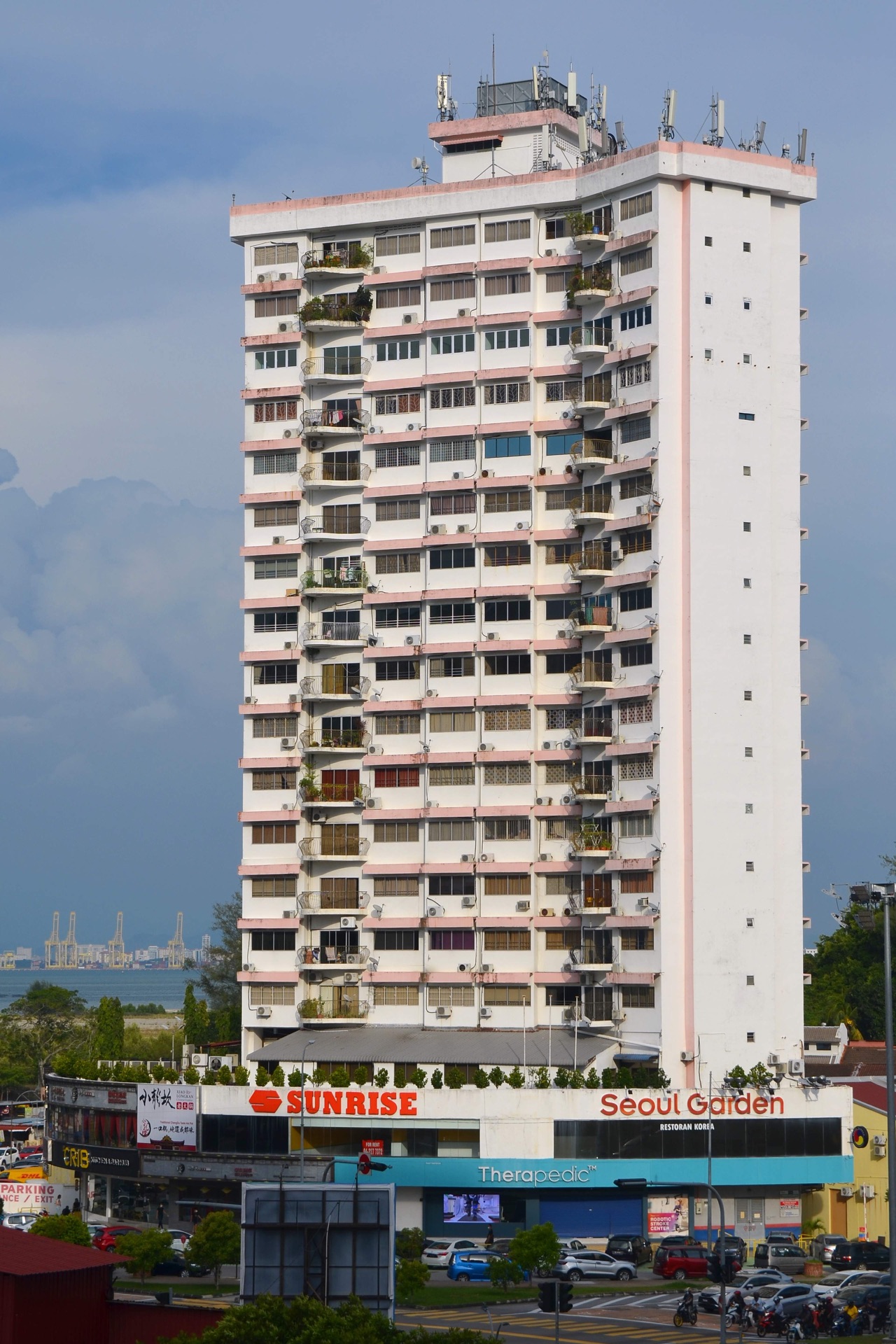
The Penang landed house your parents left you is worth around RM1.5 to RM3 million. Three siblings, no clear decision-maker, and it's been empty for eight months. Every month it stays empty, you lose money and gain arguments. Here's how families I've helped actually sold — and the two mistakes almost every family makes.
This is not a piece about maximising a headline price. It's a piece about getting a family through a hard year without losing the house, the money, or each other. If you're reading this in the first six weeks after a parent has passed, I'm sorry for your loss — and I'll be honest with you about the timing question at the end, because rushing this rarely helps.
Key takeaways:
- Malaysia has no inheritance or estate tax. Since 1991. What you deal with is probate or LOA, and RPGT — only when the heir eventually sells.
- Under RPGT Act Schedule 2, inheritance is a no-gain-no-loss transfer. Your acquisition cost as heir is the market value at date of death. Your holding period starts fresh from that date.
- Probate or LOA takes 4–12 months before the title can move. Start the paperwork before you start the market conversation, not after.
- The two mistakes families make: waiting for a "better market" that isn't coming, and siblings anchoring on different informal valuations. Both cost 12–18 months of family peace.
- A neutral broker is different from a listing agent. If the family is fractured, the person representing the sale needs to be trusted equally by every heir — not the one who promises the highest number.
The reality of RPGT on an inherited property
The most persistent worry I hear on the first call is: "How much tax will we lose to the government?" On the inheritance itself, none.
Under Schedule 2 of the Real Property Gains Tax Act 1976, the transfer of a Malaysian property to a beneficiary on the death of the owner is treated as a no-gain-no-loss disposal. That means the estate doesn't crystallise a gain, and no RPGT is triggered at the moment of inheritance. What the heir receives as an acquisition cost — for future RPGT purposes — is the market value at the date of death, not the price the parents originally paid.
That last point matters. If your parents bought the house in 1992 for RM380,000 and it's now worth RM2.4 million, you don't inherit a RM2 million gain waiting to be taxed. You inherit RM2.4 million as your starting point. RPGT only becomes relevant on any further gain above that RM2.4 million, calculated when you sell as heir, at the rate matching your own holding period from the date of death.
Malaysia has no estate duty (repealed 1991) and no separate inheritance or gift tax. So the tax friction on the transfer itself is essentially zero. What you owe on the eventual sale is RPGT on the delta above the death-date value, at the rate corresponding to your heir-holding-period.
For a citizen heir, that scale is 30% (years 1–3), 20% (year 4), 15% (year 5), and 0% from year 6 onwards. For a foreign heir, it's 30% for years 1–5 and 10% from year 6 — never zero. Confirm the current schedule with your solicitor at the SPA stage; rates have moved before and can move again.
Probate vs LOA — the paperwork clock
You cannot sell what the title office doesn't yet believe belongs to you.
If your parent left a valid will, the executor applies for probate. If there was no will, the family applies for a Letter of Administration (LOA) under the Probate and Administration Act 1959. Either route ends with a grant that lets the title move into the executors' or administrators' names — and only after that can the property be transferred to a buyer.
Realistic timeline: 4 to 12 months from application to grant. Testate estates with clean paperwork and no disputes come in at the shorter end; intestate estates with several beneficiaries, missing documents, or overseas siblings who need to sign in front of consular officers can sit at the longer end.
The practical advice: start the paperwork the month after the funeral, not the month you decide to sell. The two processes run in parallel — probate for the title, market prep for the house. Families who defer the paperwork until they're "ready to sell" then discover they have a further 6–9 months of legal work before a buyer can even sign a real SPA.
The two mistakes almost every family makes
I've helped enough families through this to see the same two failures repeat, regardless of the size of the estate or the closeness of the siblings.
Mistake one — waiting for a better market that isn't coming. The house has been in the family for thirty years. Prices have moved, sometimes a lot. There's a natural instinct to hold on for another cycle — "the market is soft right now, let's wait." The trouble with that instinct on an inherited property is what waiting actually costs. Every month, cash leaks out for quit rent, assessment, security and gardening. Every month, an empty tropical house ages faster than a lived-in one. And every month, the family has to keep the decision open, which usually gets harder, not easier, the longer it sits. A patient sale of six to nine months is fine. A "let's wait two more years" is almost always a decision made to postpone the family conversation, not to catch a market move.
Mistake two — siblings anchoring on different informal valuations. One sibling read a portal listing at RM2.8 million and rounded up. Another remembers a neighbour who supposedly sold at RM3.1 million in 2019. A third has heard from a friend that "the market is really hot right now, don't sell under three." Nobody has a professional valuation and nobody has three transacted comparables from the last six months in the same corridor. So the family conversation stalls at "we should get three, not two-point-four," and six months pass. The house sits empty. Feelings harden. When you eventually agree to sell, you take a worse number in a worse mood — because the market you're finally selling into is later, not better.
Both mistakes have the same cure: get the same neutral information in front of every heir, early. One valuation report, one comparable set, one agent walkthrough. Then the family conversation is about what to do with the facts, not about which fact is real.
The neutral broker role
There is a version of this job where the property agent's incentive is aligned with one heir — usually the loudest one, or the one who first made contact. That version doesn't help the family.
The version that does help is what I try to run when a family reaches out. I explain the RPGT position to every heir the same way. I run one valuation range, backed by three transacted comparables from the same corridor in the last six months. I hold viewings with the same script for every buyer. I bring offers back to the family through whichever channel every heir has agreed to — usually a shared WhatsApp group with all executors on it, so nothing is filtered through one sibling.
The neutral broker is not a therapist and not a mediator. What the broker can do is remove the "he said, she said" layer from the property side of the decision. Everything comes with the same paper trail, timestamped, visible to every heir.
That doesn't fix a fractured family. It does make sure the fracture isn't caused by the property agent.
The valuation reality
Numbers on an inherited property need to come from three sources, not one.
A JPPH-registered licensed valuer produces a formal report. Banks lend against this number; the tax office looks at it. It is conservative by design. It is not the number a serious buyer will pay in a competitive corridor — but it is the number your solicitor will use for stamp duty on a family buy-out, and it is the number the RPGT return will reference for the death-date market value.
A working agent's comparative market analysis looks at three transacted comparables from the last six months in the same enclave — same corridor, same street type, similar land size and condition. Not portal asking prices. Not the neighbour's rumour from 2019. Transacted numbers, from JPPH or from my own recent files. The band this produces is usually 4–10% wider than the formal valuer's number, and it's the range a real buyer will offer within.
A stress test on condition. Two houses on the same street can differ by RM200,000 based on how the last five years were spent. Termite treatment or not, roof rebedded or leaking, wiring updated or original, garden maintained or abandoned. Have someone walk the property who knows what to look for.
For a Sungai Ara semi-D or a Gelugor bungalow of RM1.5–3 million, plan for the licensed valuer's number and the agent's mid-band to be within 6–8% of each other. If they diverge more than that, one of the two is wrong — usually because the comparables aren't tight enough.
The tax and fee stack
Selling an inherited Penang landed home, for a Malaysian citizen heir at year 6+ of holding, is one of the cleanest property transactions in the country. The stack looks like this:
- RPGT: 0% for citizen heirs who have held past the fifth full year from date of death.
- Section 21B retention: 3% of the SPA price held by the buyer's lawyer, refunded once LHDN clears the return.
- Agent's commission: 2–3% + SST, typical for Penang landed.
- Legal fees: your solicitor, tiered on the SPA price — roughly 0.8–1% for this bracket.
- Discharge of charge: if there is any legacy mortgage on the property, expect a small settlement fee.
- Property tax and quit rent to date: cleared up at completion.
For a foreign heir or an heir who has held less than five years, the RPGT rate changes and the retention rises to 7%. Confirm with your solicitor at SPA stage — the schedule has moved before.
The timeline — four to six months, done properly
Assuming probate or LOA is already in hand:
- Month 1 — family meeting on the neutral information. One valuation range, one comparable set, one agreed listing price and one agreed walk-away floor. Legal representation appointed for the executors. RPGT status confirmed with the tax agent.
- Month 2 — light prep. Fix real defects. Repaint anything yellowed. Deep-clean. Trim the garden. Do not renovate — inherited houses always feel like they need renovation, and the buyer will still want to make it theirs. Budget RM15,000–40,000 for a well-kept house.
- Month 3 — list. One exclusive agent, three-month term, clear price plan. Photographs shot in morning light. All executors in the WhatsApp group with the agent.
- Months 4–5 — negotiation and SPA. Serious offers usually arrive between weeks 3 and 8. Family reviews each offer with the same information in front of every heir.
- Month 5–6 — SPA to completion. 3 months for Malaysian buyers with financing, 3–4 months for state consent if the buyer is foreign.
Total working window is four to six months from paperwork ready to keys handed over. It's not fast. It is honest.
When siblings genuinely disagree
Sometimes the family cannot agree. That's real. Three paths, in escalating cost.
Buy-out. One sibling has the cash or the borrowing capacity to buy out the others at the neutrally-agreed valuation. This is the cleanest outcome. The transaction is priced at market value, stamp duty is paid on the transfer of the other siblings' shares, and each exiting sibling walks with their portion in cash. Do not underprice the buy-out to save stamp duty on paper. That's where families fall out five years later, when the buying sibling sells the house for a much stronger number and the exited siblings feel they were pushed out cheap.
Court partition or sale. If the family cannot agree at all, any heir can apply to the courts to force a partition or a court-ordered sale of the property. This is slow, expensive, and public. Legal fees can run into six figures. Nobody wins. But it exists as an option when a family is genuinely stuck.
Sell as-is and split. The middle path. Sell the property in the open market at the neutrally-agreed number, take the net proceeds, split by the shares set out in the will or the intestacy schedule. Each heir does what they want with their share. This is what most families end up doing when a buy-out isn't feasible.
Which of the three is right depends on the family — not on the property.
Talk to me before the family meeting, not after
If your family is at the start of this and you're not sure how to have the first conversation, that's the right moment to reach out — not the moment when siblings have already dug into positions.
What I do on the first call: explain RPGT and probate honestly, without pushing you towards a sale. Confirm publishable comparables for your specific corridor. Walk the property with you if you want. Come back to the family with a valuation range, three transacted comparables, and a one-page summary that every heir can look at.
No fee for the valuation conversation. No listing pressure on the first call. If the family decides to hold for another year, that's fine — better to hold with the numbers in hand than without.
WhatsApp me with the property details — location, rough land size, whether probate or LOA is in progress — and I'll come back with a private valuation range in a couple of days.
Zac Ong — REN 64593, PropNex Penang.
Related reading
- Rent it out or sell it? The landlord math for an empty Penang landed home
- Selling your Sungai Ara semi-D in 2026
- Downsizing from a Tanjung Tokong bungalow in 2026
- RPGT calculator Malaysia 2026
Sources
- Real Property Gains Tax Act 1976, Schedule 2 (transfer on death treated as no-gain-no-loss); current RPGT rate schedule at LHDN.
- Probate and Administration Act 1959 (Malaysia) — application procedure for probate and Letter of Administration.
- Estate Duty Enactment 1941 (repealed 1991) — Malaysia currently levies no estate duty, inheritance tax or gift tax.
- Section 21B, RPGT Act 1976 — 3% retention for citizen sellers, 7% for non-citizens.
- Working agent valuation methodology and family-transaction observations from Penang landed inheritance cases handled in 2024–2026.
This article is general information, not personalised tax, legal or estate advice. Confirm your family's specific RPGT position, probate route and stamp duty treatment with a licensed tax agent and solicitor before acting. Rates and schedules cited reflect the position on 2026-09-11 and can change.