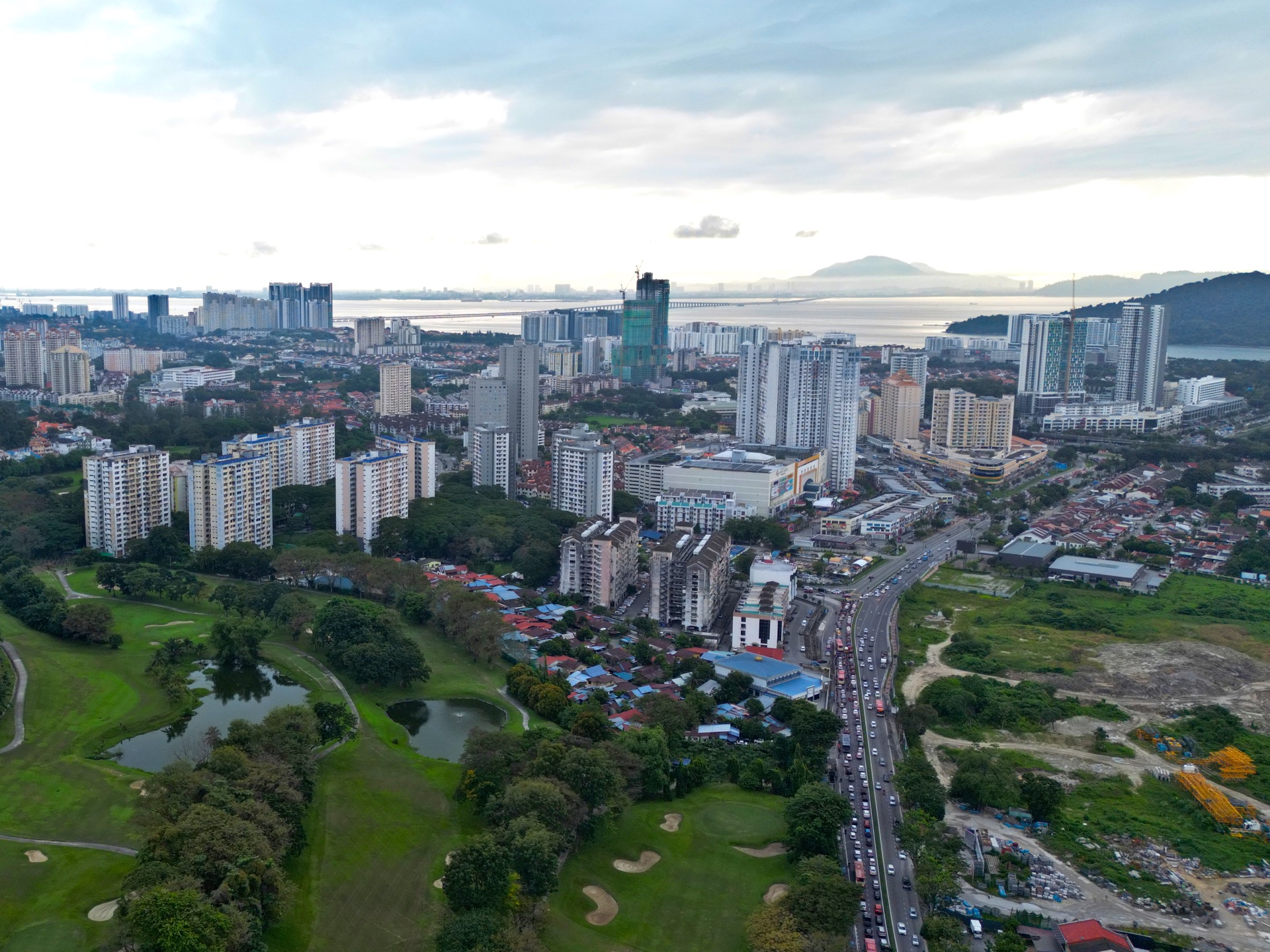
Until 9 September 2026, anyone in Penang can walk into KOMTAR, read the state's development blueprint for the next fourteen years, and formally object to it. Almost nobody will. The Draft Penang Structure Plan 2040 (Review) went on public display on 10 August under the Town and Country Planning Act 1976 (Act 172), and the window closes in weeks.
This is not a civic-duty article. A structure plan is one of the few documents that moves land value years before a single piece of machinery arrives — and it is the one stage where an ordinary buyer or owner still has a statutory voice. If you own property in Penang, or you are about to, this is worth an hour of your time.
Key takeaways:
- On display 10 August – 9 September 2026, 9am–4pm on working days, at KOMTAR and district offices.
- Objections go to the Director of PLANMalaysia Pulau Pinang, Level 57 KOMTAR by 9 September.
- Under Act 172, an objector who does not withdraw is entitled to be heard by a four-member subcommittee.
- It is strategic, not plot-level — the local plan does the plot zoning, but must follow this framework.
- Notable positions in the draft: Silicon Island assessed comprehensively; Pulau Jerejak capped at 80 acres of private development with the rest permanent forest reserve.
What a Structure Plan Actually Is (and Is Not)
Get this distinction right, because most people who read about planning documents get it wrong and then look in the wrong place.
A structure plan is strategic. It works at state level and sets the direction: where growth is concentrated, how dense development should be, which corridors get transit priority, how much affordable housing is targeted, what gets protected. It does not usually tell you what may be built on one specific lot.
A local plan is the detailed one. It translates the structure plan's direction into plot-level zoning, and together with planning permission it is what actually governs the land next to your building.
So if your question is "can they build a tower on that empty lot behind me?", the local plan and the planning application are your documents. But — and this is why the structure plan matters more than people assume — the local plan must follow the framework the structure plan sets. By the time a local plan is out for comment, the strategic direction has already been fixed. This is the earlier lever, and the more powerful one.
How a Plan Like This Moves Money
Nothing gets built for years. Values move anyway, and it is worth understanding the mechanism rather than treating it as vague optimism.
Designated growth centres reprice land. When a plan concentrates future population and employment in a particular corridor, landowners in it hold something with more permitted potential than the same acreage elsewhere. That expectation is priced into land long before infrastructure appears, and it flows through into what developers pay — and therefore into what they must charge you.
Density policy sets the ceiling on what a site can yield. A site permitted more units supports a higher land price. A site whose plan-designated density is cut is worth less the day the policy changes, regardless of anything physical.
Transit-oriented development draws a value line. Transit-oriented development is explicitly among this draft's aims, and it is exactly the mechanism the Mutiara LRT corridor is already pricing in — we have written about how that premium arrives years ahead of the trains. A plan that formalises TOD priority around stations strengthens the case for land near them and weakens it for the car-dependent pockets between.
Protection zoning cuts both ways. The draft's treatment of Pulau Jerejak is the cleanest example in this document: private development limited to 80 acres, the remainder permanent forest reserve. For anyone holding or eyeing land there on a development thesis, that is decisive information. For anyone buying nearby because of the green backdrop, it is a guarantee they could not otherwise buy. Same clause, opposite effects, depending on which side you are on.
Why This One Matters for Penang Property
Three strands of the draft speak directly to decisions people are making right now.
The island–mainland rebalance. The draft aims to balance development between Penang Island and Seberang Perai. That is a strategic answer to a real imbalance — of the projects we track, 169 are on the island against 87 on the mainland, with a median island entry price of about RM730,000 against roughly RM548,000 on the mainland. A plan that genuinely shifts growth weight toward Seberang Perai over fourteen years changes the long-run case for mainland land, and it is one of the few forces that could narrow that gap. Whether the final plan carries the policy teeth to do it is exactly the kind of thing worth reading — and objecting to — while it is still a draft.
Silicon Island. The draft assesses it comprehensively. A great deal of southern-island demand narrative rests on this project proceeding as envisaged. If your purchase thesis leans on Silicon Island, read what the plan actually says rather than what a sales gallery says about it.
Affordable housing and density. The plan addresses affordable housing need and land-use optimisation. Those two policies interact directly with the oversupply problem in Penang's cheaper high-rise band — there are already 3,165 completed unsold homes in the state, concentrated in the RM200,000–400,000 range. How a fourteen-year plan proposes to add affordable stock, and at what density, is a live question for anyone who already owns in that band.
How to Read It Without a Planning Degree
You do not need to read the whole document. You need to answer four questions about the places you care about.
One: is my area inside a designated growth centre or corridor? If yes, expect more development pressure, higher density permissions and — over time — higher land value. Decide whether you want that where you live, and whether you want it where you invest. They are often different answers.
Two: what does the plan say about density where I own? A rise in permitted density near you means more supply competing with your unit later, and possibly a changed streetscape. A cap means the opposite.
Three: does anything I depend on get protected — or unprotected? Green buffers, hill land, coastal reserves and view corridors are the features nobody thinks about until they are built on. If a view or a green frontage is part of why you bought, check whether the plan preserves it.
Four: does the transport direction match my assumption? If you paid a premium for a location on the basis of a future connection, confirm the plan still carries that direction. If you avoided a location for lack of connectivity, check whether that is about to change.
How to Object — and the Right Nobody Mentions
If something in the draft affects you, the process is open and free.
Where to read it: PLANMalaysia Pulau Pinang, Level 57 KOMTAR; the KOMTAR concourse Level 3 lobby; the Seberang Perai City Council lobby at Bandar Perda; and the lobbies of all Penang District and Land Offices. 9am to 4pm, working days only, closed weekends and public holidays.
How to object: submit a Public Objection Form, a memorandum, or an official letter to the Director of PLANMalaysia Pulau Pinang, Level 57 KOMTAR, to arrive by 9 September 2026.
And the part most people never learn: under section 10(3)(b) of Act 172, when the State Planning Committee considers the draft, an objector who has not withdrawn their objection is entitled to an opportunity to appear before and be heard by a subcommittee of four members of the Committee, one of whom is appointed chairman. A written objection is not a message into a void — it can carry a hearing with it.
Chief Minister Chow Kon Yeow framed the exercise this way: "Development planning should not be viewed solely as the responsibility of the state government, but as a shared process involving residents, industry players, professional bodies, academics." Take that at face value. The window is the mechanism through which the sharing happens, and it is short.
Write it properly if you write it. State who you are and your interest in the land or area, identify the specific policy or zone you object to rather than objecting in general, say what harm it causes, and propose the alternative you want. A specific, evidenced objection about one designation is worth more than a long complaint about development in general.
What I Would Do This Week
If you own in Penang: find your area in the draft and check the density and land-use direction. Fourteen years is long enough for a policy to change what your street looks like and what your unit competes against.
If you are buying: treat this as free due diligence you will never get this cheaply again. Before you commit to a project — particularly one whose story depends on a future corridor, a green outlook or a nearby catalyst — check whether the plan supports that story. Send me the project and the area and I will tell you what I know about the surrounding land; the plan tells you what the state intends for it.
If something in it genuinely affects you: object before 9 September, in writing, specifically. It costs a stamp and an afternoon, and it is the only stage of this process where a private owner has a statutory right to be heard.
Most buyers will read this plan for the first time in 2032, when something they did not expect is going up next door. It is on a table in KOMTAR right now.
Sources: Draft Penang Structure Plan 2040 (Review) display period (10 August – 9 September 2026), inspection venues, objection channel and the Director of PLANMalaysia Pulau Pinang as the submission address, the plan's stated aims, the Silicon Island assessment and the Pulau Jerejak 80-acre private-development limit, and the quote from Chief Minister Chow Kon Yeow, as reported by Penang Property Talk. Legal framework, objection procedure and the objector's entitlement under section 10(3)(b) to be heard by a four-member subcommittee of the State Planning Committee per the Town and Country Planning Act 1976 (Act 172). Project counts and median entry prices from our own tracked records. Confirm current display arrangements and deadlines with PLANMalaysia Pulau Pinang before relying on them; this article is general information, not planning or legal advice.