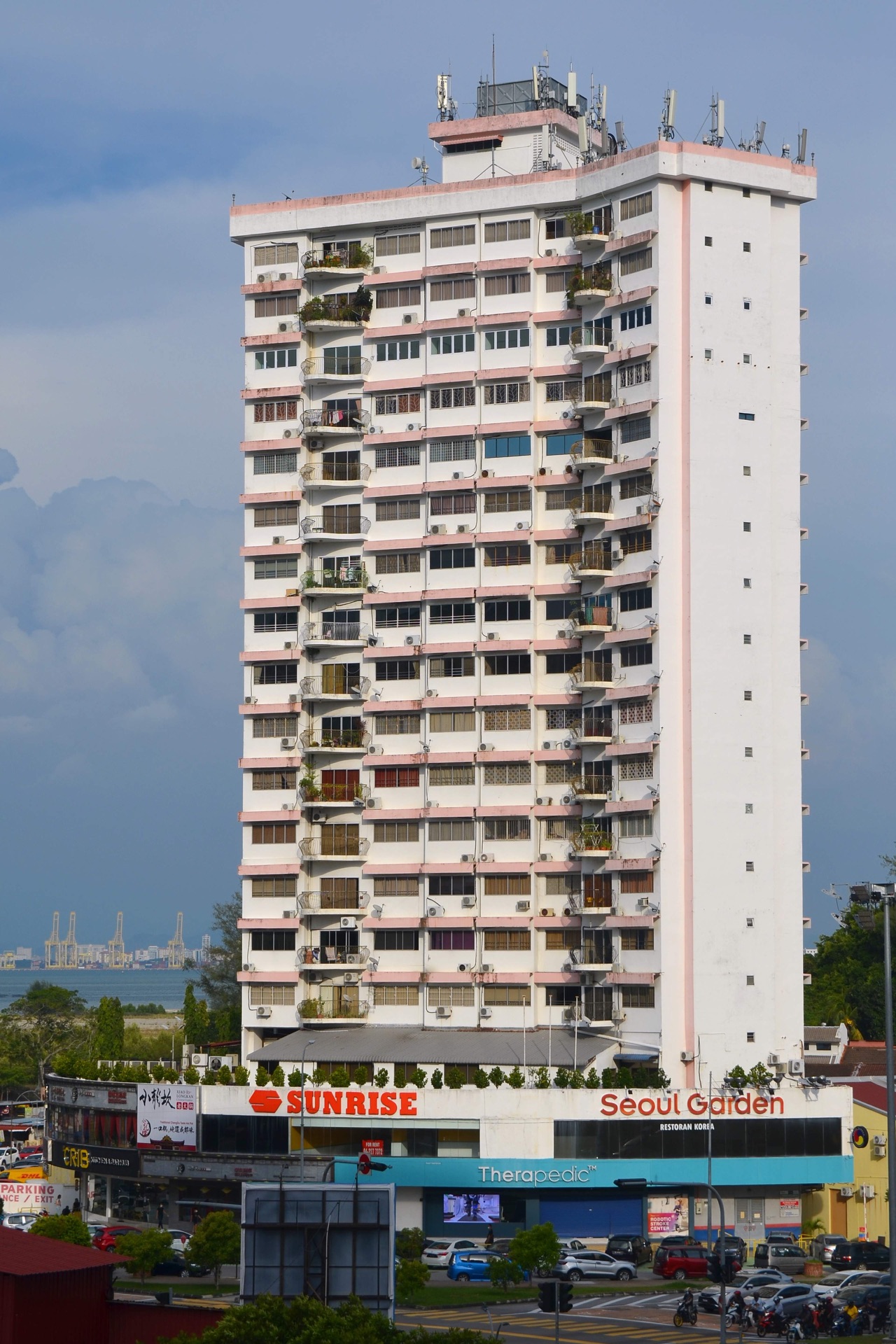
The same Penang unit can run as a corporate rental when you are 45, a holiday home when you are 55, a retirement residence when you are 65, and an inheritance when you are 85. That is unusual. Most overseas property assets can only do one of those jobs well. A Bangkok condo has good yield but a leasehold clock and a retirement lifestyle that suits a small subset of buyers. A Phuket villa is a lovely holiday home but a poor rental and a difficult inheritance. Penang is the one place in Southeast Asia where a single property, bought once and held for thirty years, can quietly change roles as the owner's life changes. This piece explains why that is structurally true — and why a Taiwanese buyer in particular is well-matched to the shape of the asset.
Key takeaways:
- Penang allows foreigners to hold freehold in their own name — the single feature that lets one asset carry across generations.
- The rental market has real depth from three different tenant pools — FIZ multinationals, medical tourism, international-school families — so the asset can earn even when you don't live in it.
- Healthcare, English, and Mandarin (with strong Hokkien overlap) infrastructure make the retirement stage realistic, not aspirational.
- The MM2H Gold tier (RM1M property minimum) matches the sweet-spot investment budget exactly — if you bought right at Stage 1, you already meet it.
- The catch: flat 8% foreign stamp duty, 3% state levy on the island, 30% RPGT in years 1–5, and ~70% max LTV. Plan the entry, do not improvise it.
Why a "one property, four lives" asset even exists in Penang
Four conditions have to co-exist for a property to carry a buyer across thirty years. Freehold in the buyer's own name, so it can be held and inherited without a nominee. A deep rental market, so it earns during the years the owner is not there. Livable retirement infrastructure — healthcare, language, food, community — so the owner can eventually move in rather than just visit. And clean inheritance mechanics, so the next generation actually receives it. Bali does not have the freehold. Ho Chi Minh City does not have the freehold. Phuket does not have the yield depth. Bangkok has the yield but the retirement lifestyle suits only a specific type of retiree. Penang is the one address in the region where all four conditions land in the same place.
The rental side is worth naming concretely. Penang's Free Industrial Zone hosts around 300 multinational companies — Intel, Bosch, Infineon, Motorola Solutions, Broadcom, Micron, Osram, B. Braun — and their corporate lease budgets are what keep mid-band condos in Bayan Lepas, Gelugor, Georgetown and Tanjung Tokong occupied. Medical-tourism arrivals via Gleneagles Penang, Island Hospital and Adventist Hospital drive a separate short-let and medium-stay demand. Four international schools on the island (Tenby, Straits International, Prince of Wales Island, Uplands) anchor a family-lease pool from expat parents. Three tenant pools, three different lease lengths — that is what "depth" means, and it is why the yield curve stays reasonable through cycles.
Stage 1 (age 45–55): the rental asset
At this stage the owner is still working in Taiwan. The unit is a pure investment — a local property manager runs it, corporate tenants pay a lease, and monthly rent lands in the owner's Malaysian bank account. Typical budget from clients I see is RM 1.2M to RM 1.8M for a freehold island condo.
Actual projects in this band right now:
- Lumina Residence — Georgetown, RM 1.03M–2.1M, freehold residential, 596 units, 43 floors, completion 2027. Georgetown catchment picks up medical, professional and post-graduate tenants.
- Waterstone — Tanjung Bungah, RM 1.29M+, freehold residential, 365 units, completion 2028. Family units 1,334–2,195 sq ft; better suited to expat-family leases than corporate.
- Fettes Residence — Tanjung Tokong subsale, RM 1.14M+ for larger 2,400+ sq ft units, freehold residential, completed 2011. IOI Properties. Mature building, real rental history.
- Merione Residences — Gelugor / The Light Waterfront, RM 1.42M+, freehold, completion 2029. Sits inside the mixed-use precinct next to the medical and USM catchments — the strongest corporate-lease fundamentals in this list.
- Andaman at Quayside — Tanjung Tokong subsale, RM 1.28M+, freehold, completed 2018. Bigger unit sizes for buyers who plan to live in it eventually.
Gross yields on this band typically sit between 3.5% and 4.5%; net after 8–10% management fee, maintenance, insurance and Malaysian non-resident withholding usually lands around 3.0–3.7%. That is the honest number. It is not a hot-money return, but it does something more valuable: it pays the property's own carrying cost for twenty years while you keep working in Taiwan.
Stage 2 (age 50–60): holiday home plus part-time rental
Around the mid-fifties the pattern shifts. The owner starts spending two or three months a year in Penang — the long Chinese New Year window, one summer month, sometimes a shoulder trip. The corporate tenant model gives way to either a longer-stay expat lease with a break clause, or, more commonly, a switch to short-term rental during the owner's absence.
The short-term rental calculator has honest baseline numbers I trust: Georgetown average daily rate RM 350–450 at around 50% occupancy; Tanjung Tokong RM 450–600 at around 52%. Pressure-test the calc with those figures rather than the developer marketing sheets, which typically assume 80% occupancy and top-of-band pricing. Penang's 2026 short-let licensing tightened the rules; residential-title condos need JMB or MC approval and are increasingly restricted, so if the Stage 2 income leg matters to you, it is worth revisiting the title type at the time of purchase.
Stage 2 is also the point where MM2H starts to matter. Below three months a year, the standard 30-day social-visit stamp is enough (with a border run). Above that, MM2H removes the friction. If you bought a qualifying RM1M+ unit at Stage 1, the property leg of MM2H Gold is already satisfied.
Stage 3 (age 60–70): the retirement residence
This is the stage that turns a decent investment into a great one, and the reason a Taiwanese buyer benefits more than most.
Healthcare is the anchor. Gleneagles Penang (~380 beds, JCI-accredited) and Island Hospital (approximately 600 beds post-expansion) are two full-service private hospitals within twenty minutes of the northern residential corridor. Penang Adventist, Loh Guan Lye and Pantai Hospital sit in George Town. Mandarin-speaking specialists are common; Hokkien is the working language of the nursing floor. For a couple in their late sixties this is a genuinely different quality of life from most retirement-migration destinations.
Monthly cost for a retired couple runs, from my client observations: frugal around RM 6,500 (~TWD 47,000), middle around RM 10,000 (~TWD 72,000), comfortable around RM 16,000 (~TWD 115,000). These cover a mid-range condo, mostly local food, one car, and basic international health insurance. Public statistics on retiree cost tend to under-count insurance and over-count utilities; these are real numbers.
Suitable projects for this stage — walkable, low-maintenance, close to healthcare — include Fettes Residence and Andaman at Quayside in Tanjung Tokong (both mentioned above), and Cantonment Residence in Pulau Tikus (RM 2.6M+, larger units 2,009–4,540 sq ft, completion 2030) for buyers who upgraded and want the last-home format.
Stage 4 (age 75+): the generational asset
Malaysia has no federal inheritance tax. Freehold, residential-title property in the owner's own name transfers to named heirs through the Malaysian grant of probate — the next generation's nationality does not restrict inheritance. What matters is that the estate document exists. Clients who have been through it recommend writing both a Malaysian will (covering the Penang asset specifically) and a Taiwan will (covering everything else), so neither court has to interpret the other.
Two follow-on things to plan at Stage 4. First, if the heirs sell within five years of inheritance, foreign-seller RPGT is 30% of the gain — they might want to hold at least six years, when RPGT drops to 10%. Second, Taiwan does tax the estates of Taiwanese decedents on worldwide assets, so the Penang property is declarable on the Taiwan side. A cross-border accountant costs a modest annual fee and prevents the mess.
The children then get an option — keep it as their own occasional-use base, rent it in the corporate market as their parents did, or sell into a mature secondary market. A 30-year-old asset in Tanjung Tokong with clean paperwork is a liquid thing; freehold residential title in an area with real rental depth does not become worthless because it aged.
Three sketches of how this actually plays out
These are composite, not specific clients, but the shape is real.
A 48-year-old Taipei engineer buys a 3-bed at Waterstone in 2026. Corporate tenant from Bosch at RM 5,800/month. He visits once a year until 55, when he switches to half-year use and short-term rental during his absence. At 62 he moves in properly on MM2H Gold; he already owned the qualifying property.
A 52-year-old Taichung business-owner couple buys Fettes Residence subsale at RM 1.4M. Rental during their working years pays the maintenance and puts a small monthly surplus into their retirement account. They move in at 66 and use the Adventist Hospital across the causeway for a knee surgery in year two.
A 58-year-old semi-retired Kaohsiung couple skips the rental phase entirely and buys Cantonment Residence at RM 2.9M as a direct retirement upgrade. Their two adult children inherit at 88; one keeps the unit, one wants the cash. The market provides both.
Why the Taiwanese buyer specifically benefits from this shape
Three reasons show up repeatedly. The first is a life-stage progression that tends to be linear — career, semi-retirement, retirement, family — which happens to line up with the four stages this asset supports. The second is a cultural comfort with long-term property holding rather than flip-culture, which is exactly what a 30-year hold requires. The third is language, food and community: Penang Hokkien and Taiwanese Hokkien are broadly mutually intelligible at market and daily-life level, Mandarin works across the northern corridor and in most private hospitals, and Taiwanese food culture translates well. That is the difference between "I could imagine retiring there" and actually retiring there.
Who this is not for (picked, not pitched)
Buyers who need the capital back inside five years. Foreign-seller RPGT is 30% in years 1–5 and does not fall to 0% for foreigners the way it does for citizens.
Buyers whose life plan does not realistically include living in Southeast Asia one day. If Stage 3 is not on the map, most of the point of this asset structure is lost — a KL investment condo or a REIT does the yield job better without the friction.
Buyers who cannot spare the equity. Foreign LTV is around 70% at best; on an RM 1.5M purchase that is roughly RM 450,000 in equity, plus 8% stamp duty (RM 120,000), plus 3% state levy (RM 45,000), plus legal (~RM 20,000) — call it around RM 640,000 (~TWD 4.5M) of upfront cash before you own the paint.
Buyers optimising for capital growth. Penang is not Bangkok or Ho Chi Minh City on capital appreciation; it is a total-return market where the yield, the tenure security and the eventual own-use value do most of the work.
What you have to get right at the buying stage
The regulatory numbers do not change with life stage — get them right once:
- Foreign minimum: RM 1,000,000 on Penang Island (per unit, all title classes), RM 600,000 on Seberang Perai (mainland).
- State levy: 3% of the purchase price on the island, 2% on the mainland — on top of the price.
- Stamp duty: flat 8% for foreigners on both the SPA and the MOT. The tiered 1–4% scale in developer brochures is the citizen rate; do not use it for your budget.
- Foreign LTV: about 70% at best; some banks cap lower on high-value units.
- State consent (COSA): 3–4 months, your lawyer runs it. Build it into your payment schedule from the start.
- RPGT for foreigners: 30% of the gain in years 1–5, 10% year 6 onward. Foreigners never reach the 0% band that citizens hit at year 6.
Sources. FIZ multinational count and named tenants: InvestPenang and individual company press releases. MM2H tiered structure: Malaysian Ministry of Tourism, current guidelines. Regulatory constants (foreign minimum, levy, stamp duty, RPGT, retention): Penang State Government, LHDN, Real Property Gains Tax Act. Hospital bed counts: Gleneagles Penang and Island Hospital public materials. Yield and cost figures are drawn from my own client observations across 2023–2026; treat them as directional, not statistical.
What I'd want to know if you asked me at a viewing
Which stage you are entering, honestly. That single answer changes which project I'd shortlist — a pure Stage 1 investor gets a different unit from a buyer whose Stage 3 is only ten years out. If you want to talk through which stage fits, what to buy for it, and how the entry economics look for your TWD budget, message me on WhatsApp. No brochures — just a conversation.