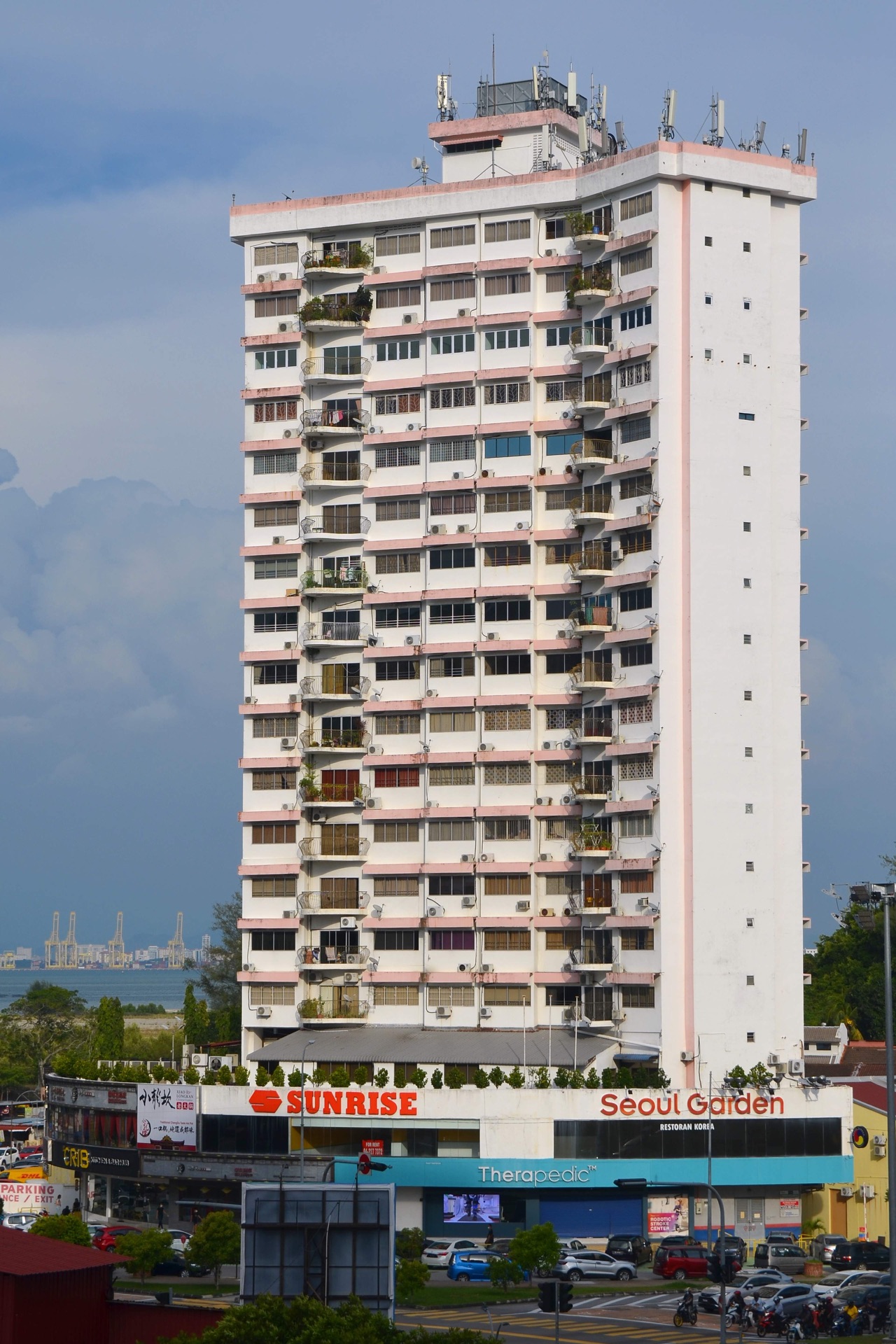
The semiconductor investment story driving Penang's economy isn't abstract for the people actually being relocated here. Every major FDI announcement translates into real executives, engineers, and senior technical staff moving to the island — sometimes for a defined assignment, sometimes as the start of a much longer stay. A growing number of them are buying property rather than renting, and the reasoning is worth understanding if you're facing this decision yourself.
Key takeaways:
- Penang is Malaysia's primary semiconductor assembly and test hub, in a country holding roughly 13% of the global ATP market, with 350+ multinational factories and 4,000+ supporting SMEs — including Intel's USD 7 billion 3D chip-packaging plant (announced December 2021).
- Renting generally suits assignments under 2 years; buying makes more sense at 3+ years or when a family is settling more permanently.
- Foreign buyers face the same rules regardless of relocation status: RM1,000,000 minimum on Penang Island (RM600,000 on the mainland), 70% maximum loan-to-value, and state consent adding 3–4 months to the transaction.
- Area choice tracks two factors — schools (Tanjung Tokong/Tanjung Bungah), healthcare and expat infrastructure (Gurney Drive/Pulau Tikus), or commute to the FIZ tech corridor (Gelugor/Bayan Lepas).
- An Employment Pass holder buys under the same foreign buyer rules as any other foreign national — the EP itself doesn't change eligibility, only the practical ease of mortgage documentation.
The Economic Story Behind the Relocation Wave
Penang is Malaysia's primary semiconductor assembly and test hub, in a country holding roughly 13% of the global ATP market, hosting more than 350 multinational factories and 4,000 supporting SMEs (InvestPenang). Intel alone has committed over USD 7 billion (announced December 2021) to build its first advanced 3D chip-packaging plant on the island. This isn't a single company's investment — it's a structural concentration of the global semiconductor supply chain's assembly and testing operations, and it requires a continuous flow of senior technical and management talent to run it.
For executives being relocated as part of this wave, the assignment is often genuinely multi-year rather than a short posting — capital-intensive semiconductor facilities take years to build, ramp, and stabilise, and companies increasingly plan executive assignments around that reality rather than rotating staff every 12–18 months.
Buy or Rent — The Actual Decision Framework
This is the question I get asked most directly, and the honest answer depends on assignment length and personal circumstances more than anything else.
Renting typically makes more sense when:
- The assignment is confirmed for under 2 years
- The company is covering housing as part of the package and buying would duplicate that benefit unnecessarily
- The executive isn't yet certain whether Penang will become a longer-term base beyond this specific role
Buying typically makes more sense when:
- The assignment is 3+ years, or genuinely open-ended
- The executive's family is relocating with them and settling in more permanently — children enrolling in international schools, for instance, tends to correlate with longer actual stays regardless of the official assignment length
- The entry cost comparison against the executive's home market (particularly Singapore or Hong Kong) makes Penang property look genuinely attractive as a standalone asset, not just a housing solution
- The executive wants to retain the option of keeping the property as a longer-term hold even after this specific role ends — either as a future return-to-Penang option or as a straightforward investment
Where Relocating Executives Actually Buy
The area choice tends to correlate closely with two factors: where the executive actually works, and whether they have school-age children.
Tanjung Tokong and Tanjung Bungah suit executives with families specifically because of proximity to Uplands International School and Dalat International School — for families making a multi-year commitment, school stability matters enormously, and living within a short drive removes one major daily friction point. See my Tanjung Tokong guide for the detail on this corridor.
Gurney Drive and Pulau Tikus suit executives who prioritise healthcare access and established expat community infrastructure — relevant for senior executives, often somewhat older, who value the Pulau Tikus hospital cluster's proximity and the established professional services ecosystem around Gurney.
Gelugor and Bayan Lepas suit executives working directly in the FIZ tech corridor who prioritise a short commute over north-island lifestyle amenities. Given that Bayan Lepas is where much of the actual semiconductor manufacturing and testing capacity sits, executives with day-to-day operational responsibilities at these facilities often specifically choose this corridor to minimise commute friction. See my Georgetown vs Bayan Lepas comparison for the trade-off between lifestyle and commute-driven area choices.
The Practical Timeline for a Relocating Buyer
Standard Malaysian foreign buyer rules apply regardless of the relocation context — there's no expedited track for executives relocating for confirmed employment. Budget for:
- RM1,000,000 minimum on Penang Island (RM600,000 on the mainland)
- State consent processing, typically adding 3–4 months on top of a standard transaction
- 70% maximum loan-to-value, meaning 30% downpayment plus acquisition costs — see my foreign buyer mistakes guide for the LTV planning detail that catches buyers who assume Malaysian rules mirror their home market
Executives should start the property search as early as the relocation is confirmed, ideally in parallel with visa and work pass processing, given these additional timeline requirements. Waiting until arrival in Penang to begin searching compresses an already multi-step process unnecessarily.
The Employment Pass and Property Ownership Question
Property ownership in Malaysia is not contingent on holding a specific visa or work pass category — an Employment Pass holder can purchase property under the same foreign buyer rules as any other foreign national. What does change is the practical logistics: EP holders typically have a Malaysian bank account and local income documentation already in place through their employer, which can meaningfully smooth the mortgage application process compared to a foreign buyer purchasing entirely from overseas. See my expat work pass property guide for the detail specific to EP holders.
What Happens If the Assignment Ends Early
This is worth planning for honestly rather than assuming the best case. If a relocated executive's assignment ends before they'd planned — company restructuring, a shorter-than-expected posting, or a personal decision to relocate again — the property doesn't need to be sold immediately. Many executives who've bought in Penang during a work assignment simply retain the property as a rental investment or occasional-use asset after moving on, particularly given Penang's stable long-term rental demand from the ongoing FDI-driven expat and professional community. The exit isn't forced — but buyers should factor holding-period flexibility into their initial purchase decision rather than assuming they'll definitely sell the moment the assignment concludes.
Zac’s Take
Zac Ong
The executives I work with in this category are usually making a genuinely practical decision, not a speculative one — they're weighing a multi-year commitment against what property actually costs here versus what they're used to paying at home. My honest advice: don't buy purely because your company's relocation package makes it feel easy, and don't rent purely out of inertia if you already know this is a 3+ year commitment. Think about where you'll actually spend your time — near the school, near the hospital, or near the plant — and let that drive the area choice before the specific unit. I work with relocating executives regularly and can move quickly once you know your assignment timeline, but the state consent process means starting early genuinely matters here.
Sources: Semiconductor capacity share, factory/SME counts, and Intel's investment figure per Penang state and federal investment-promotion data; foreign-buyer minimum price, loan-to-value cap, and state consent timeline per Penang state authority guidelines on foreign property ownership.
If your company is relocating you to Penang and you're weighing whether to buy, reach out directly — I can walk through the numbers against your specific assignment length and family situation.