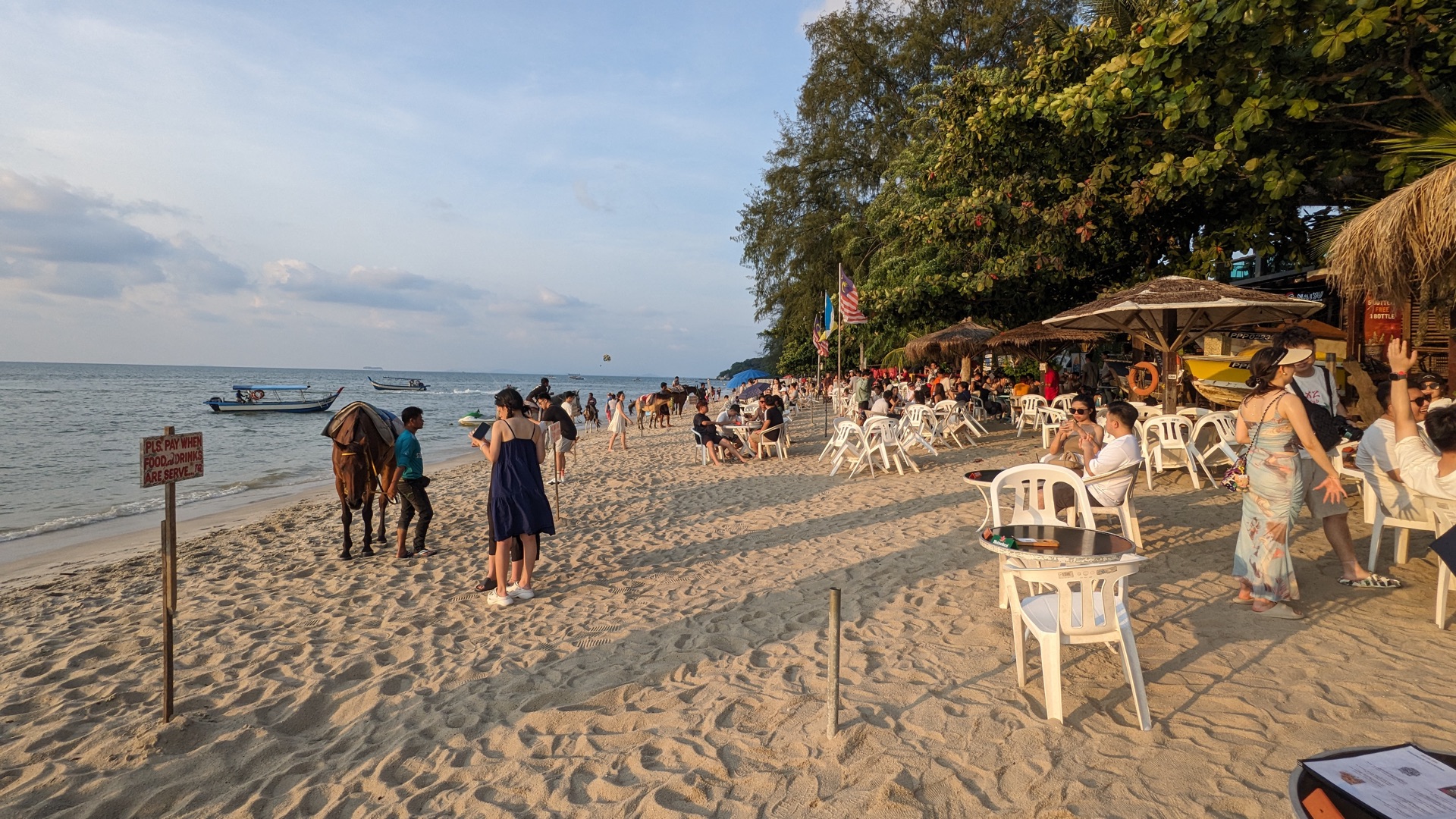
Penang and Phuket both attract Western, Chinese, Japanese, and Korean lifestyle buyers who've decided Southeast Asia is where they want to spend meaningful time. The comparison usually starts with beaches versus heritage, but the real decision is more structural: how you actually own the property, what happens on exit, and what daily life looks like beyond the initial holiday impression.
Here's the honest comparison.
Key takeaways:
- Penang gives foreigners freehold ownership of condos and landed property, subject only to the state minimum price (RM1M island, RM600K mainland) and state consent — no quota restriction.
- Phuket condos can be freehold but are capped at a 49% foreign-ownership quota per building, which often fills before construction completes in popular areas; landed property is leasehold (30 years) or via a Thai company structure.
- Penang property runs roughly RM700–1,800 PSF versus Phuket's THB 100,000–250,000 PSM (~RM1,300–3,300 PSF equivalent) — Penang is cheaper across most day-to-day cost categories too.
- Penang gross rental yields typically run 3.5–5.5% with more consistent long-term tenant demand; Phuket's STR-driven yields can hit 6–10% in high season but require active management and drop in the off-season.
- Penang's private healthcare cluster (Gleneagles Penang, Island Hospital, Loh Guan Lye, Penang Adventist) is more concentrated than Phuket's, a real edge for lifestyle retirees.
The Ownership Structure Reality
This is the single most consequential difference between the two markets.
Penang (Malaysia):
- Foreigners can own condominiums and landed property freehold
- Subject to state minimum price (RM1M island, RM600K mainland)
- State consent required (3–4 months processing)
- No quota restriction — you own your specific unit outright
Phuket (Thailand):
- Condominium units can be owned freehold, but subject to the 49% foreign quota rule per building
- The 49% quota applies to total registered floor area — once filled, remaining units must go to Thai nationals or Thai company structures
- Landed property (villas, houses) cannot be owned freehold by foreigners — the common structures are 30-year leases with renewal options, or Thai company ownership with 51% Thai shareholders
For buyers who prioritise tenure certainty and straightforward ownership, Penang offers a structurally cleaner proposition. Phuket's freehold condo path works, but requires quota availability at the specific building. Landed Phuket is effectively a lease or a company structure, both of which carry ongoing considerations that freehold does not.
Understanding the 49% Rule in Practice
The 49% quota is not a theoretical concern — in popular Phuket buildings (Patong, Kata, Bang Tao, Bang Rak), the quota routinely fills months before construction completes. Late foreign buyers find themselves unable to purchase the specific building they wanted on a freehold basis, forced to either:
- Buy a different building with quota available
- Sign a 30-year leasehold for a unit in a quota-full building
- Structure a Thai company purchase (with 51% Thai shareholders)
None of these are catastrophic, but all of them are constraints that Penang buyers simply do not face.
There has also been active discussion in Thailand about reducing the 49% quota to 30–39%, motivated by concerns about foreign demand inflating Thai buyer pricing. As of 2026, no reduction has been legislated, but foreign buyers should factor policy risk into long-term hold considerations.
Lifestyle: The Real Day-to-Day Comparison
Phuket lifestyle:
- Beach-centric — Patong, Kata, Karon, Bang Tao, Nai Harn — direct beachfront living is genuinely accessible
- Resort and hotel-dense — international tourism infrastructure at scale
- International F&B and Western-oriented lifestyle amenities widely available
- Muay Thai gyms, kite surfing, yacht chartering, diving
- Seasonal — high season (Nov–Apr) meaningfully different from low season (May–Oct)
Penang lifestyle:
- Urban-heritage anchor (Georgetown UNESCO) alongside coastal areas (Tanjung Bungah, Batu Ferringhi)
- Food culture is genuinely exceptional — hawker centers, kopitiams, cross-cultural cuisine
- Walkable urban character (particularly Georgetown, Pulau Tikus)
- Consistent year-round tropical climate without Phuket's dramatic seasonal shift
- Less beach-centric but more culturally textured
For pure beach lifestyle, Phuket is the better answer. For cultural diversity and urban-heritage lifestyle with beach access as a secondary layer, Penang is the better answer.
Healthcare Depth
Penang has one of Southeast Asia's most concentrated private hospital clusters. Gleneagles Penang, Island Hospital, Loh Guan Lye Specialists Centre, Penang Adventist Hospital, and Mount Miriam Cancer Hospital are all within a 15-minute radius in the Pulau Tikus / Burma Road corridor. For most specialist care, quality is genuinely comparable to Singapore private hospitals at meaningfully lower cost.
Phuket has capable private hospital infrastructure — Bangkok Hospital Phuket, Phuket International Hospital, and others — with international-standard care available. The cluster is less dense than Penang's, and for very specialist care many foreign residents refer to Bangkok.
For lifestyle retirees, both markets are viable healthcare bases. Penang's density is a genuine advantage that isn't widely appreciated outside Southeast Asia.
Cost of Living
Both are meaningfully cheaper than Sydney, London, Tokyo, or Hong Kong. Relative to each other:
| Category | Penang | Phuket |
|---|---|---|
| Property PSF (island equivalent) | RM700–1,800 | THB 100,000–250,000 PSM (~RM1,300–3,300 PSF equivalent) |
| Long-term rental (2BR condo, expat area) | RM2,500–4,500/mo | THB 25,000–50,000/mo (~RM3,300–6,500) |
| Restaurant meal (mid-range) | RM40–80 | THB 400–1,000 (~RM53–130) |
| Private healthcare (specialist consult) | RM150–350 | THB 1,500–4,000 (~RM200–530) |
Penang tends to be cheaper across most day-to-day categories. Phuket's tourism economy prices amenities in a way that's noticeably more expensive than Penang for equivalent quality.
Visa and Long-Stay Options
Penang / Malaysia:
- Social visit pass: 90 days on arrival for most Western, Japanese, Korean, HK, Australian nationals
- MM2H (Malaysia My Second Home): renewable long-stay visa with financial requirements
- DE Rantau: remote worker visa, 12 months renewable
Phuket / Thailand:
- Visa exemption: 30–60 days depending on nationality
- Thailand Elite Visa: multiple tiers, 5–20 year residency options
- Long-Term Resident (LTR) Visa: 10-year renewable, higher financial thresholds
- Retirement visa: over-50 with financial requirements
Both markets have viable long-stay pathways. Thailand's tiered visa options (particularly Elite) offer more explicit residency products; Malaysia's MM2H is more straightforward but with tightened financial requirements.
Rental Investment Comparison
Penang rental profile:
- Diverse tenant pool: tech corridor professionals (Bayan Lepas), medical/academic (Gelugor, Georgetown), expats (Tanjung Tokong, Gurney), STR (Georgetown)
- Long-term rental more common than nightly STR
- Consistent occupancy in established areas
- Gross yields typically 3.5–5.5%
Phuket rental profile:
- Heavily tourism-driven, STR (Airbnb) is the dominant model in popular areas
- Yields can be strong in high season but drop significantly in low season
- Management overhead is meaningful for STR operations
- Long-term rental market is thinner, primarily to expat community
- Gross annual yields vary widely — high-performing STR properties in prime locations can achieve 6–10%; underperformers can drop below 3%
For consistent yield without heavy management overhead, Penang tends to be more predictable. For higher upside with active STR management in the right property, Phuket has more headroom.
When Each Wins
Pick Penang if:
- Freehold ownership certainty matters to you
- You value urban-heritage lifestyle alongside beach access
- Healthcare depth is a priority (retirees particularly)
- Cost of living matters and you want lower ongoing expenses
- You want consistent year-round tenant demand for rental
- You value cultural texture and food culture
Pick Phuket if:
- Direct beach lifestyle is the primary buying reason
- You want established international tourism infrastructure
- STR income is central to your investment thesis and you have management capability
- Thailand Elite Visa or long-stay pathways specifically appeal
- You accept the 49% quota or Thai company structure trade-offs
Zac’s Take
Zac Ong
I have foreign buyers regularly compare Penang against Phuket, and the honest framing I use: are you buying a beach or are you buying a life? For a beach-only holiday-home use case, Phuket wins. For a serious semi-relocation, medical retirement base, or long-term hold where you actually want to live there for months at a time, Penang's freehold certainty, healthcare depth, and cultural texture usually win. The 49% quota rule is not theoretical — I've seen buyers get to the SPA stage in Phuket and discover the specific building they wanted is quota-full. That doesn't happen in Penang. If tenure certainty matters to you, that's a genuine advantage.
If you're weighing Penang vs Phuket for a lifestyle property and want an honest conversation from someone who covers Penang seriously, reach out. I can walk you through the Penang side and be honest about where Phuket might actually be the better fit for your specific brief.
For more on Penang as a lifestyle base, see my retire in Penang without MM2H guide and my breakdowns for MM2H property strategy and China buyers in Penang. Run your own numbers with the affordability calculator, check exit costs with the RPGT calculator, and track actual transacted PSF and yield data on the Penang price index.
Sources: Penang state minimum purchase price and consent requirements per Penang state authority guidelines; Thailand's 49% foreign quota rule per the Condominium Act B.E. 2522 (1979); Penang PSF and yield ranges from our own tracking on the Penang price index.