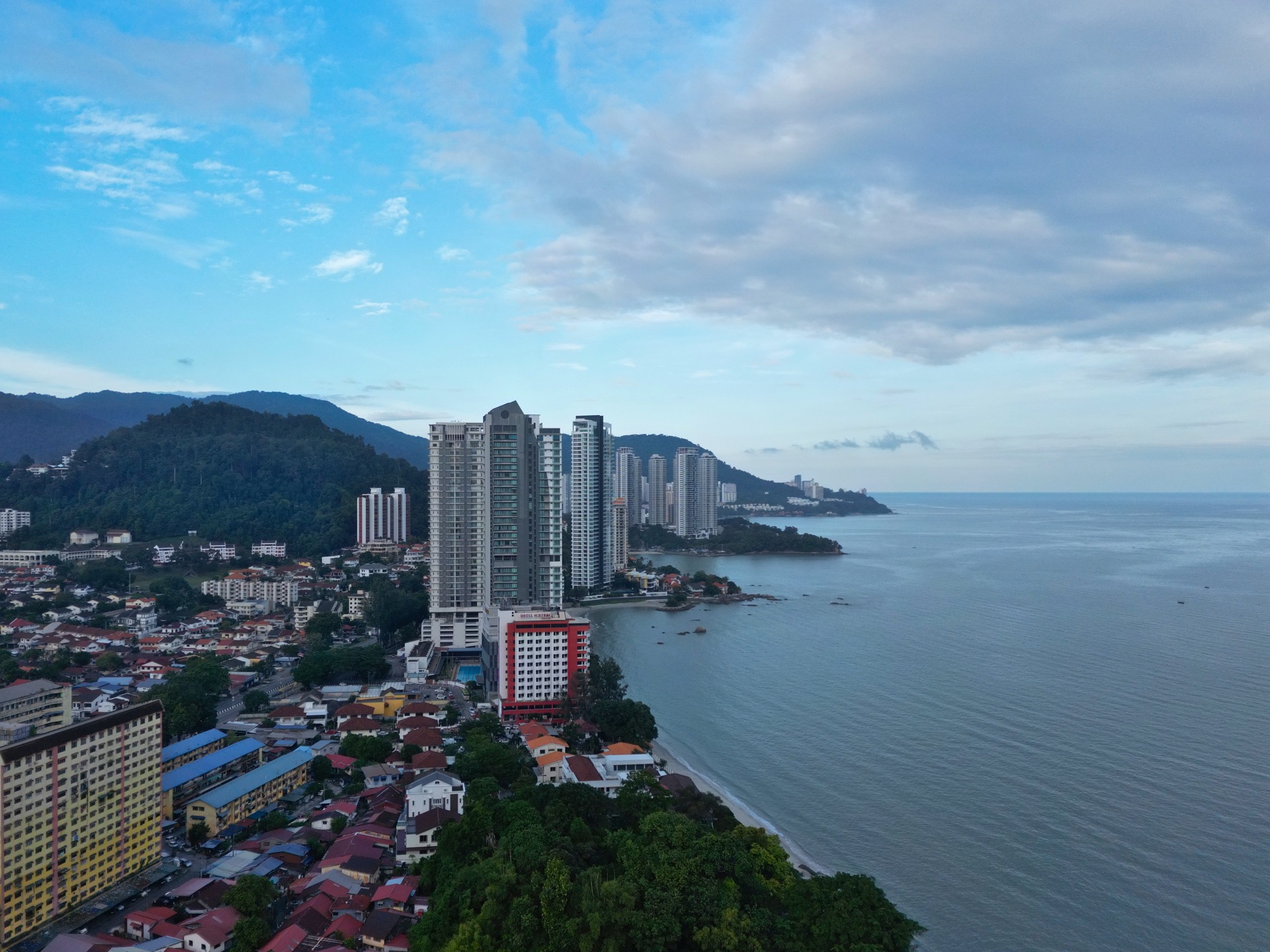
The MM2H conversation tends to go one of two ways. Either someone is genuinely ready to meet the financial requirements and start the application, or — more often — they've looked at MM2H, found the income proof requirements and fixed-deposit obligations more friction than they expected, and now want to know if there's another way.
There is. The question "can I actually live in Penang without MM2H?" has a practical answer, and it's more accessible than most people assume.
How People Actually Live in Penang Long-Term Without MM2H
The social visit pass approach. Most Western, Japanese, Korean, Taiwanese, Singaporean, and Australian nationals receive a 90-day social visit pass on entry to Malaysia. That is three months at a time. At the end of 90 days, you can:
- Exit Malaysia briefly (a short flight to Thailand, Indonesia, or Singapore) and re-enter to get a fresh 90 days
- Apply for a short in-country extension through the Immigration Department in some circumstances
This is not a loophole — it is how Malaysian immigration works. Many long-term expat residents have lived in Penang on rolling social visit passes for years without MM2H. The limitation is that it requires periodic exits and provides no formal residency status. If you need a bank account, driving licence, or other documentation requiring proof of long-term stay, MM2H or another visa category becomes more relevant.
DE Rantau. If you do any form of remote work — consulting, freelance, digital business — Malaysia's DE Rantau pass is a 12-month renewable visa available to eligible remote workers. It is not a retirement visa, but if you have income-generating remote work, it provides a cleaner legal pathway than rolling social visit passes.
MM2H as a medium-term goal. Many people I work with buy a property first, spend a year getting comfortable in Penang on social visit passes, and apply for MM2H once they're genuinely committed. The purchase gives them an asset reason to formalise their stay; the MM2H provides the long-term legal clarity. You do not need to sequence it the other way around.
What a Comfortable Life in Penang Actually Costs
I find it more useful to give real cost ranges than to optimise for the lowest possible monthly outgoing. The question is not "how cheaply can I survive in Penang?" — it's "what does a comfortable, dignified lifestyle cost?"
Monthly Cost Estimate: Single Person
| Category | Budget (RM) | Notes |
|---|---|---|
| Housing (renting a 2BR condo, expat corridor) | RM2,500–4,000 | Tanjung Tokong, Gurney, Georgetown area |
| Food (mix of hawker and restaurants, no cooking) | RM1,200–2,000 | Penang's food culture makes this easy and enjoyable |
| Transport (car or Grab-heavy) | RM600–1,500 | Car with fuel vs Grab-only vs mix |
| Utilities (electric, water, internet, mobile) | RM350–600 | Air-conditioning is the main electricity cost |
| Private health insurance | RM300–700 | International plan; varies by age and coverage |
| Entertainment, fitness, weekend activities | RM500–1,200 | Gym, Penang Hill, weekend getaways |
| Miscellaneous / buffer | RM500–800 | Maintenance, one-off costs |
| Total | RM6,000–10,800 | Comfortable, not frugal |
For a couple, add roughly 50–60% to the single-person figure (housing and transport are largely shared). A comfortable couple lifestyle in Penang runs RM9,000–16,000 per month — significantly less than Singapore, Sydney, London, or Tokyo at a comparable comfort level.
If you own your property outright (no mortgage), remove housing from the above and you are looking at RM3,500–6,800 per month for a comfortable lifestyle. For retirees with pension income or investment returns in a stronger currency, that number is highly achievable.
Healthcare: The Question Everyone Eventually Asks
Penang's private hospital network is the most frequently cited reason buyers choose Penang over other Southeast Asian retirement destinations. The specifics:
Gleneagles Penang is the flagship. It has been serving the Japanese and Western expat community for decades, has a reasonable depth of specialist coverage, and is where most expat residents go for anything beyond GP level. English is the working language throughout.
Penang Adventist Hospital and Pantai Hospital Penang offer alternatives with different specialist profiles and waiting time dynamics.
Cost of care. Private hospital consultation fees, diagnostic imaging, and surgical costs in Penang run at roughly 20–40% of Singapore private hospital equivalents, and a fraction of what the same care costs in Australia, the UK, or Japan. Routine outpatient, dental, and GP care is genuinely low-cost.
Insurance. I recommend carrying international private health insurance regardless of how healthy you are. Regional plans covering Malaysia, Thailand, and Singapore are available and relatively affordable. Do not arrive without coverage — unexpected hospitalisation can be expensive even in Penang's private system.
Limitations. For very complex conditions — advanced oncology, cardiac surgery requiring high-acuity subspecialty, rare disease management — Penang's hospitals will sometimes refer to KL (PPUM, Pantai KL, Prince Court) or Singapore. Plan for this possibility rather than assuming Penang covers everything.
Where to Live
The right location depends heavily on lifestyle priorities:
Tanjung Tokong / Gurney corridor — the established expat zone. Walkable amenities, Straits Quay marina, international schools nearby (relevant if family visits), highest density of English-speaking services. Most expensive of the island options.
Georgetown — heritage, culture, the island's best food concentration, walkable to most of what you need day-to-day. Younger energy than Tanjung Tokong; better for buyers who want culture over marina. Some STR potential if you decide to let when away.
Batu Ferringhi / Tanjung Bungah — beachside. Quieter than the central corridor. Better for buyers who want sea access on their doorstep. Less urban amenity density.
Gelugor — emerging waterfront, The Light precinct, close to USM and Queensbay. Good all-freehold new launch pipeline. Quieter than the north island but with proper infrastructure.
Active Launches Worth Considering
For buyers purchasing rather than renting:
Crown Penang (entry units fall below the RM1,000,000 foreign-buyer minimum) — from RM704K freehold (commercial HDA title) in Tanjung Tokong. The expat corridor, sea views on higher floors, lifestyle infrastructure on the doorstep. Foreign buyer minimum means looking at larger units above RM1M.
Scott @ Logan (entry units fall below the RM1,000,000 foreign-buyer minimum) — from RM436K freehold in Georgetown heritage fringe. Boutique scale, heritage address, Georgetown walkability. Foreign buyers need RM1M+ units.
Waterstone — from RM1.287M freehold in Tanjung Bungah. Sea-facing lifestyle. Quieter, more resort-feel.
See what a cash purchase or 70% LTV gets you →Set yourself as a foreign buyer and run the numbers on what you can realistically afford.The Buy vs Rent Decision
Renting first is the right call if you are not certain about Penang or about which part of the island suits you. Monthly rents for a furnished 2-bedroom condo in the expat corridor range from RM2,500–4,000. Spending a year renting costs you RM30,000–48,000 — a reasonable price for certainty before a RM1M+ purchase commitment.
Buying makes sense when you are genuinely committed to Penang as a base, you have the capital, and you want to build an asset rather than pay rent indefinitely. If you purchase with a 70% loan from a Malaysian bank, the monthly mortgage on a RM1M property is roughly RM3,500–4,200 at current rates — comparable to renting but building equity.
Zac’s Take
Zac Ong
The buyers I see do best with the Penang retirement lifestyle are the ones who visited three or four times, spent real time here — not just a week at Gurney Bay — and came back with a specific picture of how they wanted to spend their days. They know which coffee shop they'd go to on Tuesday mornings. They've checked which hospital they'd use. They've eaten at enough hawker centres to know Penang's food culture isn't a tourist novelty for them — it's genuinely how they want to eat. That specificity is a good signal. The ones who struggle are the ones who bought primarily because Southeast Asia felt like an interesting idea. Penang rewards buyers who know what they're optimising for.
If you're in the research phase on a Penang retirement or semi-retirement lifestyle and want to understand the property side of it — what's realistic at your budget, whether to buy or rent first, which area suits your lifestyle — reach out directly. I'm happy to give you a grounded picture without the sales pitch.
Sources: Project prices, PSF, sizes, unit counts, tenure, land title, developer and completion year from our tracked dataset, compiled from developer price lists, official project sites and public listings. The foreign-buyer minimum purchase price, 3% island / 2% mainland state levy and state consent requirement per Penang state policy and s.433B of the National Land Code. MM2H tiers per MOTAC. Figures move with the market — confirm current details with the developer or your solicitor before committing.