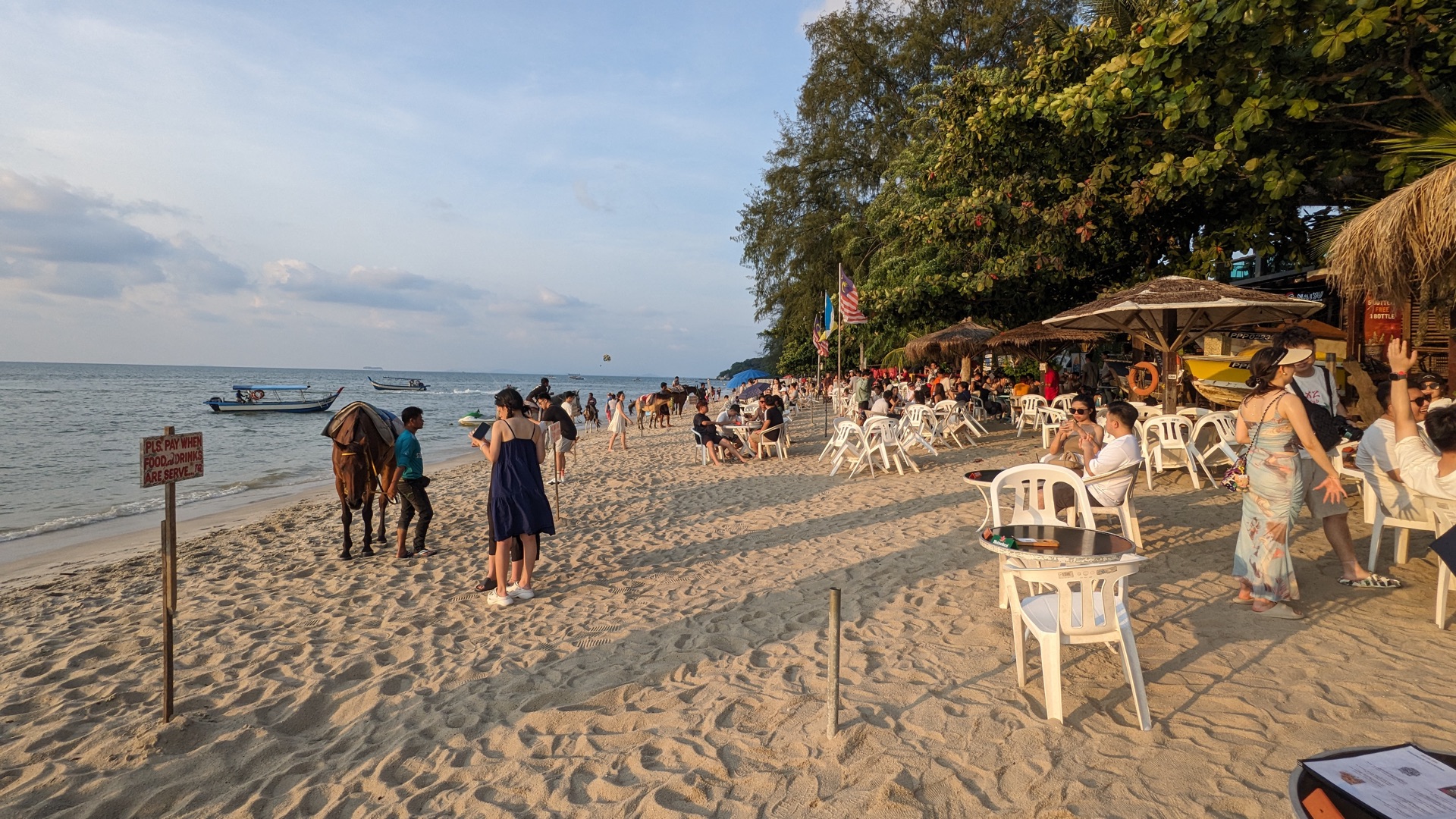
Penang and Bali represent almost opposite ends of the Southeast Asian foreign property spectrum. Penang offers structural simplicity — freehold ownership, established legal framework, moderate yields, healthcare infrastructure. Bali offers structural complexity but with genuine lifestyle and yield upside for buyers who understand what they're getting into.
For foreign investors comparing them, this is a genuinely important framing decision.
Key takeaways:
- Penang allows freehold foreign ownership above RM1M (island) / RM600K (mainland), with state consent taking 3–4 months.
- Bali has no freehold path for foreigners — ownership runs through Hak Pakai (up to 80 years), leasehold (typically 25–30 year terms), or a PT PMA company holding HGB/Hak Pakai titles.
- A PT PMA now requires only IDR 2.5 billion (~USD 150,000) in paid-up capital under BKPM Regulation 5/2025, and is the only structure that legally allows a foreigner to run a rental business in Indonesia.
- Bali's villa STR market can hit 8–15% gross yields in prime areas versus Penang's steadier 3.5–5.5% gross, but with far more operational overhead and seasonality.
- Penang's Pulau Tikus hospital cluster gives it a clear healthcare edge; Bali's serious specialist care often means referral to Jakarta or Singapore.
The Ownership Structure Reality
This is the single largest difference between the two markets.
Penang (Malaysia):
- Foreigners can own freehold (Hak Milik equivalent) — condominiums and landed
- Minimum price: RM1M island / RM600K mainland
- State consent required (3–4 months)
- Ownership is your name on the title, indefinite duration
Bali (Indonesia):
- Foreigners cannot own freehold (Hak Milik) — this is reserved for Indonesian citizens
- Three legal paths for foreign property ownership:
- Hak Pakai (Right to Use) — individual foreigners with KITAS/KITAP visa, up to 80 years total (initial term plus extensions)
- Leasehold (Hak Sewa) — contract-based, typically 25+25+25 or 30+20+30 year structures; no statutory maximum
- PT PMA (foreign investment company) — holds HGB or Hak Pakai titles, up to 80 years, only structure legally allowing rental business operation
None of these are freehold in the sense Malaysian buyers understand. Each has specific requirements, costs, and long-term considerations.
For buyers who value tenure simplicity, Penang offers a materially different proposition. Bali's structures work — hundreds of thousands of foreigners hold Bali property through these paths — but they require understanding what you're actually purchasing.
Understanding Bali's Three Ownership Paths
Hak Pakai: The most straightforward foreign individual path. Requires a KITAS (temporary stay) or KITAP (permanent stay) visa. Initial term with extensions, up to 80 years total. Suits individual buyers acquiring a personal residence they'll actually live in for the medium-long term.
Leasehold (Hak Sewa): Contract-based, typically structured as 25 or 30 year initial terms with contractual renewal options (25+25+25 or 30+20+30 are common). No statutory maximum, but renewal is contractual — meaning enforceability depends on the specific contract and Indonesian legal process. The most accessible structure with lowest transaction costs, no visa required. Widely used by foreign holiday-home buyers.
PT PMA: A foreign investment company. BKPM Regulation 5/2025 reduced minimum paid-up capital to IDR 2.5 billion (~USD 150,000). The PT PMA can hold HGB (Hak Guna Bangunan, Right to Build, typically 30 years extendable up to 80 years total). This is the only structure that legally allows a foreigner to operate a short-term rental or villa management business in Indonesia. Higher setup cost and ongoing compliance, but essential for any commercial rental strategy.
Rental Yield: Genuinely Different Markets
Bali:
- Villa STR market can deliver 8–15% gross yields in strong-performing properties in prime areas (Canggu, Seminyak, Uluwatu, Ubud)
- Requires professional management, marketing, and quality furnishing
- Significant seasonal variability
- PT PMA structure required for compliant rental business operation
- High-effort, high-return profile
Penang:
- Gross yields typically 3.5–5.5% across most areas
- Long-term rental dominant model (with STR opportunities in Georgetown and select projects)
- Consistent occupancy in established areas
- Lower operational overhead — property manager fees, tenant turnover simpler
- Lower-effort, moderate-return profile
Bali's yield upside is real. So is the operational complexity, market saturation risk in prime areas, and dependence on tourism cycles. Penang's yields are lower but more consistent and require less active management.
Healthcare and Practical Living
Penang:
- Pulau Tikus hospital cluster: Gleneagles Penang, Island Hospital, Loh Guan Lye, Adventist, Mount Miriam
- Quality genuinely comparable to Singapore private care at significantly lower cost
- English is the working language across professional and daily interactions
- Established expat community, international schools accessible
Bali:
- BIMC Hospital Nusa Dua and Siloam Hospitals Denpasar are the flagship private hospitals
- Serious specialist care often requires referral to Jakarta or Singapore
- English widely spoken in expat and tourism areas but less universal than Penang
- Growing expat community particularly in Canggu, Ubud, Sanur
For healthcare-first retirees, Penang has a clearer advantage. For lifestyle-and-community retirees drawn to Bali's specific character, healthcare is a trade-off worth accepting.
Cost of Living Comparison
Both are significantly cheaper than developed-country equivalents. Relative to each other:
| Category | Penang | Bali |
|---|---|---|
| Long-term rental (2BR villa/condo, expat area) | RM2,500–4,500/mo (~USD 550–1,000) | IDR 15–35M/mo (~USD 950–2,200) |
| Restaurant meal (mid-range) | RM40–80 | IDR 100,000–300,000 (USD 6–20) |
| Private healthcare (specialist consult) | RM150–350 | IDR 500,000–1,500,000 (USD 32–95) |
| Grocery basket (Western brands) | Moderately expensive | Notably expensive (imported goods) |
Penang tends to be cheaper across day-to-day categories. Bali's expat-area pricing (particularly Canggu, Seminyak, Ubud) has risen meaningfully as tourism and remote-work populations have grown.
Visa and Long-Stay Options
Penang / Malaysia:
- Social visit pass: 90 days on arrival for most Western, Japanese, Korean nationals
- MM2H: renewable long-stay with financial requirements
- DE Rantau: remote worker visa
Bali / Indonesia:
- Visa exemption: 30 days for many nationalities
- B211A visit visa: extendable, useful for extended stays
- KITAS (temporary stay): work, investor, retirement categories with specific requirements
- Second Home Visa: 5 or 10 years for eligible applicants
- KITAP (permanent stay): available after certain KITAS thresholds
Both markets have viable long-stay pathways. Indonesia's structure is more complex but offers longer-term residency products via KITAP.
When Each Wins
Pick Penang if:
- Freehold ownership certainty is important to you
- Healthcare depth is a priority (particularly for retirees)
- You want lower operational overhead on any rental strategy
- Urban-heritage lifestyle alongside coastal access appeals
- Consistent moderate yields work for your investment thesis
- Lower ongoing cost of living matters
Pick Bali if:
- You want the specific spiritual, wellness, and creative community culture
- Beach-and-nature lifestyle is the primary buying motivation
- You're prepared to work with Hak Pakai, leasehold, or PT PMA structures
- Higher STR yield potential with active management is your investment thesis
- Second Home Visa or KITAP pathways specifically appeal
- Bali's specific character (rice terraces, temples, surf culture) is central to your lifestyle vision
The Hybrid Reality
Some foreign buyers own in both — Penang for the freehold ownership certainty and healthcare, Bali for the lifestyle character and STR upside. This works when the economics and time commitment support two properties, but each should be evaluated on its own merits.
Zac’s Take
Zac Ong
I get foreign buyers comparing Penang and Bali more often than people realise — usually Western, Australian, or European buyers who've done Southeast Asia comparison research. What I tell them honestly: if what you're actually optimising for is a straightforward freehold hold, Bali is a genuinely complicated proposition. Even the best-structured Bali purchase has ongoing considerations that a freehold Penang purchase simply doesn't have. If what you're optimising for is a specific Bali lifestyle — the surf culture, the yoga community, the spiritual scene — Penang cannot replicate that and you should buy Bali despite the structural complexity. The buyers who get into trouble are the ones who chose Bali for perceived yield without fully understanding the PT PMA setup, or chose Penang thinking it would have Bali's lifestyle character. Match the market to your actual use case.
If you're weighing Penang against Bali for a foreign investment or lifestyle purchase, reach out for an honest conversation. I can cover the Penang side thoroughly and be upfront about where Bali might genuinely be the better fit for your specific situation.
For deeper Penang-specific foreign buyer context, see my full foreign buyer guide, the true cost breakdown, and run your own numbers with the affordability calculator or ROI calculator.
Sources: Penang foreign-buyer minimum price and state consent process per Penang state authority guidelines; Penang gross rental yields per our own Penang Price Index tracking; Indonesian PT PMA capital requirement per BKPM Regulation 5/2025.