Yes — and BN(O) status makes no difference either way. Malaysia treats you as a foreign buyer on your passport, not your visa. You can own freehold outright from RM1,000,000 on the island (RM600,000 mainland), plus a 3% state levy (2% mainland), a flat 8% stamp duty, and state consent of 3–4 months. I've noticed a pattern over the past few years: Hong Kong buyers and BN(O) holders in the UK are looking at Penang differently from how they looked at it before 2020. It's no longer just a holiday destination or a retirement thought experiment. It's a serious asset diversification question. And when I run the numbers for them — currency conversion, entry price, yield comparison — Penang consistently looks better than they expected.
Key takeaways:
- The foreign-buyer minimum on Penang Island is RM1,000,000 — roughly HKD 1.8–2.0M or GBP 175–195K at current exchange rates
- Penang island freehold condos gross 3.5–5.0% versus 4.0–6.0% for UK regional buy-to-let, but net yields land closer (2.5–3.5% vs 2.0–3.5%) once UK council tax and void periods are factored in
- Malaysia has a double taxation agreement with the UK (rental income taxed in Malaysia is generally creditable against UK tax) but no DTA with Hong Kong
- RPGT on disposal is 30% in years 1–5, dropping to 10% from year 6 onward, versus UK CGT of 18–28%
- Malaysian banks lend to foreign buyers at up to 70% LTV, and 90-day social visit passes let HK and UK passport holders use the property without a residency program
The Currency Equation
Let's be direct about what makes Penang interesting from a Hong Kong or UK perspective.
From Hong Kong: At typical HKD/MYR exchange rates, RM1,000,000 — the foreign buyer minimum on Penang Island — translates to roughly HKD 1.8–2.0M. A two-bedroom freehold condominium at RM1M in Tanjung Tokong or Gelugor is genuinely comparable in quality and location to property that would cost HKD 6–8M+ in Hong Kong. You are buying into a fundamentally cheaper market, denominated in a weaker currency, with freehold title.
From the UK (BN(O) holders): GBP has been relatively strong against MYR. At the time of writing, RM1M is roughly GBP 175–195K. Compare that to the UK buy-to-let market, where £175K buys you a small flat in a regional city with gross yields that have compressed to 4–6% and a management overhead that is genuinely painful. Penang's 3.5–5% gross yields look different when the entry price is this accessible in sterling terms, and there is a UK-Malaysia DTA that provides some tax credit structure.
What BN(O) Holders Are Actually Looking For
The BN(O) conversation tends to be layered. Most BN(O) holders I speak with who are based in the UK are not looking to relocate to Penang immediately — they want a lifestyle option: a property that gives them somewhere to spend 3–6 months per year, generates some rental income when they're not there, and represents an affordable stake in a market that feels culturally familiar. Penang's Cantonese- and Mandarin-speaking community, Hokkien heritage streets, and food culture deliver exactly that familiarity.
The practical question they ask is: can I actually do 3 months per year in Malaysia without a special visa? The answer is yes — Malaysian social visit passes allow 90-day stays for UK and HK passport holders, and you can renew at the border. For longer stays, DE Rantau and MM2H provide longer-term pathways. The point is: you can use the property meaningfully without a residency program if your stays are reasonable in duration.
Yield Comparison: Penang vs UK Buy-to-Let
| Factor | Penang (island, freehold) | UK Buy-to-Let (regional) |
|---|---|---|
| Entry price (GBP equivalent) | ~GBP 175–400K | GBP 175–350K |
| Gross yield | 3.5–5.0% | 4.0–6.0% |
| Net yield (est. after costs) | 2.5–3.5% | 2.0–3.5% |
| Stamp duty / acquisition tax | ~12% total (8% foreign stamp duty + 3% Penang levy + fees) | 3–5% SDLT (second property) |
| Annual property tax | Minimal (RM500–2K) | Council tax, service charge |
| Exit tax (capital gains) | RPGT: 30% Y1–5, 10% Y6+ | CGT: 18–28% |
| Freehold availability | Yes, widely available | Yes |
| Management from abroad | Possible via agent; simpler than HK | Complex; void periods common |
The UK advantage is in gross yield at the entry end and familiarity with the legal system. Penang's advantage is currency entry point, freehold quality at lower absolute price, and substantially lower annual holding costs.
Active Projects Worth Knowing
For HK and UK-based buyers targeting the RM1M+ range with freehold title:
W Residence Gurney Bay — from RM2.37M freehold in Gurney Drive. For HK buyers who want immediate brand recognition and premium positioning, a hotel-branded freehold residence on Gurney Drive is the top of the active new launch market. Hotel-managed infrastructure available.
Waterstone — from RM1.287M freehold in Tanjung Bungah, by BSG Property. For HK and BN(O) buyers who want a lifestyle asset at the RM1.287M level — in HKD terms, roughly HKD 2.3–2.5M for a sea-view freehold condo. That comparison alone tends to shift the conversation.
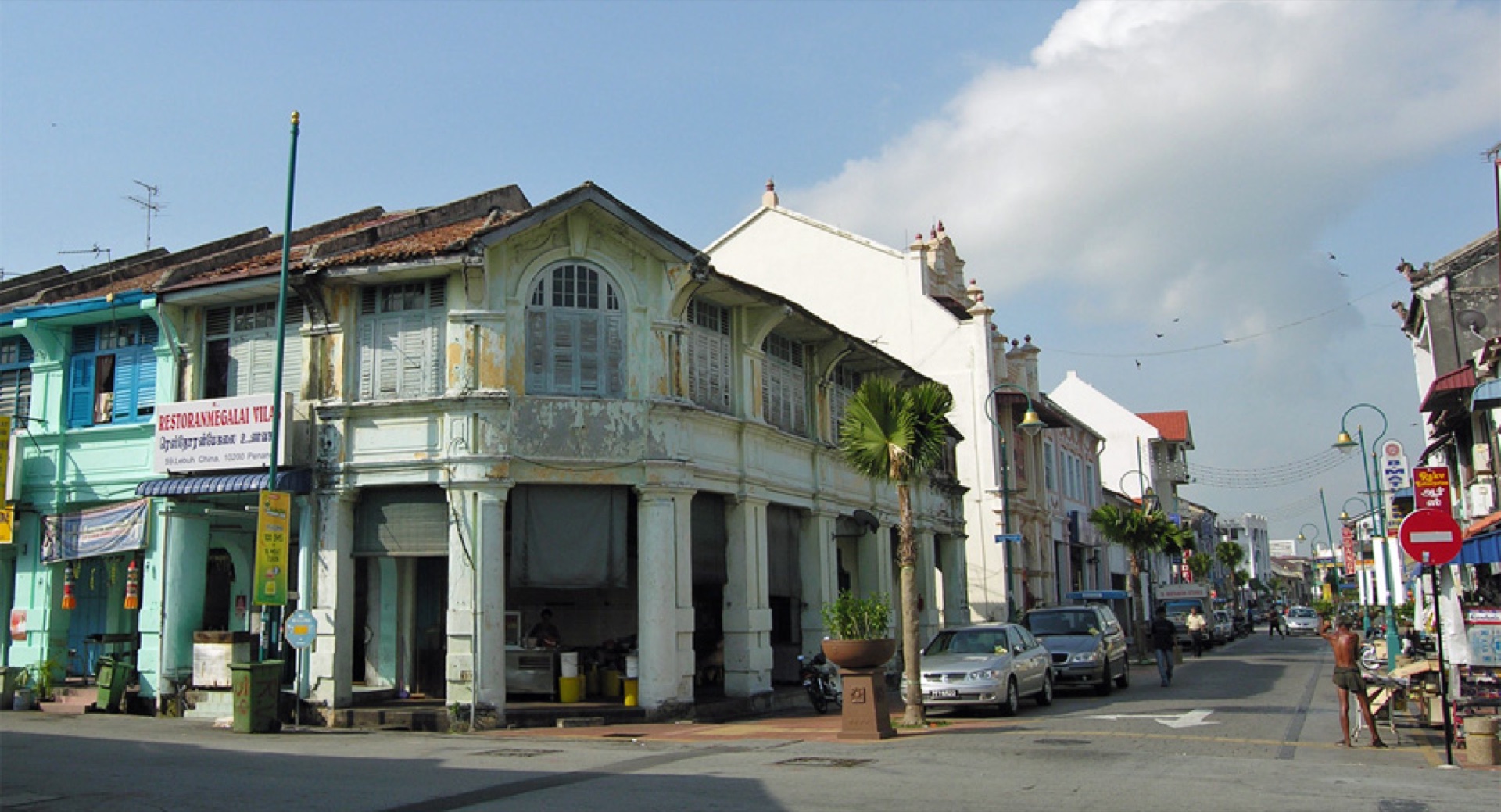
Lumina Residence — from RM1.03M freehold in Georgetown, by VST Properties & BSG. Georgetown's heritage culture resonates strongly with HK buyers — the shophouse scale and street life is culturally familiar in the best way. At RM1.03M it just clears the foreign buyer threshold.
Scott @ Logan — from RM436,000 (entry units sit below the RM1,000,000 island minimum — a foreign buyer needs a larger unit to qualify) freehold in Georgetown heritage fringe. Boutique, culturally rich. Foreign buyers target the RM1M+ units. Genuinely scarce category: freehold boutique in a UNESCO heritage zone.
See what RM1M–RM2M gets you with 70% LTV →Set yourself as a foreign buyer in the calculator to see realistic options.Tax: Malaysia-UK Double Taxation Agreement
There is a DTA between Malaysia and the UK. In practical terms, this means:
- Rental income taxed in Malaysia is generally creditable against UK income tax liability (you do not pay full tax in both jurisdictions)
- RPGT paid in Malaysia on disposal is a Malaysian capital gains tax and interacts with UK CGT rules — confirm this with a UK-qualified tax advisor who covers cross-border property
For HK-based buyers: there is no DTA between Malaysia and Hong Kong. HK's territorial tax system generally does not tax offshore income, but confirm with an HK advisor on your specific structure.
I do not give tax advice — I recommend qualified advisors in both jurisdictions before committing.
Sources: RM1,000,000 foreign-buyer minimum per Penang state authority guidelines; RPGT rates (30% Year 1–5, 10% Year 6+) per LHDN; Penang island gross/net yield ranges from our own Penang Price Index tracking; project prices and status from developer launch data current as of publication.
Zac’s Take
Zac Ong
Hong Kong and BNO buyers are among the most analytically rigorous buyers I work with — they want the numbers, the DTA structure, the currency history. What I tell them honestly: Penang at RM1–2M freehold is a genuinely competitive asset when you translate it back to HKD or GBP. The question is not whether the math works — it often does. The question is what you're buying it for: lifestyle, yield, or long-term capital hold. The answer changes which projects and which areas make sense. If you're yield-focused, the north island freehold market is your entry. If you want a lifestyle asset you can actually use on extended stays, Georgetown and the waterfront corridor are worth looking at seriously.
If you're coming from Hong Kong or the UK and want to work through the numbers — entry cost in your currency, realistic yield scenario, legal process with remote signing — reach out directly. I work with overseas buyers regularly and can structure the conversation around what you actually need to know.