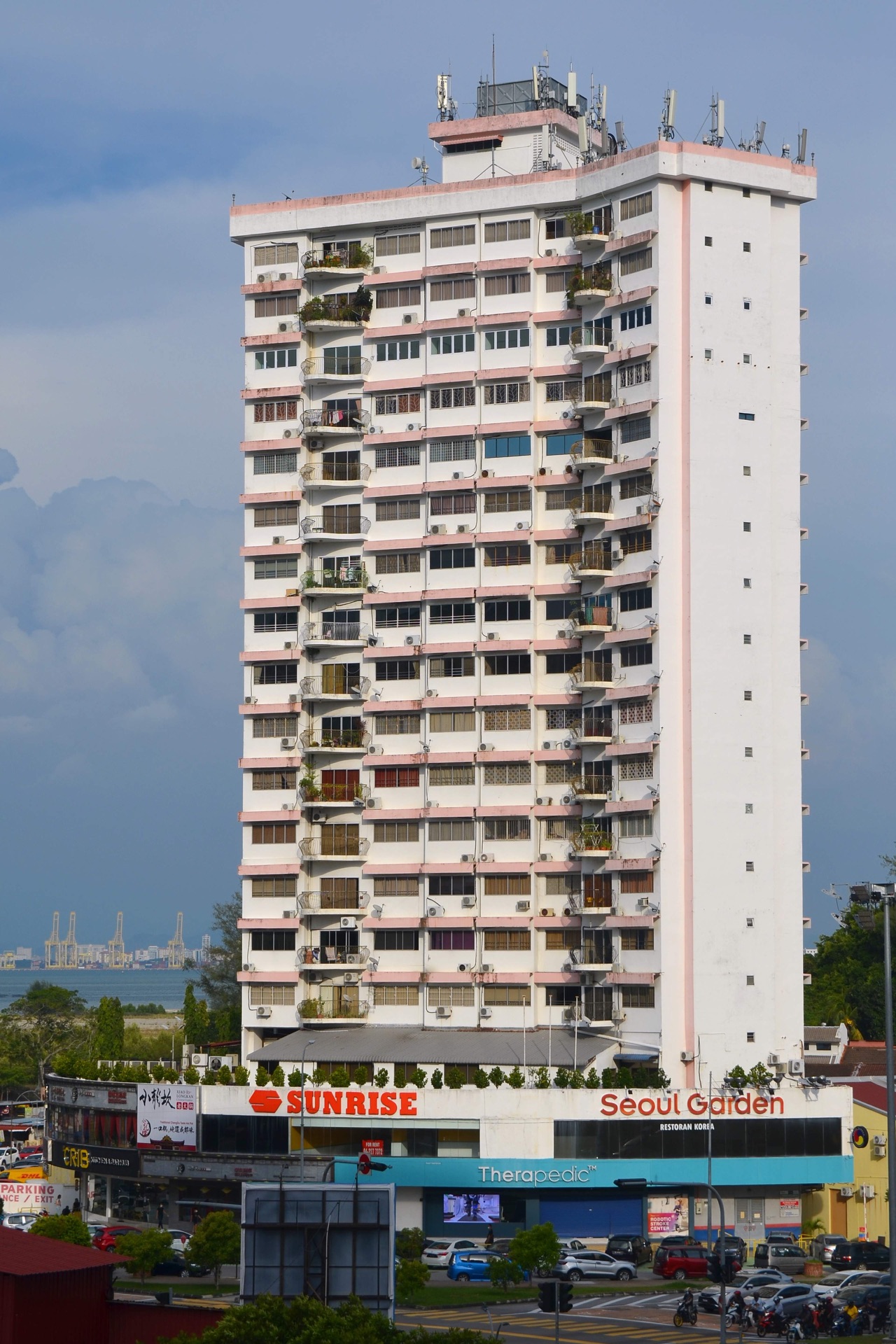
Every buyer eventually asks the same question when comparing units in the same development: is the corner unit actually worth 15–20% more, or am I paying a premium for something I don't need? The honest answer depends more on your use case than on the unit itself.
Here's the framework I use with buyers.
Key takeaways:
- Corner high-rise condo units in Penang typically command a 10–20% premium over comparable intermediate units in the same development.
- Corner landed lots command a larger 15–30% premium because you're paying for meaningfully more land and two-street frontage.
- Well-positioned corners can achieve a 5–10% rental premium, but pure-yield investors should check the same premium doesn't compress net yield.
- Orientation matters more than corner status — a west-facing corner can run hotter and cost more on aircon than a well-oriented intermediate unit.
- The hold-period rule of thumb: under 3 years, skip the corner premium; over 5 years, it's usually worth paying.
The Typical Premium
Corner high-rise condominium units in Penang typically command a 10–20% premium over comparable intermediate units in the same development. The exact number varies by project, floor level, and specific corner orientation.
Corner landed lots command a larger premium — typically 15–30% over intermediate lots — because you're paying for meaningfully more land, extra frontage, and end-of-row positioning that allows expansion or renovation options intermediates don't have.
The premium isn't arbitrary. Corner units offer measurable structural advantages, and Penang buyers have historically been willing to pay for them.
What You're Actually Paying For
More windows. A corner unit has windows on two exterior walls instead of one. This translates to:
- More natural light (fewer daytime lights needed)
- Better cross-ventilation (real air flow when both sides open)
- Better views (typically two view directions)
More privacy. Only one neighbouring wall means:
- Less noise transmission from neighbours
- Fewer shared walls in the unit
- Better acoustic experience overall
More usable area. Corner units are often architecturally larger:
- Extended balconies or corner windows
- More corner space for furniture placement
- Sometimes an additional bay window or feature area
Landed corner lots add additional layers:
- Extra side land for extensions, gardens, additional parking
- Frontage on two street sides (better vehicle access)
- Higher resale liquidity from the wider buyer pool
What the Premium Doesn't Buy You
Let's be honest about what the corner premium does NOT deliver:
- It doesn't guarantee better views — if the corner faces a construction site or a blank wall, you paid a premium for a bad view. Check the specific orientation.
- It doesn't guarantee cooler temperature — west-facing corners can be hotter than a mid-block east-facing intermediate. Sun exposure matters more than corner status.
- It doesn't reduce your maintenance fees — HOA fees are typically per square foot; larger corner units mean higher maintenance costs.
- It doesn't automatically mean better resale — in a bad development or overbuilt corridor, corner premium erodes with the broader market.
When the Corner Premium Is Genuinely Worth It
For own-stay buyers:
- If you'll live in the unit for 5+ years, the daily quality-of-life difference (light, air, privacy) compounds meaningfully
- If your family includes children or elderly members who spend significant time at home, natural light and ventilation matter more
- If work-from-home is part of your life, having a genuinely light and airy space affects daily productivity
For long-term hold investors:
- Corner units tend to resell faster in soft markets — you have exit optionality
- The buyer pool is wider (both own-stay upgraders and premium tenants)
- Rental premium of 5–10% is achievable for well-positioned corners
For lifestyle premium buyers:
- At the RM1M+ tier, buyers expect corner-quality light and ventilation as standard
- Skipping corner in a premium project can undermine the overall value proposition
When the Corner Premium Is NOT Worth It
For pure yield investors:
- Same rental Ringgit against higher purchase price = compressed net yield
- If your investment thesis is 5% gross yield and the corner drops you to 4%, that's meaningful over a hold
- Bayan Lepas tech-corridor tenants often pay similar rent for intermediate vs corner
For value-first first-time buyers:
- RM50K–RM150K premium is substantial early in your ownership journey
- Building equity faster on an intermediate unit may outperform incremental corner comfort
For short-hold flip buyers:
- Corner premium doesn't reliably appreciate faster in short holds (3–5 years)
- The absolute Ringgit premium can be dead capital during your holding period
For west-facing corners in Penang:
- Sun exposure is real and severe in west-facing units
- Air-conditioning bills are notably higher
- The corner advantage is partially undermined by heat gain
Orientation Matters More Than Corner Status
This is the point most Penang buyers underestimate. A well-oriented intermediate unit (north-south facing, good elevation, blocked from western sun) can genuinely outperform a poorly-oriented corner unit (west-facing, low floor, exposed to afternoon heat).
The Penang island geography matters:
- East-facing units get morning sun and afternoon shade — generally the most desirable
- North-south facing units minimise direct sun exposure — cooler year-round
- West-facing units get harsh afternoon sun — hotter, higher aircon costs
- South-west corners can combine premium pricing with unfavourable heat exposure
Before you pay the corner premium, verify the specific orientation. A good agent should show you the sun path across your unit at 8am, 12pm, and 4pm before you commit.
Landed Corner Lots — Different Rules Apply
For landed property, corner premium behaves differently:
- The premium is larger (typically 15–30%) but the value proposition is clearer — you're buying meaningfully more land
- Extension and renovation potential is real — corner lots often allow additional structures or garden expansion
- Two-frontage access is genuinely useful for daily logistics (vehicle access, deliveries, guests)
- Resale liquidity for corners is materially better in the landed segment
For landed buyers, my honest view: corner lots are almost always worth the premium if you can afford it. The additional land value alone justifies the differential, and the lifestyle benefits stack on top.
The Practical Framework
When a buyer asks me whether to pay the corner premium, I run through these questions:
- How long will you hold? Under 3 years, skip the corner. Over 5 years, corner is often worth it.
- Own-stay or investment? Own-stay favours corner. Pure yield investment favours intermediate.
- What's the specific orientation? East-facing corner = strong yes. West-facing corner = reconsider.
- What's the absolute premium in Ringgit? RM30K premium is easy to justify. RM200K premium requires stronger use-case fit.
- Do you have children or elderly at home? If yes, the daily light and ventilation improvement matters more.
- Do you work from home? If yes, corner-quality light affects daily wellbeing.
If most answers point to corner, pay the premium confidently. If most answers point to intermediate, skip it — you'll build equity faster or generate better yield.
Zac’s Take
Zac Ong
I've watched buyers pay RM150K corner premium and love it because they walk into their sun-filled living room every morning and feel it. I've also watched buyers pay the same premium and never open their curtains because the west-facing corner is a heat trap. The corner premium is real value when the specific unit delivers what the corner label promises. It's dead capital when the orientation is wrong or when your use case doesn't utilise the light-and-air advantages. Don't buy a corner unit because 'corner is better' — buy it because the specific unit's orientation, floor level, and view make you actively want to spend time in it. That's when the premium pays for itself.
If you're comparing corner vs intermediate at a specific project and want a grounded view on whether the premium fits your use case, reach out. This is one of those decisions where 20 minutes of specific conversation beats hours of independent research.
For more on how to evaluate specific units, see my foreign buyer mistakes guide, my subsale vs new launch comparison, the affordability calculator, and the ROI calculator if you're weighing the yield impact of a corner premium.
Sources: Sub-sale asking verified from live portal listings using the median-anchored method, with bait listings and relisted units excluded. The foreign-buyer minimum purchase price, 3% island / 2% mainland state levy and state consent requirement per Penang state policy and s.433B of the National Land Code. Rental yields derived from our own tracked asking rents and prices — directional, not an official benchmark. Figures move with the market — confirm current details with the developer or your solicitor before committing.